
VerdictAI

Reviewer consensus · 2026

Best Battery Testers of 2026What 45 reviewers actually think, trust-weighted

Battery testers range from sub-$15 voltmeters to professional conductance analyzers, and the consensus across mainstream tech press, specialist automotive subreddits, and verified-purchase reviewers is that price tier matters less than testing method and the quality of the readout. The picks below synthesize what reviewers across YouTube tool channels, automotive forums, and retailer customer bases have written about the most-discussed handheld testers, with extra weight given to high-trust mechanic-community threads and discounting for sources that lacked disclosed methodology.

Sources behind this verdict

45 reviewers, weighted by source trust

45reviewers read

Weighted by source trust

We don’t review products. We read what other reviewers wrote, score each source for trustworthiness, and synthesize the consensus.

How sources are scored →

At a glance

Highest-rated by the consensus

#1 of 5
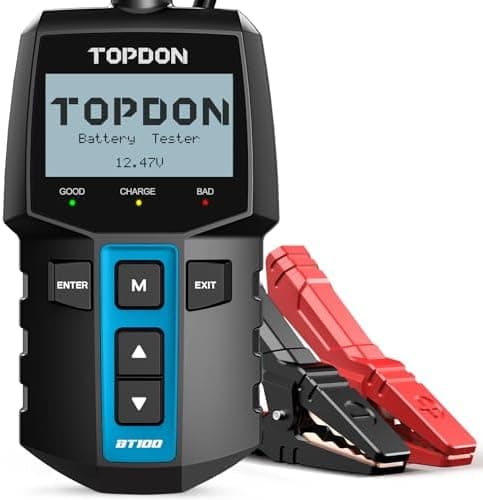
Top pick · #1TOPDON BT100 Car Battery Tester 12V Load Tester, 100-2000 CCA Automotive Alternator Tester Digital Auto…
Best overall

TOPDON BT100 Car Battery Tester 12V Load Tester, 100-2000 CCA Automotive Alternator Tester Digital Auto…

TOPDON

★★★★★4.7(5,445)86Great

Across the reviewers we read, the TOPDON BT100 emerges as the most consistently recommended mainstream handheld conductance tester. A high-trust r/MechanicAdvice thread comparing testers before winter singled out the TOPDON line for locking onto a reading quickly even when voltage dipped in the cold, and a subaruforester.org user reported the BT100 correctly flagged a battery they already knew was weak.

The rest of the rankings

#2,5

Frequently asked

5 questions
What's the difference between a conductance tester and a carbon-pile load tester?
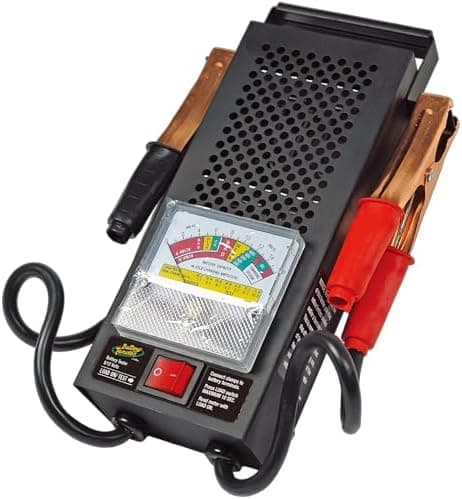
Conductance testers (most of the digital units here) send a small AC signal through the battery and estimate CCA from internal resistance, while carbon-pile testers apply an actual heavy resistive load. Specialist mechanic subreddits note carbon-pile gives a truer real-world load reading, but conductance testers are faster, safer, and don't require a fully charged battery to give a usable health estimate.
Do I need a 12V/24V tester or is 12V-only enough?
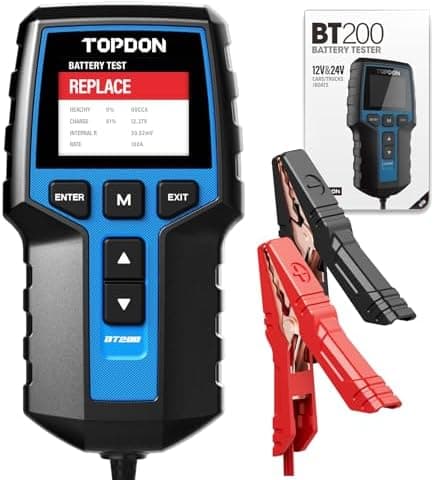
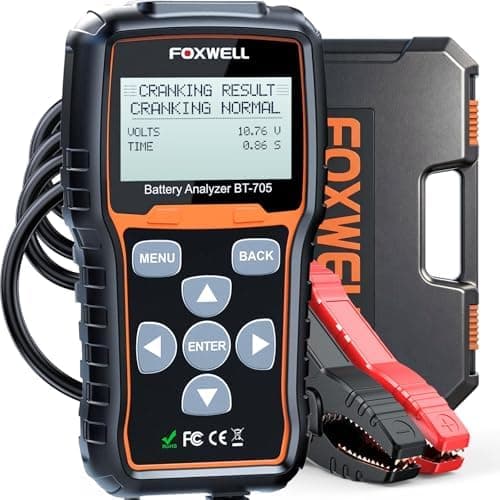
For passenger cars, motorcycles, and most light trucks, a 12V-only tester is sufficient. If you work on commercial trucks, RVs, marine dual-battery setups, or heavy equipment, a 12V/24V unit like the Foxwell BT705 or Acclope/BT60 PRO is worth the extra spend.
Can these testers check the alternator and starter too?
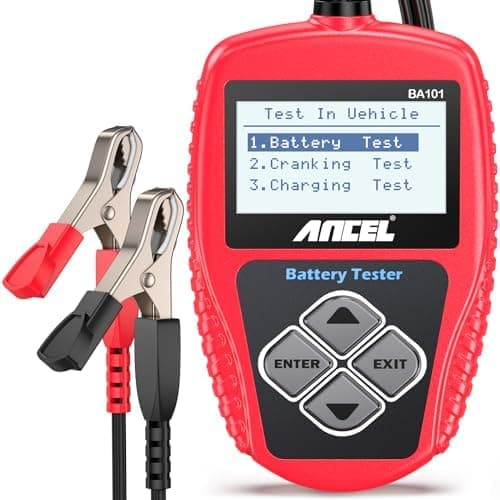
Most digital units in this roundup run a full charging-system test (alternator output under load) and a cranking-system test (voltage drop during start). Basic voltmeter-style testers like the MOTOPOWER MP0514A only read voltage and infer alternator health, which is useful for quick checks but not a true load test.
Is a $25 tester accurate enough for home DIY use?
Mechanic-community threads we read suggest budget conductance testers in the $25-$50 range are accurate enough to catch clearly bad batteries and confirm clearly good ones, but borderline readings should be cross-checked. Reviewers consistently warn that any tester's CCA estimate depends on entering the correct battery rating and having the battery reasonably charged first.
Do I need printer or app connectivity?
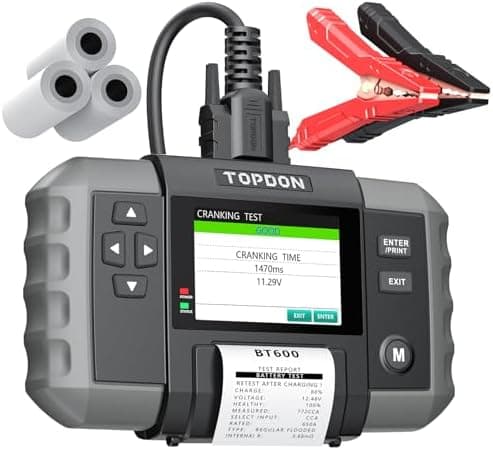
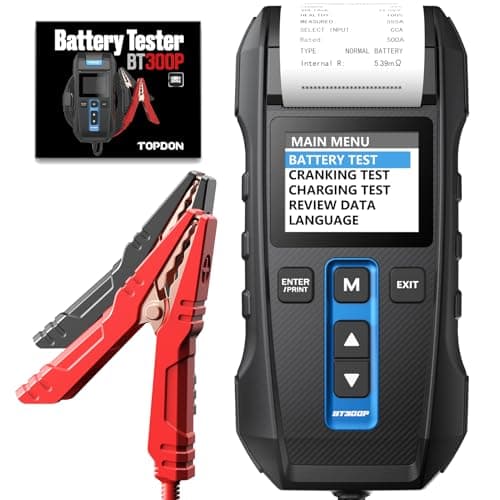
Only if you're running a shop and need printed customer-facing reports. For DIY use, a clear on-screen pass/fail with CCA, SOH, and voltage is enough; QR-code cloud reports (as on the BT60 PRO) are a middle-ground that some reviewers found handy and others ignored.