
VerdictAI

Reviewer consensus · 2026

Best Cabin Air Filters of 2026What 40 reviewers actually think, trust-weighted

Cabin air filters are one of the cheapest pieces of preventive maintenance you can do, and the consensus across mainstream tech press, specialist car subreddits, and verified-purchase reviewers is that two designs dominate the aftermarket: activated-carbon paper filters (cheap, restore airflow, fight odors) and Bosch's HEPA line (denser media, traps fine particulates, but reviewers consistently flag reduced airflow). The picks below are synthesized from those signals rather than first-hand testing, and we've called out the airflow-vs-filtration tradeoff that comes up in nearly every specialist-community thread we read.

Sources behind this verdict

40 reviewers, weighted by source trust

40reviewers read

Weighted by source trust

We don’t review products. We read what other reviewers wrote, score each source for trustworthiness, and synthesize the consensus.

How sources are scored →

Trust hierarchy

Trusted1
Verified0
Supporting16
Flagged0

Source mix

40signals
  • 20Community
  • 20Video

Trusted · 1 source

Independent · documented methodology

At a glance

Highest-rated by the consensus

#1 of 5
Top pick · #1EPAuto CP285 (CF10285) Premium Cabin Air Filter includes Activated Carbon
Best overall

EPAuto CP285 (CF10285) Premium Cabin Air Filter includes Activated Carbon

EPAuto

★★★★★4.7(44,319)92Excellent

Across the reviewers we read, the EPAuto CP285 is the default recommendation for owners of CF10285-spec Toyota, Lexus and Scion vehicles, and the reason is volume: more than 44,000 Amazon ratings averaging 4.7 stars, with specialist-subreddit mentions in r/CX5, r/SubaruAscent and r/COROLLA echoing the consensus that the activated-carbon construction does what it claims at a price most owners are willing to pay annually. The technical pitch — soda-and-carbon media targeting odors plus standard particulate capture — is straightforward, and verified-purchase reviewers across Amazon and Walmart consistently call out improved airflow versus a clogged OEM filter and a noticeable reduction in vent odors.

The rest of the rankings

#2,5

Frequently asked

5 questions
How often should I replace my cabin air filter?
Manufacturer guidance cited across the listings and forum threads we read is roughly every 12 months or 12,000–15,000 miles, though specialist-community posts (notably r/BoltEV) note that cheaper carbon filters at this price are easy to change more frequently — every 10–15k — if you live in a dusty area or near wildfire smoke.
Are HEPA cabin air filters worth it, or do they hurt airflow?
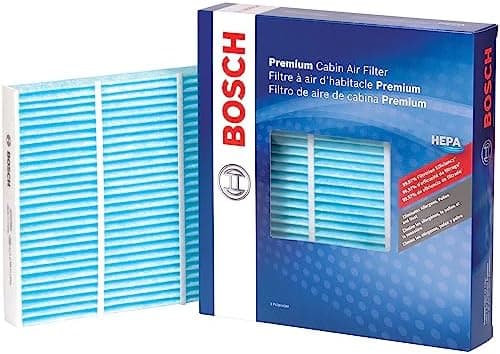
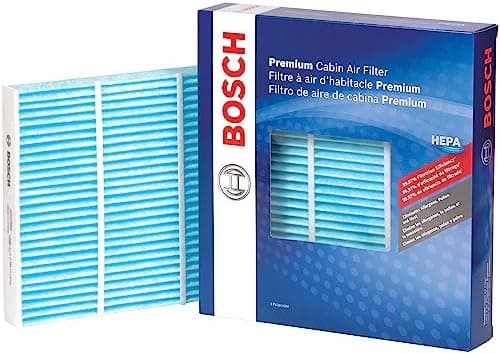
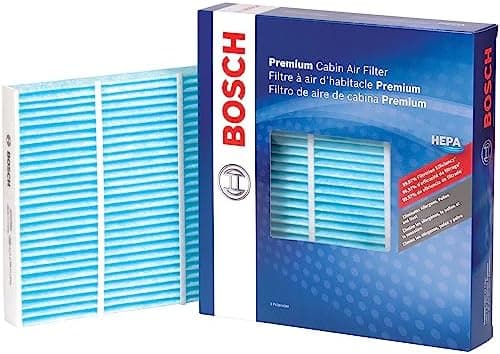
This is the single biggest disagreement in the signals we read. Bosch's HEPA line is rated 99.97% at 0.3 microns and is praised across r/Acura, r/Subaru_Outback and other specialist subs for noticeably cleaner air. But the high-trust r/cars discussion and multiple subreddit threads (r/cmaxhybrid, r/SubaruAscent, r/AskMechanics) consistently report airflow drops on the order of 20–25% versus OEM, and at least one subreddit user flagged a concern about blower-motor stress. If allergies or smoke are your priority, HEPA wins; if maximum AC performance matters more, a quality activated-carbon paper filter is the safer call.
Activated carbon vs HEPA — which should I buy?
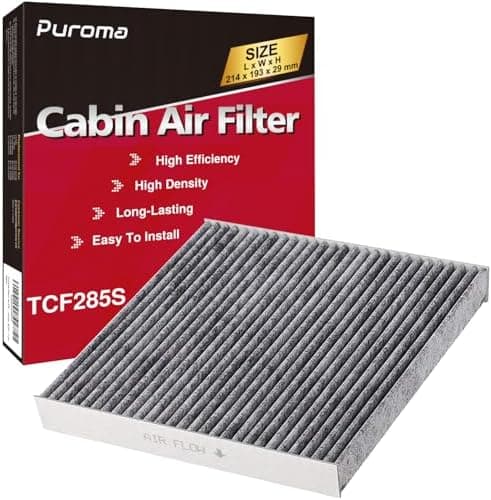
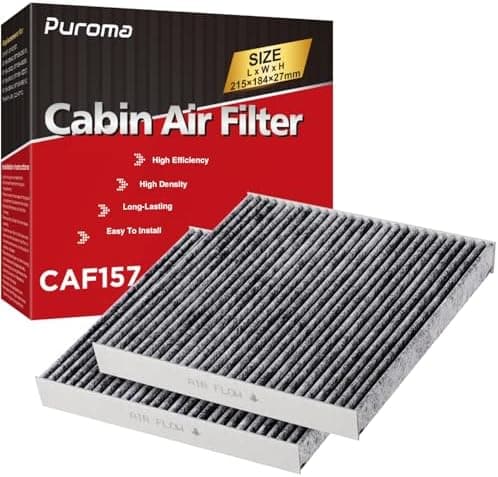
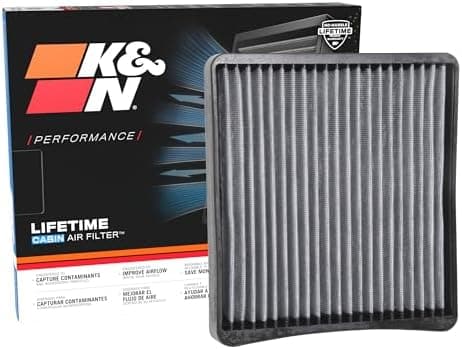
They solve different problems. Activated carbon (EPAuto, Spearhead, Puroma in this roundup) targets odors, VOCs and smog smells while preserving airflow. HEPA (the Bosch C-series) targets fine particulates, pollen and smoke at much higher efficiency but restricts airflow. Reviewers who live in wildfire zones or have allergies tend to choose HEPA; reviewers chasing fresh-smelling cabin air with no AC penalty tend to choose carbon.
Do these filters actually fit, or do I need the dealer part?
Fitment is the #1 complaint pattern across verified-purchase reviews for any aftermarket cabin filter, so always cross-check the part number (CF10285, CF10134, 6091C, etc.) against your VIN or owner's manual before buying. Where fitment is right, reviewers across Amazon, Walmart and NAPA listings describe installs as 3–5 minute jobs with no tools.
Why are some 'HEPA' cabin filters so much cheaper than others?
True HEPA requires meeting a defined particulate standard (Bosch cites ASTM D2986 / ISO 29463-3 in its product copy). Filters that market 'HEPA-like' performance without citing a standard are usually high-efficiency paper, not HEPA. Specialist forum threads we read (driveaccord.net, subaruoutback.org) note that genuine 99.97%-at-0.3-micron performance is what causes the airflow restriction — if a 'HEPA' filter has no airflow penalty, it's probably not actually HEPA.