
VerdictAI

Reviewer consensus · 2026

Best Home EV Chargers of 2026What 50 reviewers actually think, trust-weighted

Home EV chargers have become a crowded category, with established smart-charging brands competing against a wave of value-priced Amazon entrants. This roundup synthesizes what verified-purchase reviewers, specialist EV communities, and mainstream reviewers have said about the leading Level 2 units, weighted by source trust rather than marketing claims. Where high-trust community consensus and customer-review volume diverge, we surface the disagreement rather than smoothing it over.

Sources behind this verdict

50 reviewers, weighted by source trust

50reviewers read

Weighted by source trust

We don’t review products. We read what other reviewers wrote, score each source for trustworthiness, and synthesize the consensus.

How sources are scored →

At a glance

Compare

Pick any two for a head-to-head

Scores, pros, cons, and our verdict — side by side.

vs

Highest-rated by the consensus

#1 of 5
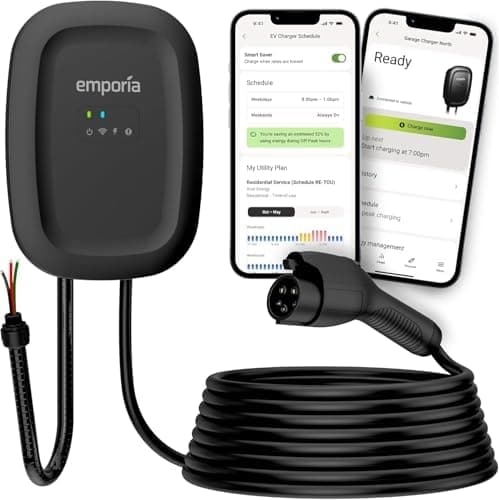
Top pick · #1EMPORIA Level 2 EV Charger w/ J1772 Connector — 48 Amp, 240V WiFi Enabled Electric Vehicle Charging Station…
Best overall

EMPORIA Level 2 EV Charger w/ J1772 Connector — 48 Amp, 240V WiFi Enabled Electric Vehicle Charging Station…

EMPORIA

★★★★★4.7(411)88Great

Across the reviewers we read, the Emporia 48A hardwired charger emerges as the most well-rounded home unit, combining 48A/11.5kW output, WiFi scheduling, and utility time-of-use integration at a competitive price. On r/electricvehicles, a high-trust thread describes it as well reviewed with full WiFi capability that interfaces with the utility company for charge-pausing during peak rates.

The rest of the rankings

#2,5

Frequently asked

4 questions
Should I buy a hardwired or plug-in (NEMA 14-50) home EV charger?
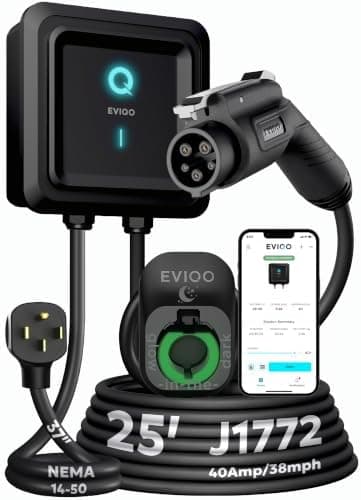
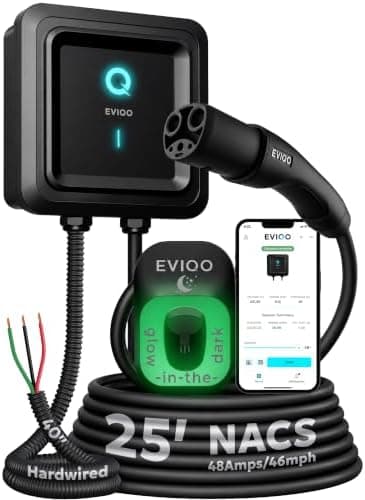
Across the reviewers we read, plug-in units are favored for renters and DIY installs because no electrician is strictly required if a 240V outlet already exists, while hardwired units are preferred for permanent installs and the higher continuous amperage (48A/11.5kW) needed to charge at maximum speed. Specialist EV communities note that 48A hardwired setups require a 60A circuit, so factor in panel capacity before buying.
Is a 40-amp or 48-amp charger better for home charging?
Specialist subreddit threads repeatedly point out that most owners charging overnight see no practical difference between 40A and 48A, since both fully recharge a typical EV by morning. A 48A unit charges faster but needs a dedicated 60A circuit and usually hardwiring, while 40A plug-in models run on a common 50A circuit. The reviewers we read generally recommend 40A plug-in unless you have a large battery and short charging windows.
Are cheaper off-brand EV chargers safe to use?
The consensus across the reviewers we read is to insist on UL or ETL certification regardless of brand. Community discussion flags reliability as the bigger gamble with budget units, with some owners reporting chargers failing after a year or two. Certification and warranty length matter more than the badge on the case.
Do I need a smart (WiFi) EV charger?
Reviewers note that WiFi scheduling is most valuable if your utility offers time-of-use rates, since it lets you charge during cheap off-peak hours automatically. If you have a flat electricity rate, many community members say a simple, reliable 'dumb' charger is the more dependable choice and avoids buggy-app complaints.