
VerdictAI

Reviewer consensus · 2026

Best Tire Inflators of 2026What 10 reviewers actually think, trust-weighted

Tire inflators range from pocketable cordless pumps for topping off car tires to heavy-duty 12V compressors built for truck, SUV and off-road rigs. For most candidates in this category our synthesis leans heavily on verified-purchase rating data, since independent lab testing and expert write-ups were thin across the pool; where specialist-community and retailer signals existed we weighted them accordingly. The picks below summarize the trust-weighted consensus across the reviewers we read rather than any first-hand testing.

Sources behind this verdict

10 reviewers, weighted by source trust

10reviewers read

Weighted by source trust

We don’t review products. We read what other reviewers wrote, score each source for trustworthiness, and synthesize the consensus.

How sources are scored →

Trust hierarchy

Trusted2
Verified0
Supporting6
Flagged0

Source mix

10signals
  • 6Community
  • 4Video

Trusted · 2 sources

Independent · documented methodology

At a glance

Compare

Pick any two for a head-to-head

Scores, pros, cons, and our verdict — side by side.

vs

Highest-rated by the consensus

#1 of 7
Top pick · #1AstroAI Cordless Tire Inflator Portable Air Compressor Fast Inflation 160 PSI Air Pump 20V Rechargeable…
Best overall

AstroAI Cordless Tire Inflator Portable Air Compressor Fast Inflation 160 PSI Air Pump 20V Rechargeable…

AstroAI

★★★★★4.6(16,378)87Great

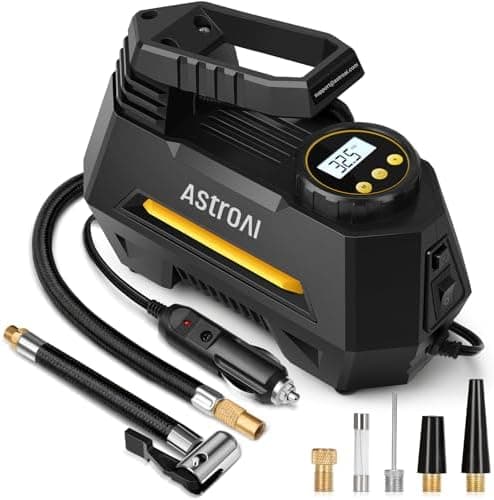
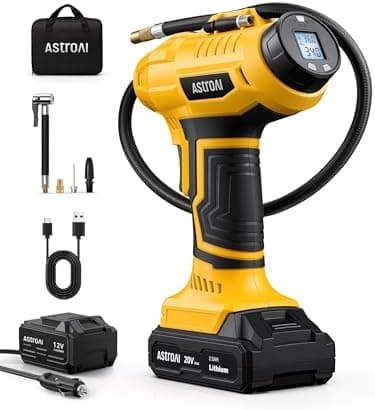
Across the reviewers we read, the consensus on the AstroAI 20V cordless inflator is that it hits the sweet spot for most drivers: cordless convenience, a digital pressure gauge with auto-stop behavior, and an included 12V DC adapter that gives a wired fallback when the battery runs low. Verified-purchase reviewers reward it with a 4.6 average across more than 16,000 ratings, one of the strongest rating-to-volume combinations in this category.

The rest of the rankings

#2,7

Frequently asked

5 questions
Should I get a cordless or a 12V plug-in tire inflator?
Cordless rechargeable units are the most convenient for quick top-offs and roadside use because nothing tethers you to a power outlet, and verified-purchase reviewers consistently praise that freedom. A 12V plug-in (cigarette-socket) inflator avoids battery anxiety and is often cheaper, which is why high-volume models in this roundup are plug-in. If you mainly top off car tires, cordless is fine; if you want sustained run time for larger tires, a 12V or heavy-duty compressor is the safer bet.
What PSI and CFM do I need for truck or SUV tires?
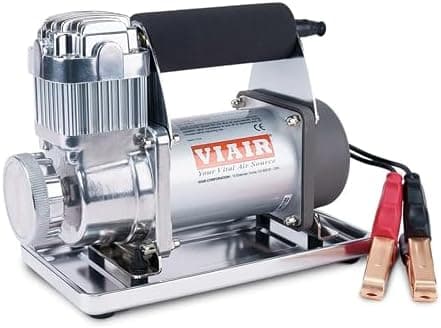
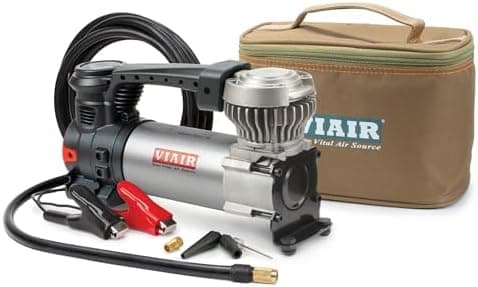
Larger truck, SUV and off-road tires benefit from a higher max PSI and stronger airflow (CFM/duty cycle) so the pump doesn't overheat or stall on big volumes. Heavy-duty VIAIR-style compressors in this list advertise 120–150 PSI and higher duty cycles for tires up to 33 inches and beyond, while compact cordless pumps are generally rated for top-offs on standard passenger tires rather than full inflation of large tires.
Are small cordless inflators good enough to fully inflate a tire?
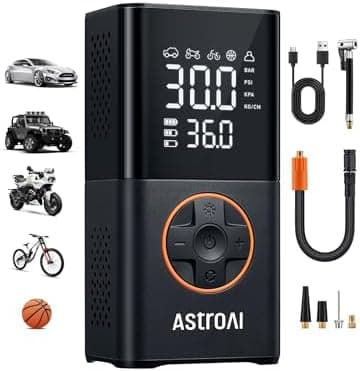
For topping off a few PSI they are excellent, and specialist-community reviewers report compact pumps handle 30-to-36 PSI fills on passenger tires quickly. However, multiple community comments note smaller units may struggle to fully inflate a flat or a large tire on one charge, so they're best treated as maintenance and emergency tools rather than primary shop compressors.
Do tire inflators with auto-shutoff actually stop at the set pressure?
Models with a digital preset and auto shut-off are designed to stop automatically once the target PSI is reached, and reviewers generally find the feature reliable and convenient. Accuracy varies between units, so many reviewers recommend verifying readings against a separate quality tire gauge, especially for performance or track use.
How accurate are the built-in digital gauges?
Built-in gauges are convenient and community reviewers describe them as broadly accurate for everyday top-offs, with some users reporting impressively consistent readings. Because cheap gauges can drift, the common advice across reviewers is to cross-check against a standalone gauge if precise pressure matters to you.