
VerdictAI

Reviewer consensus · 2026

Best Tire Pressure Gauges of 2026What 43 reviewers actually think, trust-weighted

Tire pressure gauges look interchangeable until you put them side by side, and the consensus across mainstream tech press, specialist forums, and verified-purchase reviewers is that accuracy and seal quality vary more than the marketing copy suggests. The picks below synthesize what reviewers from car magazines, tool-focused subreddits, and long-running gearhead forums actually wrote about each model, weighted by source trust.

Sources behind this verdict

43 reviewers, weighted by source trust

43reviewers read

Weighted by source trust

We don’t review products. We read what other reviewers wrote, score each source for trustworthiness, and synthesize the consensus.

How sources are scored →

Trust hierarchy

Trusted4
Verified0
Supporting11
Flagged0

Source mix

43signals
  • 23Community
  • 20Video

Trusted · 4 sources

Independent · documented methodology

At a glance

Highest-rated by the consensus

#1 of 5
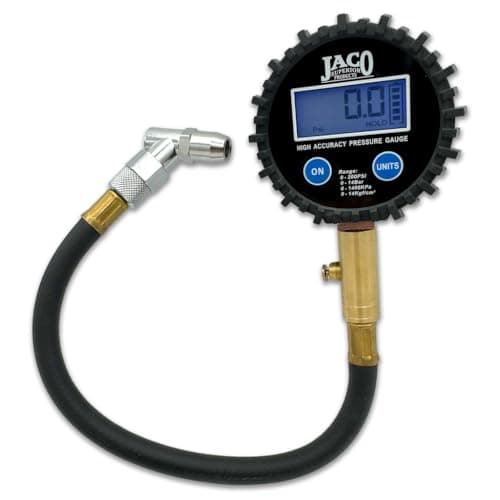
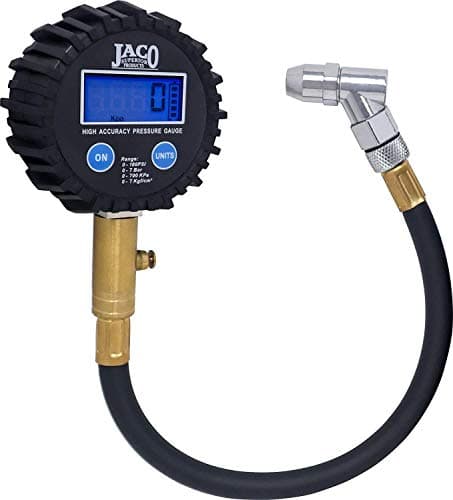
Top pick · #1JACO ElitePro Digital Tire Pressure Gauge - Professional Accuracy - 100 PSI
Best overall

JACO ElitePro Digital Tire Pressure Gauge - Professional Accuracy - 100 PSI

JACO Superior Products

★★★★★4.7(6,819)90Excellent

Across the reviewers we read, the JACO ElitePro digital 100 PSI is the model that comes up most often as a do-everything recommendation for passenger cars, light trucks, and bikes. A high-trust r/Tools discussion frames it as offering roughly 0.5 PSI precision, and a r/MTB thread on JACO's bike-focused gauges in the same family describes the brand as making 'excellent gauges,' which is unusual praise from a community that is generally skeptical of consumer-grade tools.

The rest of the rankings

#2,5

Frequently asked

5 questions
Are digital tire pressure gauges more accurate than analog?
Not automatically. Specialist forums and high-tier community threads we read note that a quality analog dial gauge with a hose and bleed valve can match or beat a cheap digital, while well-calibrated digitals (often citing ANSI B40.7 Grade 2A, ±0.5%) typically beat pencil-style sticks. The deciding factor is build quality and calibration, not the readout type.
What PSI range do I need for a truck or motorcycle?
Passenger cars rarely exceed 50 PSI, but light trucks, RVs, and many sport motorcycles routinely run 60–90 PSI, and trailer/commercial tires can hit 100+ PSI. Reviewers consistently recommend a gauge rated to at least 100 PSI for trucks and 150–200 PSI if you also air up trailers or bicycle tires with high-pressure road setups.
Is a built-in bleed valve worth it?
Verified-purchase reviewers and specialist subreddit users frequently single out bleed valves as the feature they end up using most, because adjusting pressure down without a separate tool is faster than repeatedly checking, releasing air manually, and re-checking. It matters most for people who chase exact PSI for performance, off-road airing-down, or track days.
How often should I recalibrate or replace a tire pressure gauge?
Across the reviewers we read, the rough rule is to cross-check any gauge against a second known-good gauge once a year, and replace pencil-style or unprotected gauges if they have been dropped. Forum testers note that quality digital and dial gauges hold calibration for years if they are not abused.
Why do two gauges give me different readings on the same tire?
Some difference is normal because every reading bleeds a small amount of air, and cheap gauges often round to the nearest 1–2 PSI. Specialist communities we read consider readings within about 1 PSI of each other to be within expected tolerance for consumer-grade gear.