
VerdictAI

Reviewer consensus · 2026

Best Push Walkers of 2026What 59 reviewers actually think, trust-weighted

Push walkers for new walkers split into two broad camps: sturdy wooden activity carts in the Montessori tradition and plastic sit-to-stand toys loaded with lights and music. This roundup synthesizes what verified-purchase reviewers, specialist parenting communities, and the review sites we read have said about the most-discussed models, and it surfaces the recurring debate honestly, namely that tipping resistance, wheel speed, and whether a walker actually helps (or briefly delays) independent walking come up again and again. We weight high-trust community consensus and independent buying-guide coverage above raw star averages.

Sources behind this verdict

59 reviewers, weighted by source trust

At a glance

Compare

Pick any two for a head-to-head

Scores, pros, cons, and our verdict — side by side.

vs

Highest-rated by the consensus

#1 of 7
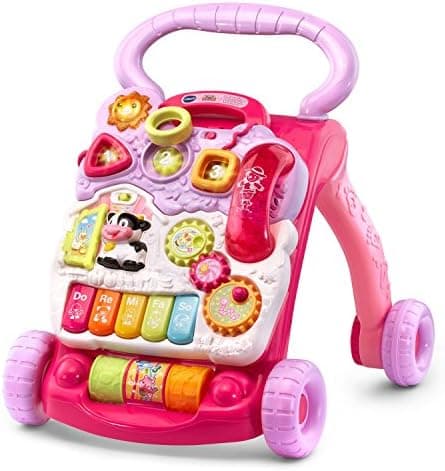
Top pick · #1VTech Sit-to-Stand Learning Walker (Frustration Free Packaging), Pink
Best overall

VTech Sit-to-Stand Learning Walker (Frustration Free Packaging), Pink

VTech

★★★★★4.8(97,985)90Excellent

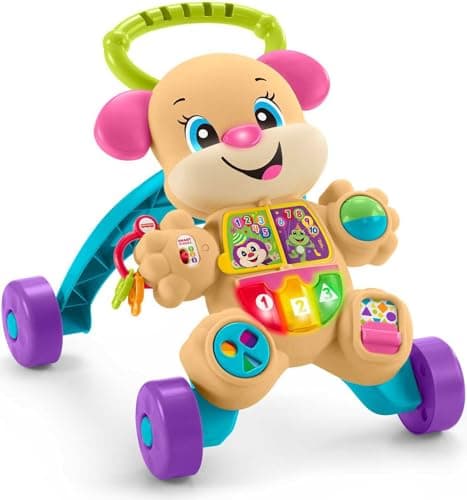
Across the reviewers we read, the VTech Sit-to-Stand is the default recommendation in the push-walker category, and the sheer scale of feedback is hard to ignore, roughly 98,000 Amazon ratings averaging 4.8 alongside consistent praise on walmart.com and target.com. A high-trust r/BabyBumps essentials thread singled it out as something a first-time parent would buy again, and r/BabyBumpsandBeyondAu commenters credit it with helping their little one gain confidence and walk sooner.

The rest of the rankings

#2,7

Frequently asked

5 questions
Do push walkers actually help babies learn to walk?
The consensus across the specialist parenting communities we read is mixed but generally positive for push-behind walkers (as opposed to seated circle walkers). Several high-trust threads note they build balance and confidence, while others caution that lightweight models can roll away too fast and encourage leaning forward or toe-walking. Pediatric-leaning commenters stress that any walking benefit is modest and that walkers are primarily a fun, motivating toy rather than a developmental necessity.
Wooden or plastic push walker, which is better?
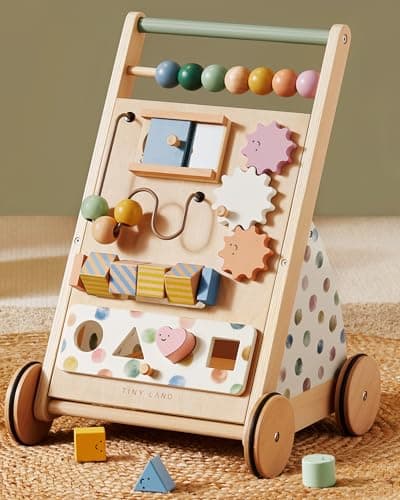
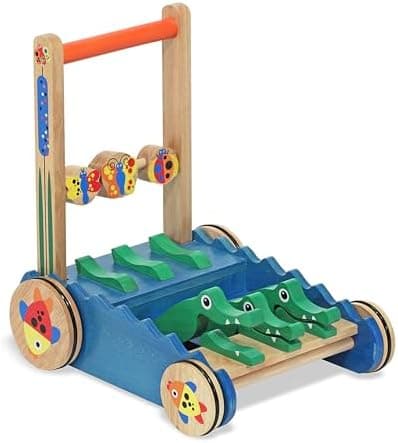
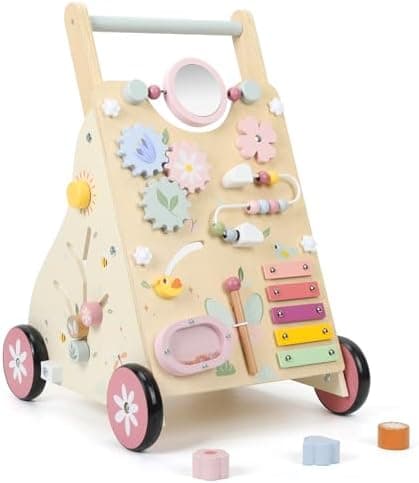
Reviewers frame it as a trade-off. Wooden walkers (Tiny Land, Melissa & Doug, Pithfor) are praised for durability and longer play life as a doll stroller or toy hauler, but several are flagged for tipping until a baby has enough core strength. Plastic sit-to-stand models (VTech, Fisher-Price) win on price, lights-and-music engagement, and a wider, harder-to-tip base, though some parents find the electronic features gimmicky.
How do I stop a push walker from rolling away too fast?
This is the single most common complaint in the threads we read. Models with adjustable wheel resistance or a decelerator (Tiny Land cites an adjustable back screw to control speed) are repeatedly recommended for early walkers, while heavier wooden carts and wide-base plastic walkers also slow things down. Supervising on carpet rather than hard floors is the usual community workaround.
What age is a push walker appropriate for?
Most listings and reviewers target roughly 9 to 12 months, when a baby can pull to stand, with use continuing well into the toddler years as a toy cart or doll stroller. Sit-to-stand styles like the VTech add a floor-play panel usable from around 6 months, extending the useful window.
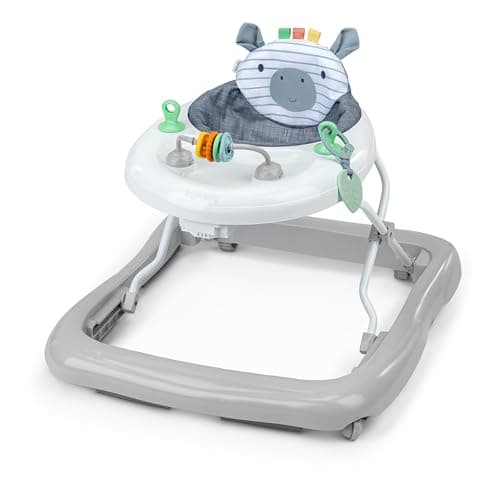
Are push walkers safe compared to the old seated baby walkers?
Across the communities we read, push-behind walkers are viewed far more favorably than the seated, wheeled 'circle' walkers that safety advocates have long warned against. The repeated caveat is supervision and keeping any wheeled walker away from stairs.