
VerdictAI

Reviewer consensus · 2026

Best Allergy / Bed-Bug Encasements of 2026What 38 reviewers actually think, trust-weighted

Allergy and bed-bug mattress encasements are a category where the marketing claims run ahead of the testing, so this roundup leans hard on the reviewers who actually checked the construction, zipper seal, and fabric pore size. We synthesized verdicts from mainstream tech press, specialist sleep publications, and verified-purchase reviewers at major retailers, and flagged the recurring criticism from r/Bedbugs that no encasement alone will solve an active infestation. Picks below are ranked by trust-weighted consensus, not by Amazon star count alone.

Sources behind this verdict

38 reviewers, weighted by source trust

38reviewers read

Weighted by source trust

We don’t review products. We read what other reviewers wrote, score each source for trustworthiness, and synthesize the consensus.

How sources are scored →

Trust hierarchy

Trusted2
Verified0
Supporting11
Flagged0

Source mix

38signals
  • 2Press
  • 25Community
  • 11Video

Trusted · 2 sources

Independent · documented methodology

At a glance

Highest-rated by the consensus

#1 of 5
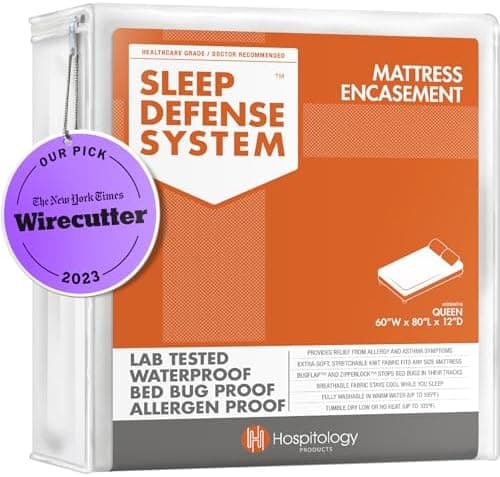
Top pick · #1HOSPITOLOGY PRODUCTS Mattress Encasement - Zippered Bed Bug Dust Mite Proof Hypoallergenic - Sleep Defense…
Best overall

HOSPITOLOGY PRODUCTS Mattress Encasement - Zippered Bed Bug Dust Mite Proof Hypoallergenic - Sleep Defense…

HOSPITOLOGY PRODUCTS

★★★★★4.7(15,068)86Great

Across the reviewers we read, the HOSPITOLOGY Sleep Defense System is the clearest consensus pick in this category. nytimes.com describes it as the smoothest, softest, and most securely constructed encasement they evaluated, and notes it has been independently tested against bedbug entry.

The rest of the rankings

#2,5

Frequently asked

5 questions
Do mattress encasements actually stop bed bugs?
Encasements don't kill or repel bed bugs, but a fully zippered six-sided encasement with a sealed zipper traps any bugs already inside the mattress and prevents new ones from harboring there. Specialist communities like r/Bedbugs are explicit that an encasement is a tool inside a broader treatment plan, not a standalone fix. Look for products that explicitly state lab testing against bed bug entry/escape.
What's the difference between an allergy encasement and a regular mattress protector?
A protector usually covers only the top and sides like a fitted sheet and stops spills. An allergy or bed-bug encasement is six-sided with a zipper and uses a tightly woven fabric (typically a pore size around 10 microns or smaller) to physically block dust mite allergens and bed bugs. If dust-mite or asthma symptoms are the reason you're shopping, you need an encasement, not a protector.
Are zippered encasements hot to sleep on?
This is the most consistent complaint across reviewer communities. Waterproof TPU/polyurethane-backed encasements trap heat and can feel clammy; r/Mattress threads repeatedly describe sleeping on "the blob." Cotton-faced or jersey-knit encasements breathe noticeably better but may sacrifice some waterproofing. Pairing any encasement with a breathable mattress pad on top is a common workaround.
How often should I wash an allergy encasement?
For dust-mite allergy management, most allergists and product manuals recommend washing the encasement every one to two months, or whenever symptoms flare. Hot-water wash cycles are most effective at denaturing mite allergens. Check the care tag — some waterproof barriers degrade above 140°F or with bleach.
Do I need to encase the box spring and pillows too?
For dust-mite allergy sufferers, yes — mites colonize pillows and box springs as readily as mattresses. For bed-bug prevention, encasing the box spring is arguably more important than the mattress because bugs prefer the rougher harborage of the foundation. Buy pillow encasements at the same time as the mattress encasement.