
VerdictAI

Reviewer consensus · 2026

Best Pillow Protectors of 2026What 44 reviewers actually think, trust-weighted

Pillow protectors are a low-glamour buy, but the reviewers we read across mainstream tech press, mattress-focused publishers, and bedding-specific subreddits make it clear that fit, noise, and how the fabric handles moisture matter more than marketing claims. Most picks here are evaluated against the recurring complaints that come up in r/Bedding and r/BuyItForLife threads: crinkly TPU liners, ballooning when zipped, and zippers that fail before the fabric does. The synthesis below weights independent expert assessments and specialist-community consensus more heavily than retailer star averages, which are gameable.

Sources behind this verdict

44 reviewers, weighted by source trust

44reviewers read

Weighted by source trust

We don’t review products. We read what other reviewers wrote, score each source for trustworthiness, and synthesize the consensus.

How sources are scored →

Trust hierarchy

Trusted1
Verified1
Supporting12
Flagged0

Source mix

44signals
  • 4Press
  • 24Community
  • 16Video

Trusted · 1 source

Independent · documented methodology

Verified · 1 source

Documented methodology · commerce-owned

At a glance

Highest-rated by the consensus

#1 of 5
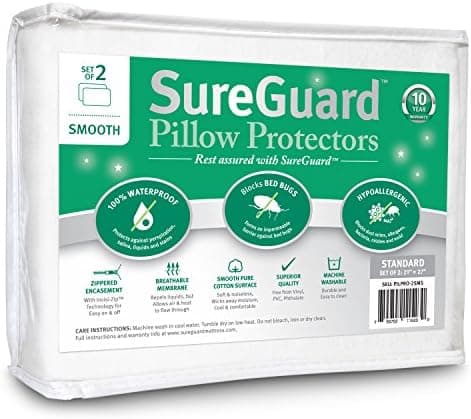
Top pick · #1Set of 2 King Size SureGuard Pillow Protectors - 100% Waterproof, Bed Bug Proof, Hypoallergenic - Premium…
Best overall

Set of 2 King Size SureGuard Pillow Protectors - 100% Waterproof, Bed Bug Proof, Hypoallergenic - Premium…

SureGuard

★★★★★4.6(7,039)86Great

Across the reviewers we read, the SureGuard cotton-terry set is the pick that comes up most consistently when shoppers ask specifically for a waterproof, bed-bug-proof protector that doesn't feel like plastic. A r/Bedding thread asking for exactly that combination surfaces this product by name, and r/CleaningTips commenters describe the broader SureGuard line as 'pricey but worth it' for full-encasement protection.

The rest of the rankings

#2,5

Frequently asked

5 questions
Do I really need a pillow protector if I already use a pillowcase?
Across the reviewers we read, a zippered protector adds two things a pillowcase doesn't: a barrier against sweat, oils and saliva that would otherwise soak into the pillow itself, and an enclosure against dust mites and (with the right construction) bed bugs. r/Allergies threads in particular treat encasements as non-optional for people with documented dust-mite sensitivity.
Waterproof or breathable — can I get both?
Sort of. The trade-off shows up repeatedly in community threads: 100% waterproof protectors use a TPU or polyurethane membrane that some sleepers find hot or crinkly, while breathable cotton or polyester-only protectors stop dust and allergens but won't fully block liquids. Cotton-terry-faced waterproof designs (like SureGuard's) are the most common compromise reviewers point to.
Are zippered encasements really bed-bug proof?
Only if the zipper is fine-toothed and fully seals the pillow. Mainstream expert coverage consistently flags zipper construction, not fabric, as the failure point. Look for 'Invisi-Zip' style fine zippers and sealed end-stops; gapped or loose zippers defeat the purpose regardless of fabric claims.
How often should pillow protectors be washed?
Across verified-purchase reviewers and bedding subreddits, every 4–8 weeks is the rough consensus, more often if you sweat heavily, have pets on the bed, or have allergies. Most protectors in this roundup are machine-washable, but very hot wash cycles can stress TPU liners over time.
Will a pillow protector make my pillow feel different?
Yes, somewhat. Reviewers repeatedly note that waterproof models can feel firmer, warmer, or noisier under the head. Cotton-faced and tightly woven polyester models tend to be the least intrusive, while cheap TPU-only liners are the ones community threads most often describe as crinkly or 'plasticky.'