
VerdictAI

Reviewer consensus · 2026

Best Camp Axes & Hatchets of 2026What 0 reviewers actually think, trust-weighted

Camp axes and hatchets are a category where reputations are built over decades, and the candidate pool here is dominated by two long-running American and Finnish brands. It's worth being upfront about the evidence: for this roundup the signals we could gather are almost entirely verified-purchase retailer ratings rather than independent lab testing or specialist-community threads, so the rankings below summarize where large volumes of buyers converge rather than a hands-on technical teardown. Read the consensus accordingly, and weight your own use case (kindling vs. full log splitting vs. backpacking weight) heavily.

At a glance

Compare

Pick any two for a head-to-head

Scores, pros, cons, and our verdict — side by side.

vs

Highest-rated by the consensus

#1 of 8
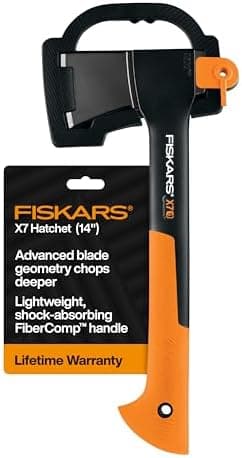
Top pick · #1Fiskars X7 Small 14" Hatchet Axe with Sheath for Chopping Wood Kindling for Campfires, Outdoors & Camping…
Best overall

Fiskars X7 Small 14" Hatchet Axe with Sheath for Chopping Wood Kindling for Campfires, Outdoors & Camping…

★★★★★4.8(12,023)90Excellent

Across the verified-purchase reviewers we could read, the Fiskars X7 is the most broadly endorsed tool in this group, carrying a 4.8 average over more than 12,000 ratings, the deepest review base of any candidate here. Buyers repeatedly highlight the insert-molded forged steel head, the shock-absorbing FiberComp handle, and a low-friction blade coating that they say bites cleanly into wood for kindling and light chopping.

The rest of the rankings

#2,8

Frequently asked

4 questions
What's the difference between a camp hatchet and a splitting axe?
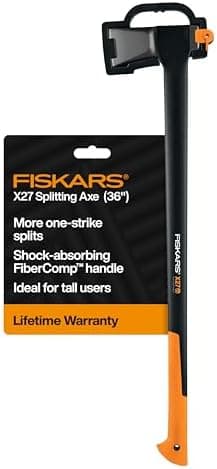
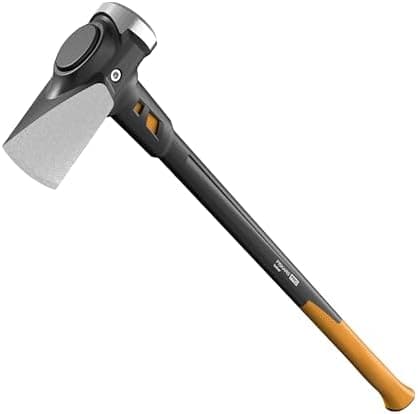
A hatchet is a short (roughly 12-15 inch) one-handed tool meant for limbing, carving, and processing kindling at a campsite. A splitting axe or maul is longer (19-36 inches) with a heavier, wedge-shaped head designed to drive through and split larger rounds of firewood. Several picks here, like the Fiskars X27 and 8 lb maul, are splitting tools rather than packable hatchets, so match the length and head weight to whether you're splitting logs or trimming branches.
Are Estwing one-piece steel axes better than Fiskars composite-handle axes?
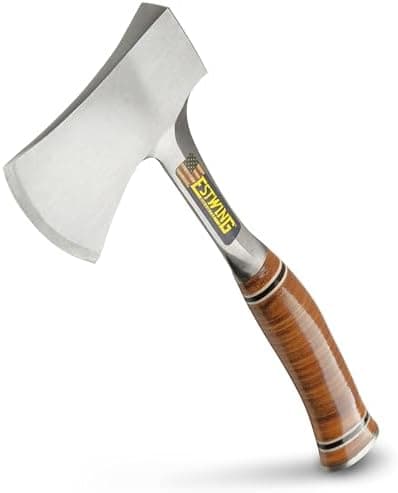
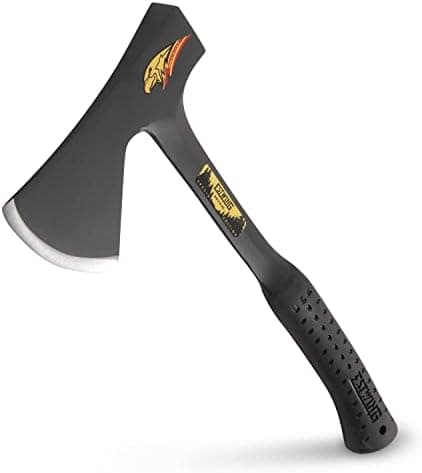
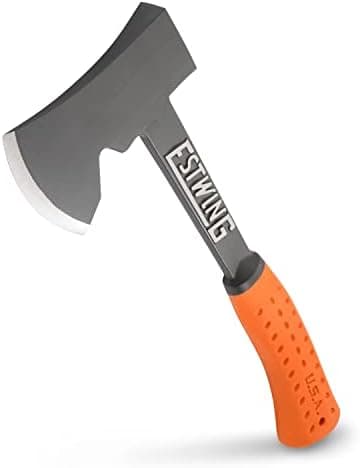
They reflect two design philosophies. Estwing's forged one-piece steel construction is essentially indestructible at the head-to-handle junction (a common failure point), which is why verified-purchase buyers praise its durability, but the trade-off is more shock transmitted to the hand. Fiskars uses an insert-molded forged head on a shock-absorbing FiberComp handle that buyers say is lighter and more comfortable to swing. Both rate extremely well across high-volume retailer reviews; the choice is mostly handle feel and weight preference.
What size axe do I need for car camping versus backpacking?
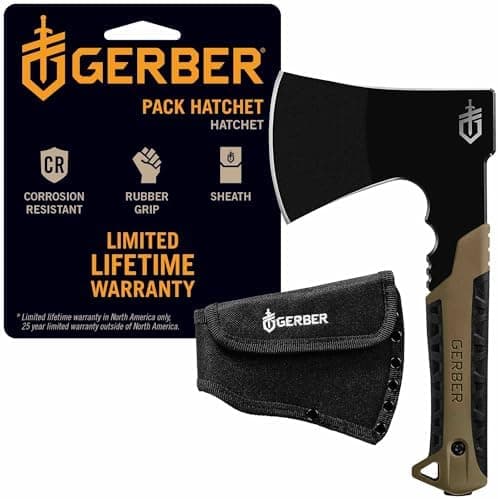
For backpacking where every ounce counts, a compact 3.5-inch-blade hatchet like the Gerber Pack Hatchet is the lighter, pack-friendly choice. For car camping where weight is less critical, a 14-inch hatchet handles kindling well, and a 19-26 inch camp axe gives more leverage for splitting larger pieces around the fire.
Do these axes come sharp out of the box?
Most verified-purchase reviewers report a usable factory edge on both the Fiskars and Estwing models, though many recommend honing or stropping before serious use to get a clean shaving edge. As with any axe, expect to maintain the edge yourself over time.