
VerdictAI

Reviewer consensus · 2026

Best GPS Handhelds of 2026What 41 reviewers actually think, trust-weighted

Handheld GPS units remain a niche but essential category for backcountry hikers, hunters, geocachers, and anyone who needs navigation that works where cell service doesn't. The picks below synthesize what mainstream outdoor publishers, specialist enthusiast communities (notably r/Garmin, r/Ultralight, and r/CampingGear), and verified-purchase reviewers have said about the current crop, with the most weight given to high-trust expert sources and long-running specialist subreddits.

Sources behind this verdict

41 reviewers, weighted by source trust

41reviewers read

Weighted by source trust

We don’t review products. We read what other reviewers wrote, score each source for trustworthiness, and synthesize the consensus.

How sources are scored →

At a glance

Highest-rated by the consensus

#1 of 5
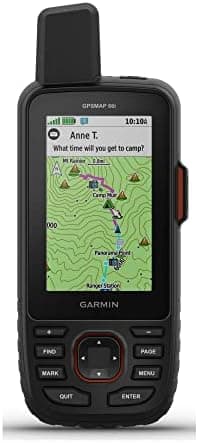
Top pick · #1Garmin GPSMAP 67i Rugged GPS Handheld with inReach® Satellite Technology, Two-Way Messaging, Interactive SOS…
Best overall

Garmin GPSMAP 67i Rugged GPS Handheld with inReach® Satellite Technology, Two-Way Messaging, Interactive SOS…

★★★★★4.4(353)89Great

Across the reviewers we read, the GPSMAP 67i is the consensus pick for a do-everything handheld in 2024–2025. outdoorgearlab.com classifies it as a strong product for both GPS navigation and satellite messaging, and hikingguy.com's long-form review reports roughly 140 hours of real-world battery life with multi-band GNSS active and 6–9 ft accuracy on trail.

The rest of the rankings

#2,5

Frequently asked

5 questions
Do I really need a handheld GPS if I have a phone?
For day hikes near civilization, probably not. But across the reviewers we read, the consensus is that dedicated handhelds outperform phones on battery life (often 100+ hours vs. a single day), GNSS chip quality, and ruggedness. Backpacking and r/Ultralight commenters specifically call out that phone GNSS chips are tuned for power efficiency at the cost of accuracy, while handhelds prioritize signal lock.
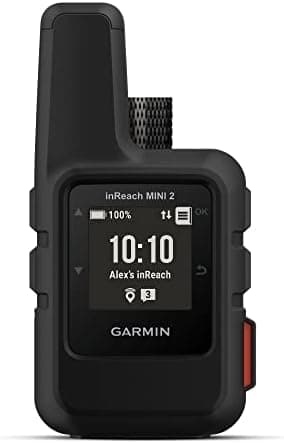
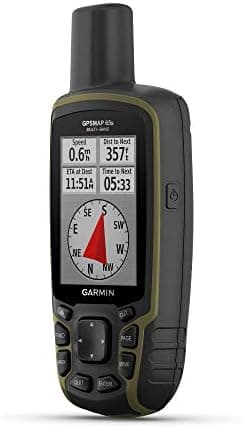
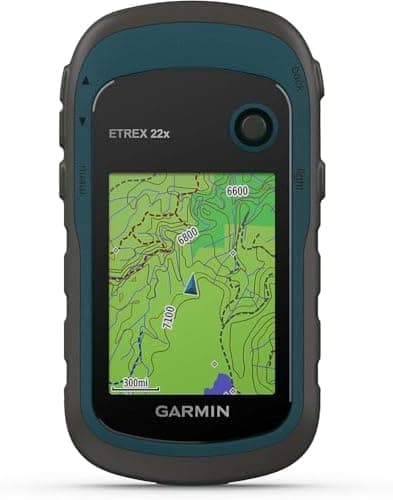
What's the difference between a GPSMAP, an eTrex, and an inReach Mini?
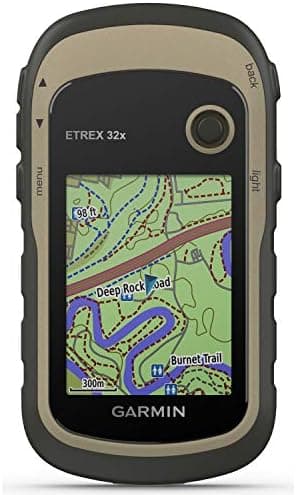
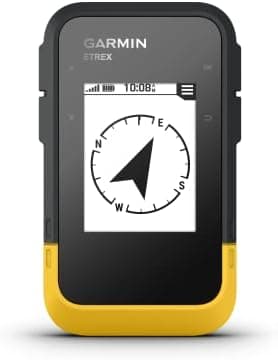
GPSMAP units (like the 67i and 65s) are Garmin's premium handhelds with large screens, multi-band GNSS, and full topo maps. eTrex models are smaller, cheaper, button-driven workhorses aimed at geocachers and casual hikers. The inReach Mini 2 isn't a full mapping GPS at all — it's a compact two-way satellite communicator with SOS, designed to be paired with a phone or worn alongside another GPS.
Is the subscription on an inReach required?
Yes. Reddit threads on r/CampingGear repeatedly flag that the inReach Mini 2 and GPSMAP 67i both require an active Garmin satellite subscription to send messages or trigger SOS. The hardware works as a standalone GPS without it, but the satellite communicator features are paywalled.
Do I need multi-band GNSS?
Multi-band (offered on the GPSMAP 65s, 67i, and H1) helps in canyons, dense tree cover, and urban canyons where signals bounce. Specialist-community consensus is that for open trails and prairie country, single-band is fine; multi-band is worth it if you regularly navigate slot canyons, deep forest, or tight terrain.
Can I use these with gloves and in the cold?
Button-driven models (eTrex 10, eTrex 22x, GPSMAP 65s) get strong endorsements in r/geocaching and r/CampingandHiking for cold-weather use because touchscreens get unreliable in rain and with gloves. The newer GPSMAP H1 and eTrex Touch attempt hybrid button-plus-touch interfaces, with mixed early reception.