
VerdictAI

Reviewer consensus · 2026

Best Headlamps of 2026What 50 reviewers actually think, trust-weighted

Headlamps span a wide range of use cases, from ultralight emergency backups to 1,000-plus-lumen trail-running lights, and the consensus across specialist outdoor publications, mainstream tech press, and verified-purchase reviewers consistently points to a small handful of dependable picks. The synthesis below weighs independent testing outlets like Outdoor Gear Lab and CleverHiker more heavily than retailer listings or single YouTube reviews, and flags where specialist communities push back against marketing claims. Petzl dominates the conversation in nearly every category we surveyed, with budget-bin Amazon multipacks the main alternative that holds up to scrutiny.

Sources behind this verdict

50 reviewers, weighted by source trust

50reviewers read

Weighted by source trust

We don’t review products. We read what other reviewers wrote, score each source for trustworthiness, and synthesize the consensus.

How sources are scored →

At a glance

Highest-rated by the consensus

#1 of 5
Top pick · #1PETZL Swift RL Headlamp - Lightweight & Rechargeable 1100 Lumen Headlamp - Black
Best overall

PETZL Swift RL Headlamp - Lightweight & Rechargeable 1100 Lumen Headlamp - Black

★★★★★4.6(1,154)89Great

Across the reviewers we read, the Petzl Swift RL is treated as the most well-rounded performance headlamp in Petzl's lineup. gearjunkie.com calls it a bright, easy-to-use rechargeable that works for climbing, running, backpacking, and biking, while trailrunmag.com and peakmountaineering.com emphasize the 1,100-lumen output paired with a roughly 100-gram weight and reactive lighting that auto-adjusts beam intensity to ambient conditions.

The rest of the rankings

#2,5

Frequently asked

5 questions
How many lumens do I actually need in a headlamp?
For around-camp tasks, reading, and short walks, 100–300 lumens is plenty and is what most reviewers recommend for general use. Trail runners and night hikers typically want 350–500 lumens of sustained output, and ultrarunners or technical terrain users push toward 800–1,100 lumens. Note that specialist communities repeatedly point out that headlining 'max lumen' figures often can't be sustained because the lamp thermal-throttles down within minutes.
Should I get a rechargeable headlamp or one that takes AAA batteries?
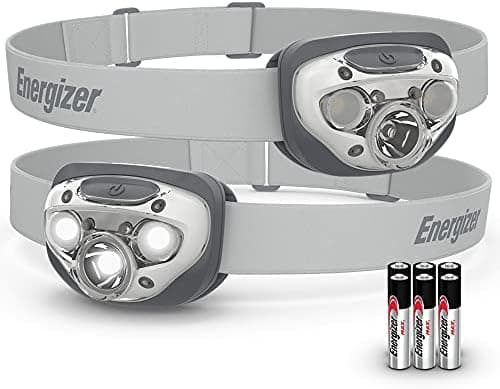
Rechargeable lithium models are lighter, brighter, and cheaper to run long-term, which is why most current Petzl and Black Diamond flagship picks use them. AAA models still win for multi-day backcountry trips with no power access and for cold-weather use, since you can swap in fresh batteries. Several Petzl models like the Actik and Tikka offer hybrid compatibility, which reviewers consistently call out as a real advantage.
What's the point of a red-light mode on a headlamp?
Red light preserves dark-adapted night vision and is far less disruptive to others around you in a tent, on a trail, or at a campsite. It's also useful for map reading and avoiding bug attraction. Across reviewers, it's the single most frequently cited reason to step up from a bare-bones model to one with a multi-color LED.
Are cheap Amazon headlamps actually good enough?
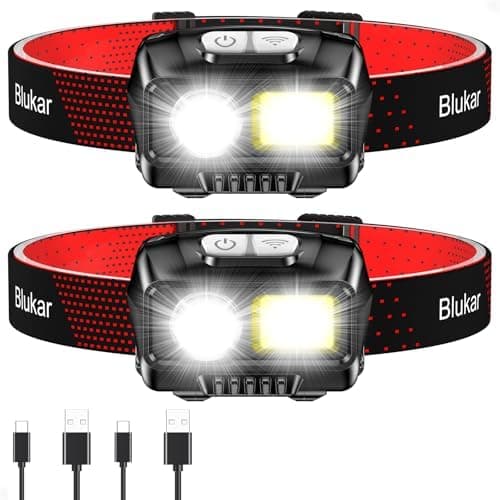
For light around-the-house, garage, or occasional camping use, verified-purchase reviewers report that sub-$20 multipacks do the job, and even mainstream outdoor press has acknowledged that some perform surprisingly well for the price. The trade-offs flagged by specialist communities are unstable output as batteries drain, weaker waterproofing, less comfortable headbands on long wears, and inconsistent quality control between units in the same pack.
Is reactive (auto-dimming) lighting worth paying extra for?
Reviewers focused on trail running and ultra events strongly endorse reactive lighting because it extends battery life and reduces the need to fiddle with buttons mid-run. For casual camping and around-camp use, the consensus is that it's a nice-to-have rather than a must-have, and a simpler three-mode lamp at half the price often suffices.