
VerdictAI

Reviewer consensus · 2026

Best Camping Tarps of 2026What 50 reviewers actually think, trust-weighted

Camping tarps cover wildly different jobs, from sub-pound ultralight shelters to bombproof bushcraft rain flies to cheap utility covers for car camping. The picks below are a trust-weighted synthesis of what specialist subreddits, mainstream tech and outdoor press, and verified-purchase reviewers have written, not our own field testing. Where reviewers disagreed, we've surfaced the disagreement rather than smoothed it over.

Sources behind this verdict

50 reviewers, weighted by source trust

50reviewers read

Weighted by source trust

We don’t review products. We read what other reviewers wrote, score each source for trustworthiness, and synthesize the consensus.

How sources are scored →

At a glance

Highest-rated by the consensus

#1 of 5
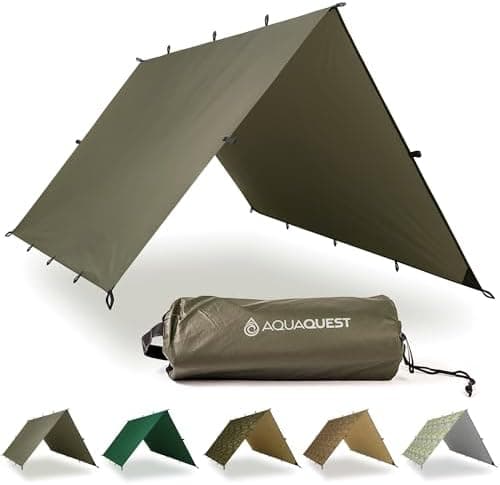
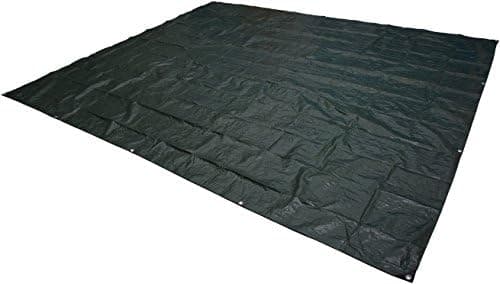
Top pick · #1AquaQuest Defender Tarp – Heavy-Duty Waterproof (20,000 mm) Seam-Taped Rain Fly for Camping, Bushcraft &…
Best heavy-duty / car camping

AquaQuest Defender Tarp – Heavy-Duty Waterproof (20,000 mm) Seam-Taped Rain Fly for Camping, Bushcraft &…

AquaQuest

★★★★★4.8(2,103)86Great

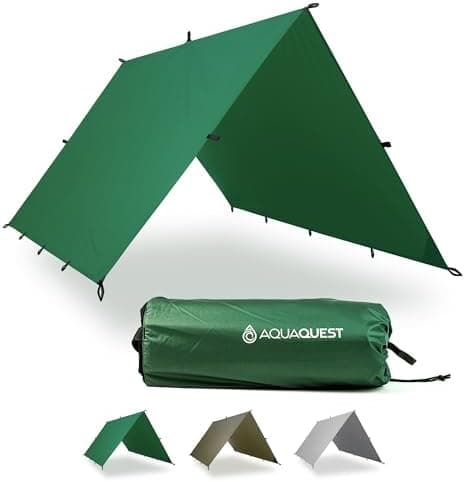
Across the reviewers we read, the AquaQuest Defender is the consensus pick when the priority is weatherproofing over weight. Multiple r/Bushcraft threads describe it as durable, with one long-term owner reporting twelve years of leak-free use after periodic UV re-treatment, and another choosing it over the AquaQuest Safari after direct comparison.

The rest of the rankings

#2,5

Frequently asked

5 questions
What size tarp do I need for hammock camping?
Most hammock-camping community discussions point to 11 to 12 feet of ridgeline length as the sweet spot, with 8x10 or 10x10 tarps considered marginal for an 11-foot hammock in real rain. A 12x10 tarp with doors is the most commonly recommended configuration when weather protection matters more than weight.
Silnylon, silpoly, or DCF (Dyneema) for an ultralight tarp?
Across specialist communities, silnylon is cheapest and durable but stretches when wet and sags overnight. Silpoly doesn't stretch and resists UV better. DCF (Dyneema Composite Fabric) is the lightest and doesn't stretch or absorb water, but costs several times more and is less abrasion-resistant. Pick based on whether weight, budget, or storm performance matters most.
What does the 'mm' waterproof rating on a tarp actually mean?
It's the hydrostatic head, the height of a water column the fabric can hold before leaking. 1,500mm is the technical threshold for 'waterproof,' 3,000mm handles most camping rain, and 20,000mm ratings (seen on heavy bushcraft tarps) are overkill for casual use but reassuring in sustained storms. Seam taping matters as much as the rating itself.
Do I need a separate tarp if my tent already has a rainfly?
A separate tarp is useful as a cooking/lounge canopy in rain, as a tent footprint to protect the floor, or as a backup shelter. For backpackers, a tarp can replace the tent entirely to save weight, but that requires more skill in pitching and site selection.
How many tie-out points should a camping tarp have?
Six tie-outs is the practical minimum for a basic A-frame pitch. Eight to twelve allows more pitch configurations (lean-to, half-pyramid, storm mode). Heavy bushcraft tarps sometimes carry 20+ tie-outs to allow elaborate setups, but most campers will use only a handful regularly.