
VerdictAI

Reviewer consensus · 2026

Best AV Receivers of 2026What 51 reviewers actually think, trust-weighted

AV receivers are a category where features, room correction, and HDMI 2.1 implementation can vary widely even within a single brand's lineup, so we leaned on a trust-weighted read of specialist communities, mainstream tech press, and verified-purchase retailer reviews to sort the field. The picks below favor models where high-trust home-theater subreddits and named expert outlets converged on the same strengths, and we surface known firmware and HDMI quirks rather than smoothing them over.

Sources behind this verdict

51 reviewers, weighted by source trust

51reviewers read

Weighted by source trust

We don’t review products. We read what other reviewers wrote, score each source for trustworthiness, and synthesize the consensus.

How sources are scored →

At a glance

Highest-rated by the consensus

#1 of 5
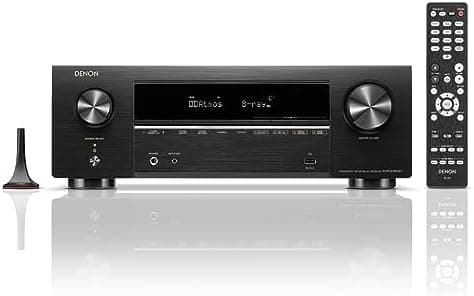
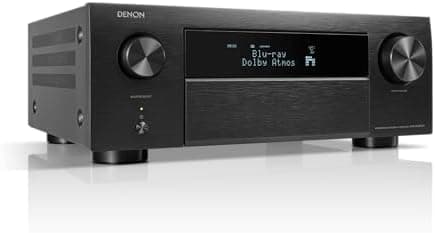
Top pick · #1Denon AVR-X3800H 9.4-Ch 8K UHD AVR Home Theater Stereo Receiver, (105W X 9) Built-in Bluetooth Wi-Fi & HEOS…
Best overall

Denon AVR-X3800H 9.4-Ch 8K UHD AVR Home Theater Stereo Receiver, (105W X 9) Built-in Bluetooth Wi-Fi & HEOS…

★★★★★4.3(1,111)88Great

Across the reviewers we read, the Denon AVR-X3800H is the clearest mid-range consensus pick in this field. whathifi.com describes it as a 'superb home cinema receiver' with a smooth, cinematic sound and a comprehensive feature set, while audiosciencereview.com published detailed bench measurements of the 9.4-channel unit.

The rest of the rankings

#2,5

Frequently asked

5 questions
How many channels do I actually need in an AV receiver?
For a basic 5.1 system, a 5.2-channel receiver is enough. If you want Dolby Atmos with height speakers, look for 7.2 channels (5.1.2 layout) at minimum, and 9.2 or 11.2 if you want a full 7.1.4 or 5.1.4 Atmos setup. Reviewers in r/hometheater repeatedly note that paying up for more channels is mainly worthwhile if you actually plan to install ceiling or height speakers.
Do I need HDMI 2.1 on my AV receiver for gaming?
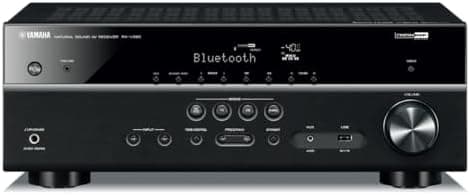
If you own a PS5, Xbox Series X, or a high-end PC and want 4K/120Hz, VRR, or ALLM passthrough to your TV, yes — you need genuine HDMI 2.1 ports. Older receivers like the Yamaha RX-V385 top out at 4K/60Hz. Note that reviewers have flagged HDMI 2.1 handshake quirks on some current-gen Denon and Sony models, so check community threads for your exact pairing before buying.
Is Dirac Live worth paying extra for over Audyssey or YPAO?
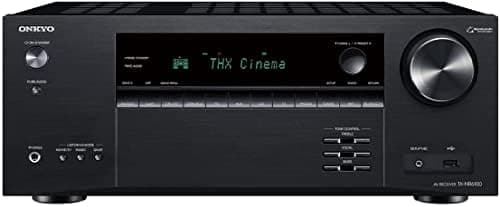
Specialist subreddit consensus is that Dirac Live generally produces tighter bass and more natural midrange than the built-in room correction on most Denon, Yamaha, or Sony receivers, but the gap narrows once you tune Audyssey manually. The Onkyo TX-NR7100 is widely cited as the most affordable AVR that ships with Dirac Live out of the box.
Denon vs. Onkyo vs. Sony — which brand is most reliable right now?
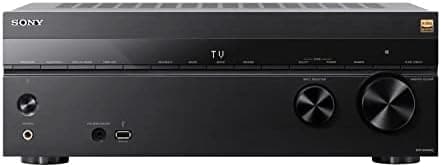
Across the home-theater subreddits we read, Denon's X-series gets the strongest reliability reputation, while Onkyo's current generation is praised for features (Dirac, HDMI 2.1) but has more mixed user reports on dialog clarity and firmware. Sony's STR-AN1000 draws praise for its Spatial Sound but multiple owners have reported audible hiss or slow startup quirks.
Can I add an external amp to a mid-range AVR later?
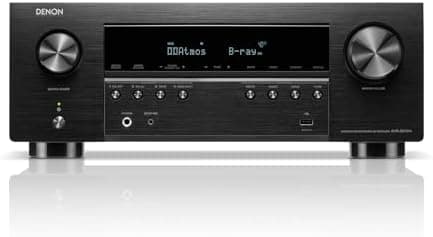
Yes — most receivers in this list have pre-outs (the Denon X3800H, Onkyo TX-NR7100, and Sony STR-AN1000 all do). Entry-level units like the Denon AVR-S570BT and Yamaha RX-V385 generally do not, so if you think you'll eventually add a separate power amp, prioritize a model with full pre-outs from the start.