
VerdictAI

Reviewer consensus · 2026

Best Prime Camera Lenses of 2026What 50 reviewers actually think, trust-weighted

Prime lenses still dominate the conversation when photographers want maximum sharpness, low-light reach, and that distinctive shallow depth of field a zoom can't match. This roundup synthesizes what mainstream tech press, specialist photography communities, and verified-purchase reviewers have said about the most-discussed prime lenses currently on the market, weighted toward the highest-trust sources. We're summarizing the consensus across reviewers, not delivering our own bench tests.

Sources behind this verdict

50 reviewers, weighted by source trust

50reviewers read

Weighted by source trust

We don’t review products. We read what other reviewers wrote, score each source for trustworthiness, and synthesize the consensus.

How sources are scored →

Trust hierarchy

Trusted1
Verified0
Supporting17
Flagged0

Source mix

50signals
  • 30Community
  • 20Video

Trusted · 1 source

Independent · documented methodology

At a glance

Highest-rated by the consensus

#1 of 5
Top pick · #1Nikon NIKKOR Z 50mm f/1.8 S | Premium large aperture prime lens (nifty fifty) for series mirrorless cameras |…
Best 50mm

Nikon NIKKOR Z 50mm f/1.8 S | Premium large aperture prime lens (nifty fifty) for series mirrorless cameras |…

★★★★★4.8(836)92Excellent

Across the reviewers we read, the Nikon Z 50mm f/1.8 S is treated as a benchmark for what a modern 'nifty fifty' can be. dpreview.com describes outstanding resolution even wide open and 'practically immaculate' performance at normal working apertures, and photographylife.com's lab-style review echoes the strong measured performance.

The rest of the rankings

#2,5

Frequently asked

5 questions
Is an f/1.8 prime sharp enough, or do I need f/1.4?
Across the reviewers we read, modern f/1.8 primes from Canon, Sony, and Nikon are sharp wide open and often optically excellent by f/2.8. f/1.4 lenses buy you about a stop of light and slightly smoother subject separation, but at 2-4x the price and weight. Most reviewers recommend f/1.8 unless you specifically shoot low-light events or want shallower depth of field.
What's the best 'first prime' for a new mirrorless owner?
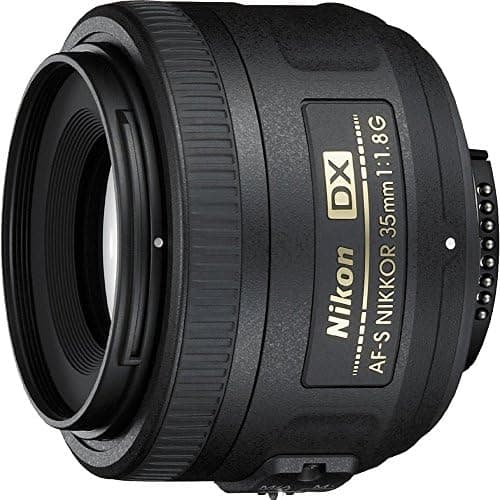
Mainstream reviewers and specialist subreddit threads consistently point to the nifty-fifty (50mm f/1.8) for whichever mount you shoot. It's cheap, light, sharp enough for portraits and everyday shooting, and forces you to compose with your feet. A 35mm f/1.8 is the other common recommendation if you prefer a wider, more environmental field of view.
Are budget third-party primes from Viltrox, Meike, and Brightin Star worth it?
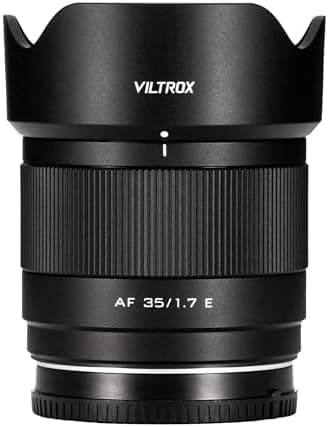
Reviewer consensus is split by brand. Viltrox in particular gets strong reviews from specialist communities for autofocus performance and sharpness at very low prices. Manual-focus ultra-fast lenses from Brightin Star are praised for the price-to-aperture ratio but flagged by reviewers for soft wide-open performance and weak contrast at f/0.95.
Do I need image stabilization in a prime lens?
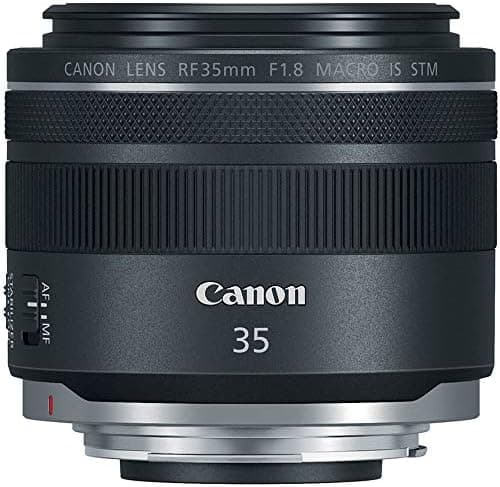
Most reviewers say it's nice to have but not essential if your camera body has IBIS. Reviewers covering the Canon RF 35mm f/1.8 Macro frequently call out its IS as a meaningful advantage for handheld video and low-light stills, while reviewers of bodies-with-IBIS systems consider it less critical.
Is the Canon RF 35mm f/1.4 L VCM worth the price over the RF 35mm f/1.8?
Reviewers covering the f/1.4 VCM describe it as a 'hybrid' L-series lens with excellent sharpness, fast autofocus, and minimal focus breathing — clearly a step up for professional work and video. The f/1.8 Macro is the better value pick for hobbyists, while reviewers flag distortion and rattle concerns on the f/1.4 VCM that buyers should be aware of.