
VerdictAI

Reviewer consensus · 2026

Best Mirrorless Cameras of 2026What 50 reviewers actually think, trust-weighted

Mirrorless cameras now span everything from sub-$700 beginner kits to full-frame hybrids built for working pros, and the consensus across mainstream tech press, specialist photography communities, and verified-purchase reviewers has shifted meaningfully in the last two years. Below is a trust-weighted synthesis of what reviewers across the internet are saying about the current standout bodies, with the disagreements surfaced rather than smoothed over. Prices and bundle contents vary widely on Amazon listings, so judge each pick on the underlying camera body rather than the accessories tacked on.

Sources behind this verdict

50 reviewers, weighted by source trust

50reviewers read

Weighted by source trust

We don’t review products. We read what other reviewers wrote, score each source for trustworthiness, and synthesize the consensus.

How sources are scored →

At a glance

Highest-rated by the consensus

#1 of 5
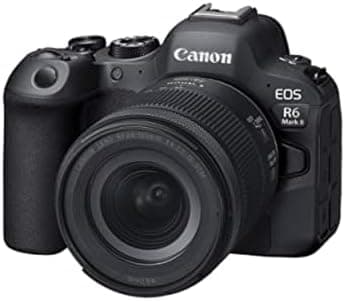
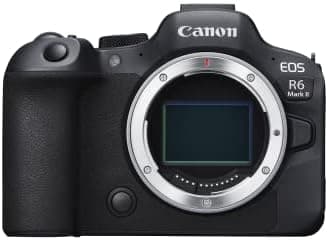
Top pick · #1Canon EOS R6 Mark II Mirrorless Camera (Body Only), Full-Frame Camera, 24.2 Megapixel CMOS Sensor, Photo and…
Best overall

Canon EOS R6 Mark II Mirrorless Camera (Body Only), Full-Frame Camera, 24.2 Megapixel CMOS Sensor, Photo and…

★★★★★4.7(613)89Great

Across the reviewers we read, the Canon EOS R6 Mark II is the camera that draws the most consistent praise as an all-around hybrid. The dpreview in-depth review frames it as a 24MP full-frame body squarely aimed at enthusiasts who shoot both stills and video, and rangefinderonline's reviewer calls it the best hybrid on the market at its price tier.

The rest of the rankings

#2,5

Frequently asked

5 questions
Should I buy a full-frame or APS-C mirrorless camera?
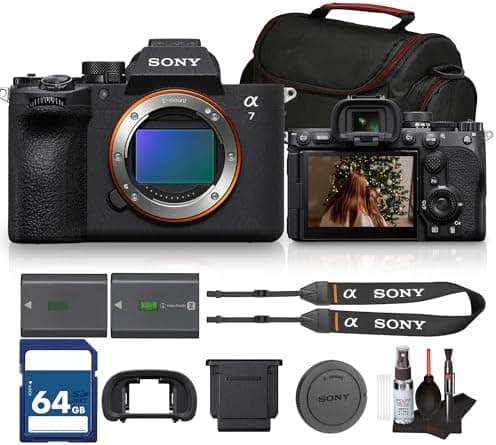
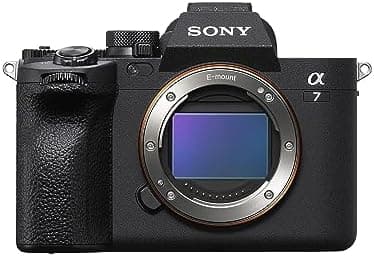
Full-frame sensors (Sony a7 IV, Canon R6 II, Sony a7 V) deliver better low-light performance, shallower depth of field, and more dynamic range, but bodies and lenses cost substantially more. APS-C bodies like the Sony a6400 and Canon R50 are lighter, cheaper, and more than enough resolution for most hobbyists, social content, and travel. Reviewers across the specialist subreddits we read consistently tell beginners that lens budget matters more than sensor size.
Is the Sony a7 III still worth buying in 2025?
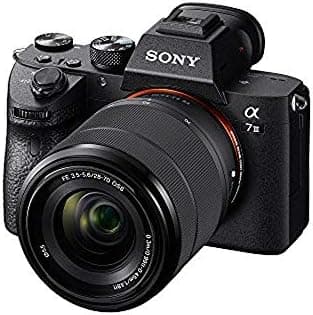
Mainstream reviewers and r/SonyAlpha threads broadly agree the a7 III still produces excellent stills and holds up for casual video, but it's clearly showing its age against the a7 IV and a7 V on autofocus, EVF resolution, and the single SD card slot. It makes sense as a used or discounted buy, less so at full price when the a7 IV exists.
What's the best mirrorless camera for hybrid photo and video work?
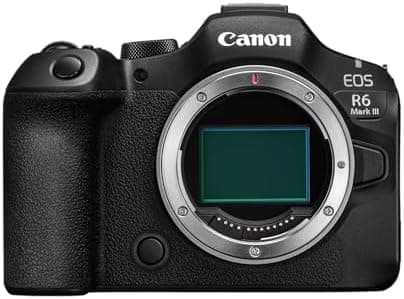
The consensus from expert reviews and community discussion points to the Canon EOS R6 Mark II and Sony a7 IV as the two reference hybrids under $2,500, with the newer R6 Mark III and a7 V pushing the ceiling higher for those who need stacked-sensor speed, 7K video, or improved rolling shutter.
Which mirrorless camera is best for a beginner?
For under roughly $800, the Canon EOS R50 gets the strongest reviewer consensus among current mirrorless options thanks to a modern 24MP APS-C sensor, capable autofocus, and the growing RF mount. The Sony a6400 is also frequently recommended where Sony's E-mount lens ecosystem is preferred. Reviewers caution that the bundled kit zooms on either system are weak and most users will want to upgrade lenses early.
How important are dual card slots on a mirrorless camera?
For weddings, paid events, and any irreplaceable shoot, specialist communities are emphatic that dual slots are close to mandatory — it's the most common reason r/SonyAlpha threads steer pros away from the older a7 III. For hobbyists, travel, and content creation, a single slot is fine and shouldn't drive the decision.