
VerdictAI

Reviewer consensus · 2026

Best Floor-Standing Speakers of 2026What 50 reviewers actually think, trust-weighted

Floor-standing tower speakers remain the backbone of serious two-channel and home-theater setups, and this roundup synthesizes what verified-purchase reviewers, specialist audio communities, and mainstream reviewers have published about the leading towers available now. Rather than delivering our own bench tests, we weight each source by trust tier, lean on specialist communities like r/audiophile and r/hometheater plus retailer verified-purchase reviews, and surface the disagreements honestly. Note that several listings in this category are mislabeled accessories (speaker stands, lamps, soundbars, portable party towers) and have been excluded in favor of genuine passive floor-standing speakers.

Sources behind this verdict

50 reviewers, weighted by source trust

50reviewers read

Weighted by source trust

We don’t review products. We read what other reviewers wrote, score each source for trustworthiness, and synthesize the consensus.

How sources are scored →

At a glance

Compare

Pick any two for a head-to-head

Scores, pros, cons, and our verdict — side by side.

vs

Highest-rated by the consensus

#1 of 5
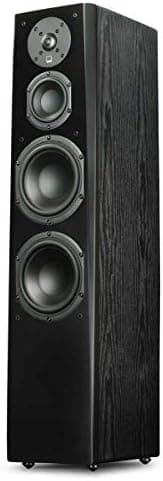
Top pick · #1SVS Prime Tower Speaker - (Each) Black Ash
Best overall

SVS Prime Tower Speaker - (Each) Black Ash

★★★★★4.5(99)88Great

Across the reviewers we read, the SVS Prime Tower draws the most consistent praise of any tower in this pool for sheer sound quality relative to price. audioholics.com highlighted a wide sweet spot, brisk dynamics and extended bass at budget pricing; themasterswitch.com described great detail, balance and soundstage with warm, engaging mids; and avnirvana.com echoed easy setup, well-balanced tone and a clean, lively, accurate presentation.

The rest of the rankings

#2,5

Frequently asked

5 questions
Do floor-standing speakers need a separate amplifier or receiver?
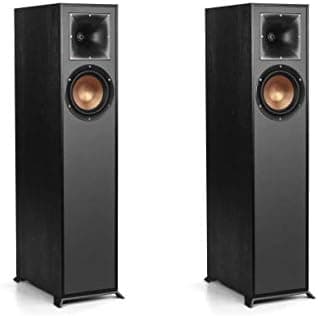
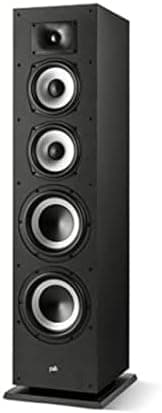
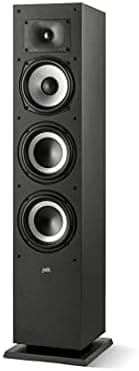
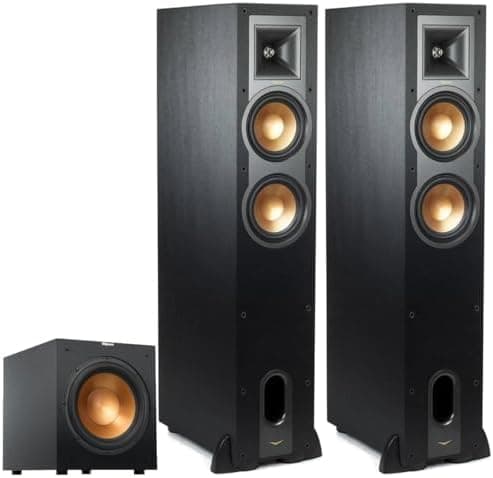
Yes. Every traditional tower in this roundup (SVS Prime Tower, Klipsch R-26FA, Polk Monitor XT60, Sony SS-CS3M2) is a passive speaker and requires an AV receiver or integrated amplifier to drive it. Klipsch's high-sensitivity horn design is frequently cited by reviewers as easy to drive even with modest receivers, while community threads note the Polk XT60 has somewhat lower sensitivity and benefits from a bit more power.
Are floor-standing speakers better than bookshelf speakers for home theater?
Across the reviewers and forum threads we read, towers are generally favored for larger rooms because they move more air and produce fuller low-end without leaning as hard on a subwoofer. That said, specialist-community consensus is consistent that adding a subwoofer still meaningfully improves any of these towers, particularly the Polk XT60 and Sony SS-CS3M2.
Do I still need a subwoofer with tower speakers?
Reviewers say it depends on the speaker and room. SVS Prime Tower owners report satisfying extended bass on its own, while r/hometheater threads on the Polk XT60 specifically describe a 'huge improvement' after adding a sub. For dedicated movie watching, most reviewers recommend pairing towers with a subwoofer regardless.
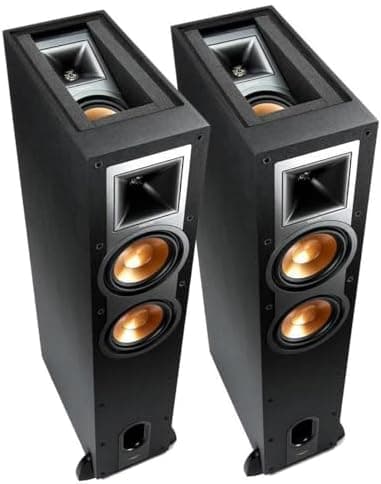
What does the Dolby Atmos module on the Klipsch R-26FA actually do?
It is an upward-firing elevation driver built into the top of each tower that bounces height-channel sound off your ceiling. Reviewers note it only works if your AV receiver supports Atmos and you enable the elevation channels; some forum users consider ceiling-bounce Atmos a gimmick versus dedicated in-ceiling speakers, while others report a clear sense of overhead height.
Which tower is the best value for a first home-theater setup?
Verified-purchase and community sentiment points to the Polk Monitor XT60 as the budget standout and the Klipsch R-26FA as the step-up home-theater pick. Shoppers wanting a near-complete package often look at the Klipsch R-26FA plus R-12SW subwoofer bundle, though it carries far fewer reviews than the standalone tower.