
VerdictAI

Buying guide · 2026

Best Gaming Monitors

Gaming monitors in 2025 stretch from sub-$200 1440p IPS panels to $1,000 4K QD-OLED flagships, and the consensus across reviewers shifts dramatically depending on what you're optimizing for. This roundup synthesizes coverage from RTINGS, Wirecutter-adjacent specialist publishers, Tom's Hardware, r/Monitors, r/OLED_Gaming, and verified-purchase retailer reviews to surface the picks that reviewers actually agree on — and where they don't.

Sources behind this synthesis

41 reviewers read. Weighted by trust.

We don’t review products. We read what other reviewers wrote, score each source for trustworthiness, and synthesize the consensus.

How sources are scored →

Trust mix

No flagged sources

Trusted2trustedMixed23mixed

Trusted contributors

Best Buy customersr/buildapc
Show all 14 other sources →
r/hardwarer/gadgetsr/OLED_Gamingr/MonitorsYouTube · REVIEW! (Should ...YouTube · YouTubeYouTube · Still Worth It in 2025?!r/buildapcsalesYouTube · B Review: 4K 180Hz OR 1080p ...YouTube · Mode 4K ...YouTube · Important things to knowYouTube · 240Hz, 0.3ms MPRT, IPS ...r/ultrawidemasterraceYouTube · Review

By source type

Expert
0
Retailer
1
Community
24
Video
16

At a glance

Our top pick

#1 of 5
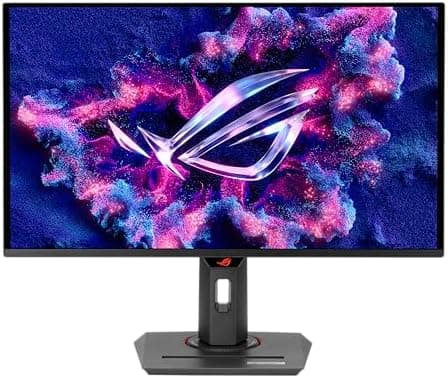
Top pick · #1ASUS ROG Swift 32” 4K OLED Gaming Monitor (PG32UCDM) - UHD (3840 x 2160), QD-OLED, 240Hz, 0.03ms, G-SYNC…
Best overall

ASUS ROG Swift 32” 4K OLED Gaming Monitor (PG32UCDM) - UHD (3840 x 2160), QD-OLED, 240Hz, 0.03ms, G-SYNC…

★★★★★4.6(510)93Excellent

Across the reviewers we read, the ASUS ROG Swift PG32UCDM is treated as the reference 4K gaming OLED of its generation. r/hardware aggregated multiple expert reviews calling it 'the best gaming monitor we've tested,' and r/OLED_Gaming threads — including hands-on user reviews running months long — repeatedly praise the 138 PPI sharpness, near-instant response, and the QD-OLED panel's color volume.

The rest of the rankings

#2–5

Frequently asked

5 questions
Is OLED worth it for a gaming monitor?
Across RTINGS, Tom's Hardware, and the r/OLED_Gaming community, the consensus is yes if you can afford it — OLED's near-instantaneous response times and perfect blacks consistently outscore IPS in motion clarity tests. The trade-offs reviewers repeatedly cite are burn-in risk with static UI elements, lower full-screen brightness than mini-LED, and a price premium. If you do heavy productivity work with static taskbars, reviewers suggest mitigating with screen savers and pixel-shift features.
4K, 1440p, or ultrawide for gaming?
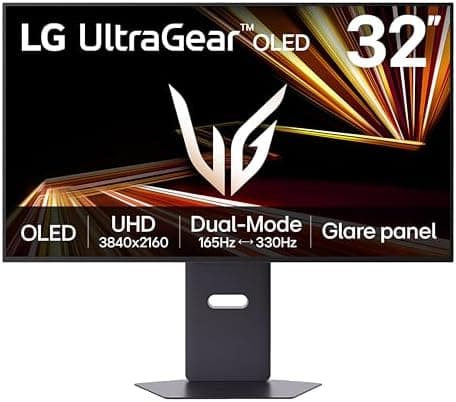
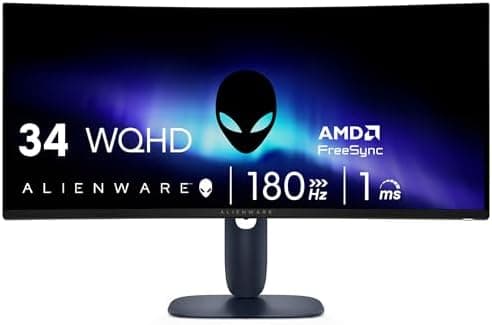
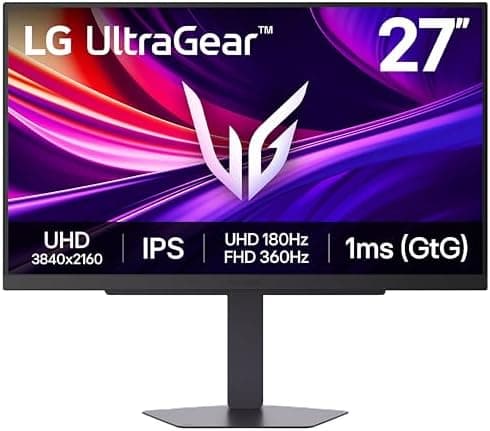
Reviewer consensus: 1440p remains the sweet spot for most gamers on midrange GPUs, with 240Hz IPS and OLED panels widely available under $500. 4K at 144Hz+ is increasingly viable thanks to dual-mode panels (4K/180Hz plus 1080p/360Hz) but demands a high-end GPU. Ultrawide 3440x1440 is praised for immersion in single-player and sim titles but criticized for inconsistent support in competitive multiplayer.
What refresh rate do I actually need?
Specialist communities like r/Monitors generally peg 144–180Hz as the smoothness floor for fast-paced gaming, with diminishing returns above 240Hz outside of competitive shooters. Casual and console-focused buyers (PS5/Xbox Series X cap at 120Hz) don't need to chase the 360Hz+ tier.
Are budget gaming monitors from AOC, KTC, and Acer reliable?
Verified-purchase reviews and r/buildapcsales threads broadly endorse AOC and Acer Nitro panels as legitimate value buys, with caveats on HDR implementation, IPS glow, and middling factory color accuracy. Newer brands like KTC get more cautious reception — generally well-regarded for the price, but with less third-party lab testing than legacy brands.
Do I need HDR on a gaming monitor?
RTINGS and Tom's Hardware consistently note that DisplayHDR 400 — common on sub-$400 IPS monitors — produces only a marginal HDR effect because of limited peak brightness and lack of local dimming. Meaningful HDR generally requires OLED (TrueBlack 400) or mini-LED with full-array local dimming, which adds significant cost.