
VerdictAI

Reviewer consensus · 2026

Best Handheld Camera Gimbals of 2026What 51 reviewers actually think, trust-weighted

Handheld gimbals span a wide range, from sub-$100 smartphone stabilizers to flagship rigs built to carry full-frame mirrorless cameras with cinema zooms. This roundup synthesizes what mainstream tech press, specialist videography communities, and verified-purchase reviewers have written about the current generation of gimbals, weighting independent expert coverage and high-trust retailer feedback more heavily than promotional content. The picks below reflect the trust-weighted consensus across the reviewers we read, not first-hand testing on our part.

Sources behind this verdict

51 reviewers, weighted by source trust

At a glance

Highest-rated by the consensus

#1 of 5
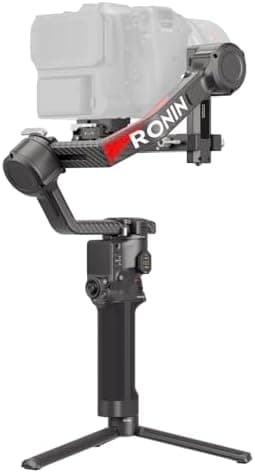
Top pick · #1DJI RS 4, 3-Axis Gimbal Stabilizer for DSLR and Mirrorless Cameras Canon/Sony/Panasonic/Nikon/Fujifilm…
Best overall

DJI RS 4, 3-Axis Gimbal Stabilizer for DSLR and Mirrorless Cameras Canon/Sony/Panasonic/Nikon/Fujifilm…

★★★★★4.5(914)88Great

Across the reviewers we read, the DJI RS 4 is treated as the current default recommendation for creators stepping up to a dedicated mirrorless gimbal. The bhphotovideo.com product listing — a high-trust retailer source — highlights the 6.6 lb payload and Teflon-coated axis arms that reviewers credit for faster balancing, and the second-generation native vertical mode is repeatedly called out in mainstream YouTube coverage as a meaningful upgrade for short-form creators.

The rest of the rankings

#2,5

Frequently asked

5 questions
What size gimbal do I need for a mirrorless camera?
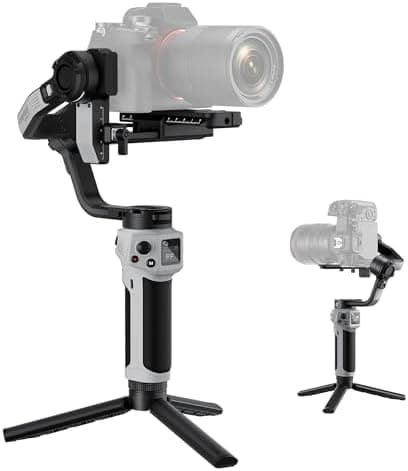
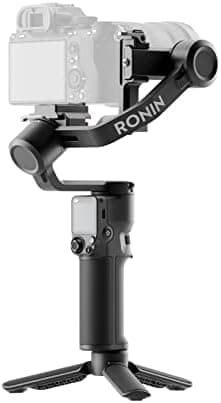
For most APS-C and entry full-frame bodies with a small-to-mid zoom (under about 4.4 lbs total), a compact gimbal like the DJI RS 4 Mini or Zhiyun Weebill 3E is generally sufficient. If you're running a heavier cine-style rig or a long zoom, reviewers consistently steer shoppers toward the full-size DJI RS 4 or RS 5, which offer stronger motors and longer battery life.
Do I need a camera gimbal if my camera has in-body stabilization (IBIS)?
IBIS handles micro-shake, but reviewers across videography communities agree it doesn't replicate the smooth walking, tracking, and low-angle moves a 3-axis gimbal produces. For static or near-static shots IBIS may be enough; for cinematic motion, a gimbal still adds value.
Are smartphone gimbals worth it over just using a phone's built-in stabilization?
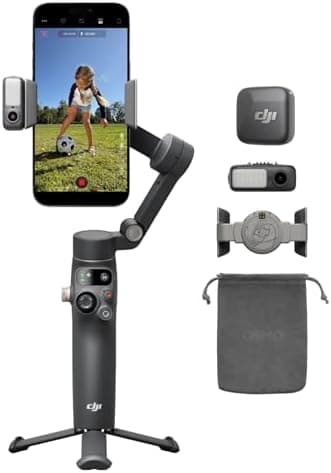
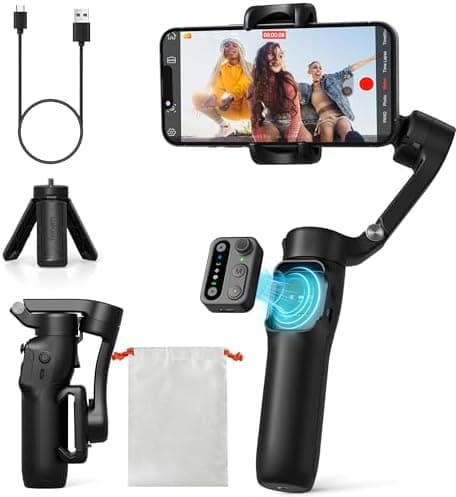
Mainstream reviews suggest yes, particularly for tracking shots, portrait/vertical workflows, and long handheld takes. The DJI Osmo Mobile 7P in particular is cited for adding subject tracking, a built-in extension rod, and audio/lighting accessories that phone software alone can't replicate.
What's the difference between the DJI RS 4 and RS 5?
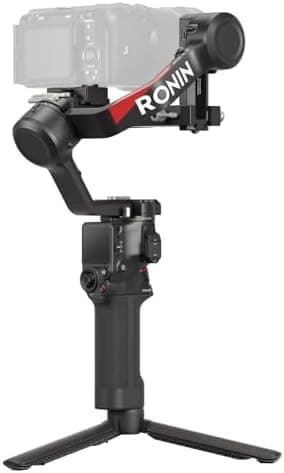
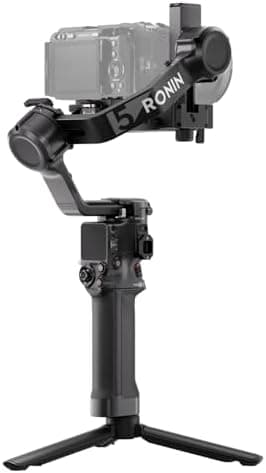
Across the reviewers we read, the RS 5 is positioned as the newer flagship with more torque, an electronic briefcase handle, and updated touchscreen tracking, while the RS 4 remains the established workhorse with broader long-term review coverage and a typically lower price. The RS 4 is the safer mature buy; the RS 5 is the upgrade pick for heavier rigs.
Can a gimbal track a subject automatically?
Most current DJI and Zhiyun gimbals offer some form of subject tracking, either via a phone-mounted tracking module or, in newer models like the RS 5 and Osmo Mobile 7P/8, via built-in or native phone-camera integration. Reviewers note tracking quality varies by lighting and subject, and Android implementations are sometimes less seamless than iOS.