
VerdictAI

Reviewer consensus · 2026

Best Portable Power Stations of 2026What 51 reviewers actually think, trust-weighted

Portable power stations now span everything from pocketable 88Wh banks to 3,600W home-backup systems, and the consensus across mainstream tech press, specialist solar and camping communities, and verified-purchase reviewers has shifted decisively toward LiFePO4 (LFP) chemistry for its longer cycle life. This roundup is a trust-weighted synthesis of what reviewers across the internet have already published, with the most weight given to independent testing outlets and high-trust community threads. Where high-trust sources disagree with marketing claims or marketplace ratings, we surface the conflict rather than smoothing it over.

Sources behind this verdict

51 reviewers, weighted by source trust

51reviewers read

Weighted by source trust

We don’t review products. We read what other reviewers wrote, score each source for trustworthiness, and synthesize the consensus.

How sources are scored →

At a glance

Compare

Pick any two for a head-to-head

Scores, pros, cons, and our verdict — side by side.

vs

Highest-rated by the consensus

#1 of 5
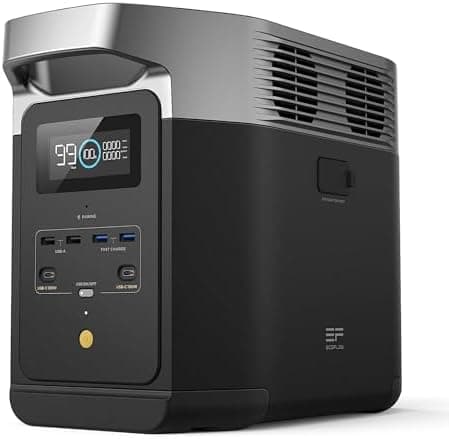
Top pick · #1EF ECOFLOW Portable Power Station DELTA 2, 1024Wh LiFePO4 (LFP) Battery, 1800W AC/100W USB-C Output, Solar…
Best overall

EF ECOFLOW Portable Power Station DELTA 2, 1024Wh LiFePO4 (LFP) Battery, 1800W AC/100W USB-C Output, Solar…

★★★★★4.7(5,060)89Great

Across the reviewers we read, the EcoFlow Delta 2 is the most well-rounded 1,000Wh-class pick, combining LiFePO4 chemistry, an 1,800W inverter, and fast AC charging (EcoFlow and Home Depot's listing cite 0-80% in about 50 minutes). A high-trust r/overlanding thread sums up the durability consensus bluntly: these units "charge fast and are consistent, reliable and hold up to abuse," calling it solid value.

The rest of the rankings

#2,5

Frequently asked

5 questions
Is LiFePO4 (LFP) better than older lithium-ion in a power station?
Across specialist communities, the strong consensus is yes for most buyers. High-trust camping and prepping threads repeatedly steer shoppers toward LiFePO4 because it tolerates far more charge cycles (often quoted at 3,000+ versus a few hundred for older NMC packs) and is more thermally stable. The tradeoff reviewers note is that LFP units tend to be heavier for a given capacity, which matters more for backpack-style portability than for car camping or home backup.
What capacity do I need for home backup during an outage?
Reviewers generally frame it by load. Verified-purchase and community reports indicate a ~1,000Wh unit will run a full-size fridge intermittently for roughly 8-10 hours, while 2,000Wh-plus units with expansion batteries are what reviewers recommend for multi-day coverage or higher-draw appliances. If you want to power pumps, heaters, or dryers, reviewers point to 3,000W-class inverters rather than 1,800W models.
How fast can these recharge from a wall outlet?
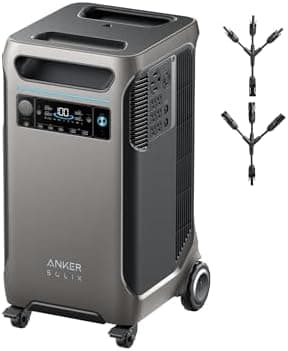
Fast AC charging is now a headline spec. Manufacturer and reviewer figures cited in the signals include roughly 50-80 minutes to full on 1,000Wh-class units and under an hour on some 1,024Wh and 2,048Wh Anker SOLIX models. Several reviewers caution that sustained high-speed charging can stress cells over time, so some units deliberately cap the rate to protect battery lifespan.
Can a portable power station run a CPAP overnight?
Yes, and it is one of the most common real-world uses reviewers mention. In community reports, a roughly 1,000Wh LiFePO4 unit ran a ResMed-class CPAP for around 10 hours with capacity to spare, especially with the humidifier and heated hose turned off. Smaller 288-300Wh units can cover a single night for low-draw setups but leave little margin.
Are the bundled solar panels worth buying?
Reviewers are mixed. Some verified-purchase owners report excellent solar charging in good sun, while multiple long-term community threads flag panel durability problems and weak warranty support after a couple of years. Several reviewers suggest the power station is the safer investment and that third-party panels can be a cheaper, comparably effective pairing.