
VerdictAI

Buying guide · 2026

Best Compression Socks

Compression socks are a crowded, claim-heavy category, with most Amazon listings promising similar benefits at similar price points. To cut through the noise, we synthesized findings from Consumer Reports, Wirecutter (NYT), Good Housekeeping, Verywell Fit, and long-running threads on r/POTS, r/Nurse, r/travel and r/Marathon_Training, weighted by trust tier. The picks below reflect that aggregated consensus — not first-hand testing.

Sources behind this synthesis

23 reviewers read. Weighted by trust.

We don’t review products. We read what other reviewers wrote, score each source for trustworthiness, and synthesize the consensus.

How sources are scored →

Trust mix

No flagged sources

Trusted2trustedMixed13mixed

Trusted contributors

Consumer Reports
Show all 12 other sources →
r/StudentNurser/travelr/Nurser/onebagYouTube · Our Point Of ViewYouTube · 20 mmHg ...YouTube · YouTuber/POTSr/ProductQueryr/hikinggearr/BuyItForLifeYouTube · DANISH ENDURANCE

By source type

Expert
2
Retailer
0
Community
13
Video
8

At a glance

Our top pick

#1 of 5
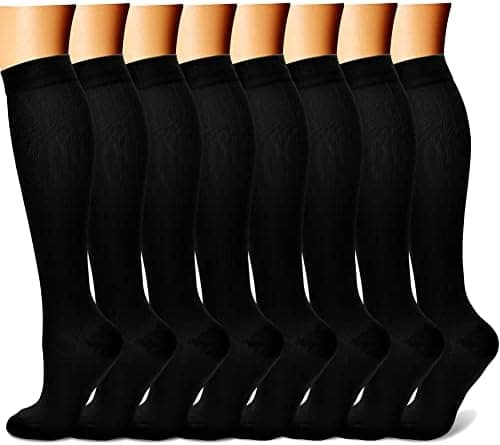
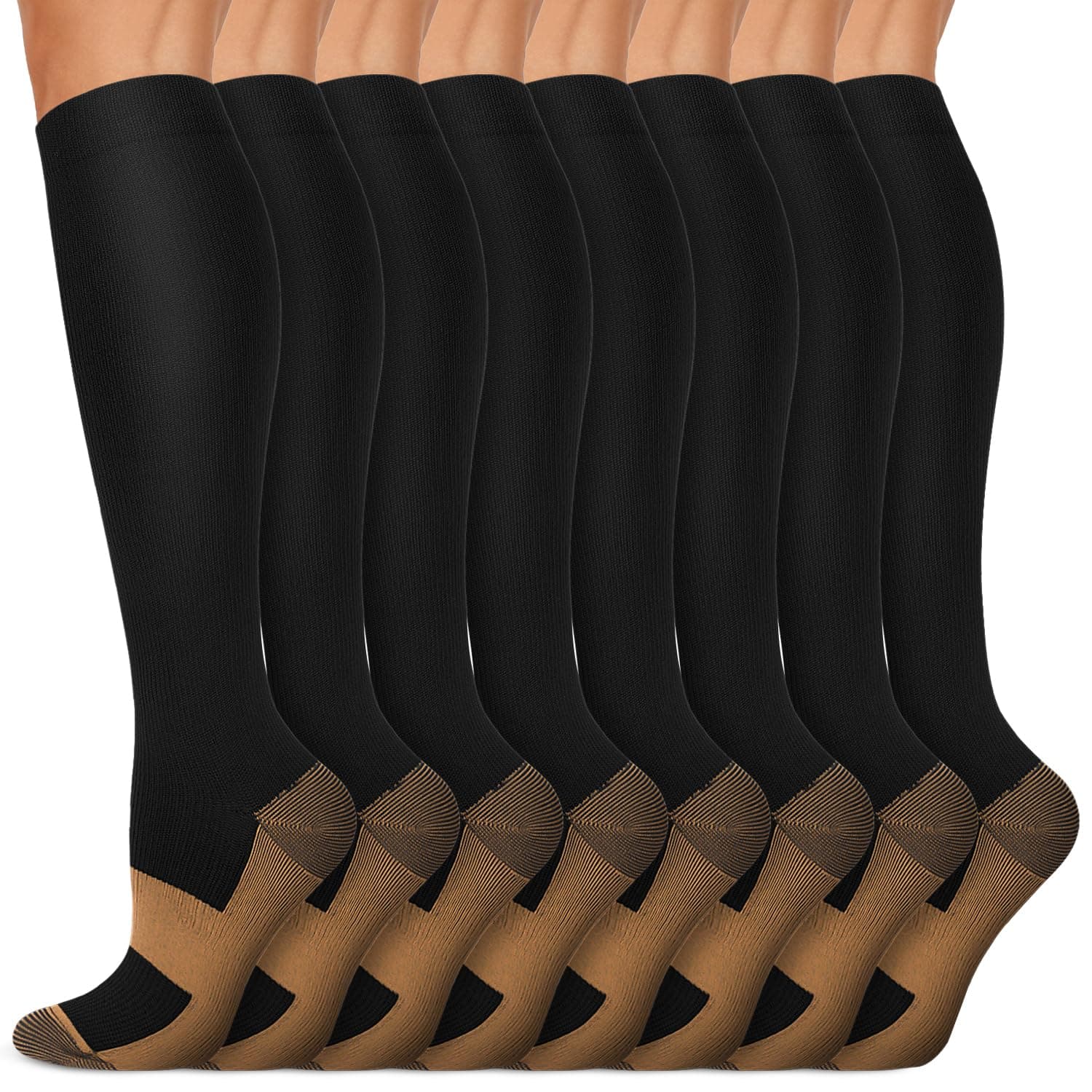
Top pick · #1Iseasoo Copper Compression Socks 15-20 mmHg for Men & Women 8 Pairs – Circulation Support for Nurses, Travel…
Best overall

Iseasoo Copper Compression Socks 15-20 mmHg for Men & Women 8 Pairs – Circulation Support for Nurses, Travel…

★★★★★4.6(39,436)86Great

Across the reviewers we read, the Iseasoo Copper 15–20 mmHg pack lands as the most well-rounded option in this category. Consumer Reports and Verywell Fit both cite it in their compression sock coverage, with Verywell Fit reporting reduced leg fatigue and noticeable swelling reduction after a full day of wear.

The rest of the rankings

#2–5

Frequently asked

5 questions
What compression level (mmHg) do I actually need?
Across the high-trust sources we read (Consumer Reports, Wirecutter, Good Housekeeping), 15–20 mmHg is the typical recommendation for travel, mild swelling, nursing shifts, and athletic recovery. 20–30 mmHg is considered medical-grade and is generally recommended only when advised by a clinician for issues like varicose veins, post-surgical recovery, or moderate edema. Anything above 30 mmHg requires a prescription.
Do compression socks actually help on long flights?
Consumer Reports and r/travel commenters broadly agree that compression socks reduce ankle swelling and leg fatigue on flights longer than about four hours, and may lower DVT risk in sedentary travelers. The high-trust consensus is that 15–20 mmHg graduated socks are sufficient for most healthy passengers.
Are copper-infused compression socks better than regular ones?
Reviewers across r/ProductQuery and Verywell Fit are skeptical of the copper claims specifically — there's little independent evidence that copper itself adds antimicrobial or circulatory benefit beyond marketing. That said, the copper-branded socks from Iseasoo and Bluemaple still score well on fit and compression in mainstream reviews, so the underlying sock can be fine even if the copper story is hype.
How do I find compression socks that fit wider calves?
r/PlusSizePregnancy and r/POTS users repeatedly recommend brands that specifically size for wide calves, such as LEVSOX, which offers extended sizing up to 5XL. Standard knee-high compression often digs in or rolls down on wider legs, so dedicated wide-calf options are worth the small premium.
How often should compression socks be replaced?
Long-running r/BuyItForLife threads note that even well-made compression socks lose elastic recovery over 6–12 months of regular wear. Once the squeeze feels noticeably weaker or the band stops staying up, the graduated compression is no longer doing its job and replacement is recommended.