
VerdictAI

Reviewer consensus · 2026

Best Pulse Oximeters of 2026What 40 reviewers actually think, trust-weighted

Pulse oximeters are a commodity category dominated by a handful of repeat picks across mainstream tech and health publishers, with nytimes.com's home-use roundup and a peer-reviewed accuracy study on pmc.ncbi.nlm.nih.gov doing most of the heavy lifting on which consumer models actually match clinical readings. Below is a trust-weighted synthesis of what reviewers and verified-purchase customers across Amazon and Walmart have written about the leading fingertip models, with disagreements surfaced rather than smoothed over. Amazon star ratings are treated as one signal among several, not as a verdict.

Sources behind this verdict

40 reviewers, weighted by source trust

40reviewers read

Weighted by source trust

We don’t review products. We read what other reviewers wrote, score each source for trustworthiness, and synthesize the consensus.

How sources are scored →

Trust hierarchy

Trusted1
Verified0
Supporting12
Flagged0

Source mix

40signals
  • 3Press
  • 17Community
  • 20Video

Trusted · 1 source

Independent · documented methodology

At a glance

Highest-rated by the consensus

#1 of 5
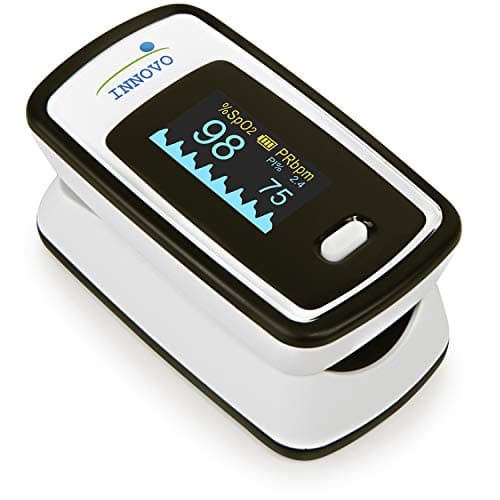
Top pick · #1Innovo Deluxe iP900AP Fingertip Pulse Oximeter Blood Oxygen Saturation Monitor with Alarm, Plethysmograph and…
Best overall

Innovo Deluxe iP900AP Fingertip Pulse Oximeter Blood Oxygen Saturation Monitor with Alarm, Plethysmograph and…

Innovo

★★★★★4.7(50,169)88Great

Across the reviewers we read, the Innovo Deluxe iP900AP is the most consistently recommended fingertip oximeter in this pool. nytimes.com's hands-on roundup explicitly called out comfort — testers said it didn't pinch as much as competing models — which matters more than spec sheets suggest for users taking frequent or overnight readings.

The rest of the rankings

#2,5

Frequently asked

5 questions
Are consumer fingertip pulse oximeters accurate enough to rely on?
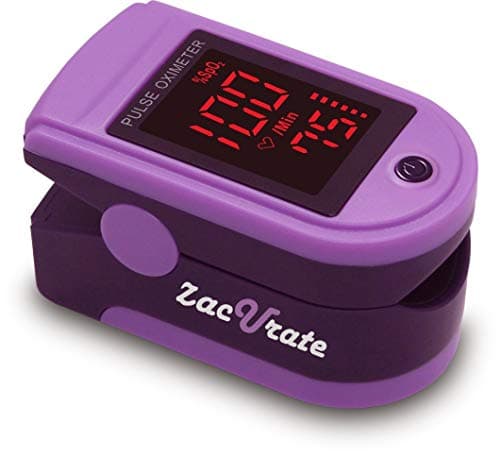
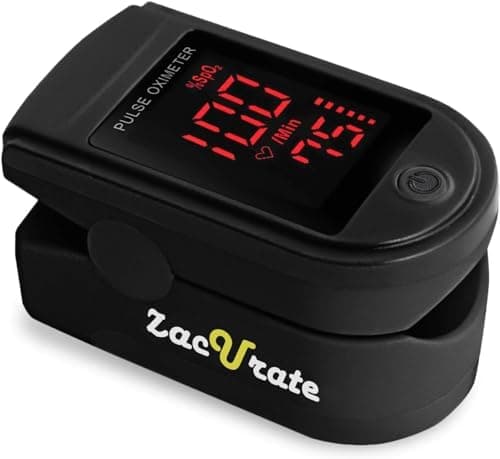
For trend-tracking, yes; for clinical decisions, with caveats. A study indexed on pmc.ncbi.nlm.nih.gov found the Zacurate Pro Series 500DL hit roughly 90% accuracy against reference devices, which is strong for a consumer unit but still below hospital-grade Masimo or Nonin sensors. Across the reviewers we read, the consensus is that any FDA-cleared finger oximeter is fine for spot checks, but readings can swing 2–4 points based on cold fingers, nail polish, motion, and perfusion.
Do I need an FDA-cleared pulse oximeter?
If you have a diagnosed condition like COPD, sleep apnea, or heart failure, yes — FDA clearance is the minimum bar, and nytimes.com explicitly restricts its picks to FDA-cleared units. For casual wellness or altitude curiosity, an uncleared unit may be acceptable, but verified-purchase reviewers consistently flag accuracy drift on the cheapest no-name models.
What's the difference between SpO2, perfusion index, and a plethysmograph?
SpO2 is your blood oxygen saturation percentage. Perfusion index (PI) shows how strong the pulse signal is at the fingertip — useful for knowing whether a low reading is real or just poor circulation. The plethysmograph is the waveform; a clean, regular wave means the reading is trustworthy. Mid- and higher-tier units like the Innovo iP900AP show all three; budget units typically show only SpO2 and pulse.
Can a pulse oximeter detect sleep apnea?
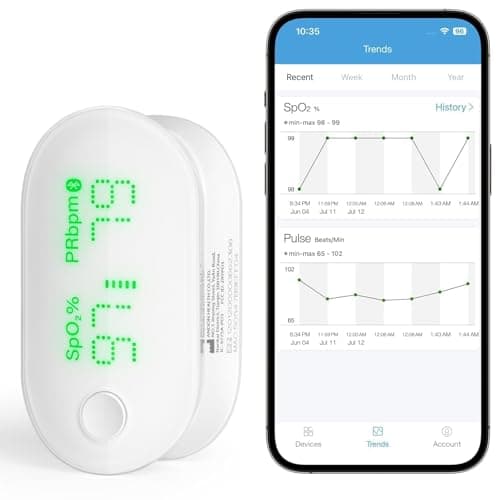
A spot-check finger unit cannot — you need continuous overnight logging. Specialist subreddit threads on r/SleepApnea repeatedly point users toward Bluetooth-enabled or wrist/ring oximeters that record overnight desaturation events (ODI), not single-reading fingertip models. A Bluetooth-logging model is the minimum useful tier for screening.
Why do my readings change every few seconds?
That's normal. Comments captured from r/Anxiety note that SpO2 naturally varies a couple of points breath to breath, and minor finger movement can swing the number. Reviewers generally recommend taking a steady 30-second reading with a warm hand at heart level, then averaging.