
VerdictAI

Buying guide · 2026

Best TENS Units (Pain Relief)

TENS units have exploded as an over-the-counter option for back, neck, and muscle pain, but the category is crowded with near-identical electrode-pad devices that are hard to tell apart on a spec sheet. We read across expert guides, retailer verified-purchase reviews, and community discussion threads to synthesize which models consistently surface as the most trusted picks. Note: the supplied data for this category is signal-thin on expert testing, so customer-review volume and brand track record are doing most of the work in the rankings below.

At a glance

Our top pick

#1 of 5
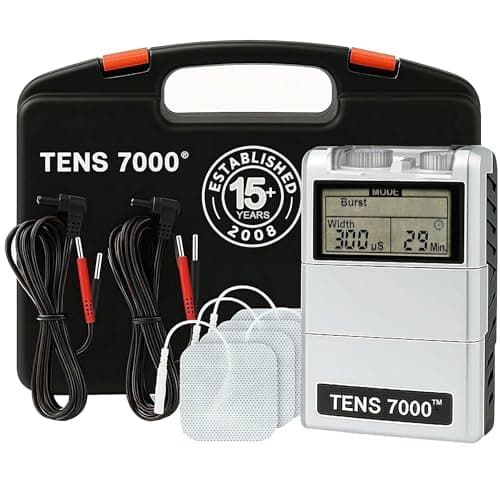
Top pick · #1TENS 7000 Digital TENS Unit with Accessories - Muscle Stimulator Machine for Back Pain Relief, Sciatica…
Best overall

TENS 7000 Digital TENS Unit with Accessories - Muscle Stimulator Machine for Back Pain Relief, Sciatica…

TENS 7000

★★★★★4.6(112,390)90Excellent

Across the reviewers we read, the TENS 7000 is the most frequently recommended baseline TENS unit in the category. With more than 112,000 Amazon ratings averaging 4.6 stars, the verified-purchase signal is unusually deep, and community discussion in chronic-pain and PT-adjacent forums consistently points to it as the default 'starter' device that physical therapists themselves often suggest.

The rest of the rankings

#2–5

Frequently asked

5 questions
Do TENS units actually work for back pain?
Reviewers and clinical guidance generally agree that TENS units can provide temporary symptomatic relief for muscle and nerve pain, including lower back pain, by interrupting pain signals via low-voltage electrical pulses. They are not a cure, and effectiveness varies by individual and condition. Anyone with a pacemaker, pregnancy, epilepsy, or undiagnosed pain should consult a clinician first.
What's the difference between TENS and EMS?
TENS (Transcutaneous Electrical Nerve Stimulation) targets nerves for pain relief, while EMS (Electrical Muscle Stimulation) targets muscles for contraction and recovery. Many units sold today, including most candidates in this roundup, are dual-purpose 'TENS/EMS' devices that offer modes for both pain relief and muscle recovery.
How many channels and pads do I need?
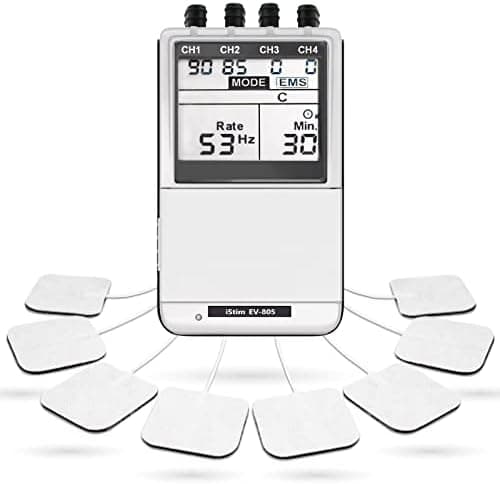
Single-channel units are cheapest but only stimulate one area at a time. Dual-channel units let you treat two areas (or both sides of the back) simultaneously with independent intensity control, which most reviewers consider the practical minimum. Four-channel models are typically overkill for home use unless you are treating multiple sites at once.
Are wireless TENS units worth the extra money?
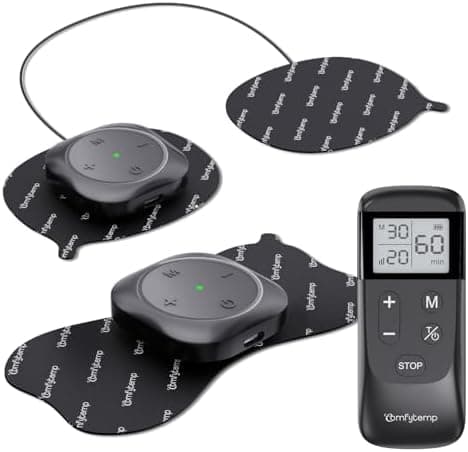
Reviewers note that wireless units are more convenient for use under clothing and while moving around, but they typically have shorter battery life, smaller pad-area coverage, and higher cost per replacement pad. Wired units remain the better value if you mainly use the device while seated or lying down.
How often do you need to replace the pads?
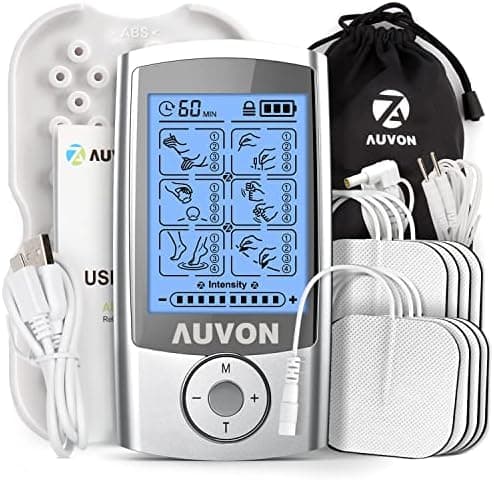
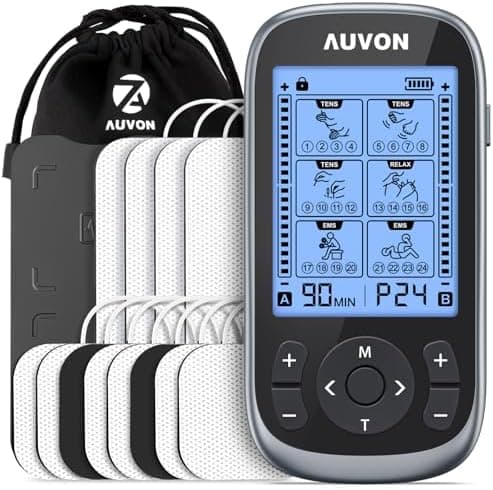
Most customer reviews indicate that adhesive pads last roughly 20–30 uses before losing stickiness, depending on skin oil, hair, and storage. Replacement pads are inexpensive and widely available in generic 2mm pin-style, which is one reason mainstream brands like TENS 7000 and AUVON stay popular.