
VerdictAI

Reviewer consensus · 2026

Best Weighted Vests of 2026What 58 reviewers actually think, trust-weighted

Weighted vests have exploded in popularity for rucking, calisthenics, and bone-density walking, and the market is now crowded with near-identical neoprene and Oxford-nylon models. This roundup is a trust-weighted synthesis of what reviewers across the internet have already published, leaning hardest on independent testing outlets like OutdoorGearLab and garagegymreviews.com, corroborated by specialist communities such as r/bodyweightfitness, r/Rucking, and r/walking, plus large pools of verified-purchase ratings. We don't test vests ourselves; we summarize the consensus and surface disagreement where it exists.

Sources behind this verdict

58 reviewers, weighted by source trust

58reviewers read

Weighted by source trust

We don’t review products. We read what other reviewers wrote, score each source for trustworthiness, and synthesize the consensus.

How sources are scored →

At a glance

Compare

Pick any two for a head-to-head

Scores, pros, cons, and our verdict — side by side.

vs

Highest-rated by the consensus

#1 of 8
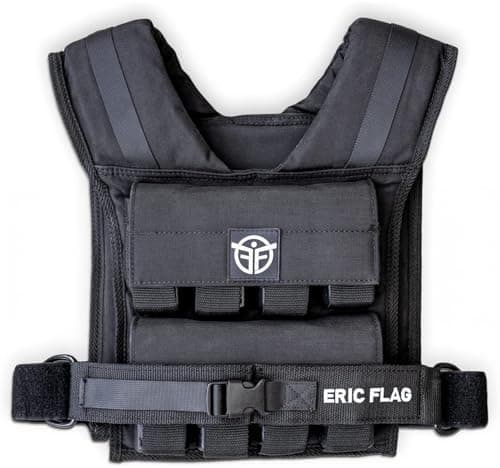
Top pick · #1ERIC FLAG 40 lb Weighted Vest for Men & Women - Adjustable 0-40 lb with 16 Iron Weight, Heavy-Duty for…
Best overall

ERIC FLAG 40 lb Weighted Vest for Men & Women - Adjustable 0-40 lb with 16 Iron Weight, Heavy-Duty for…

Eric Flag

★★★★★4.8(1,032)86Great

Across the reviewers we read, the Eric Flag draws the most consistently positive reception of any vest in this group, pairing a 4.8-star average over roughly a thousand verified-purchase ratings with hands-on community endorsement. A guide posted in r/CalisthenicsCOM specifically recommends compact, block-based vests with evenly distributed weight and solid padding, naming the Eric Flag as a personal pick — a meaningful signal because that community scrutinizes how vests handle pull-ups, dips and other dynamic movements.

The rest of the rankings

#2,8

Frequently asked

5 questions
How much weight should I start with in a weighted vest?
A commonly cited rule of thumb in communities like r/Rucking is roughly 15% of bodyweight in a vest (versus up to 30% in a backpack-style ruck). Many r/walking posters report that even 10–12 lb felt surprisingly heavy at first but normalized within a couple of weeks, so most reviewers suggest starting light and using an adjustable model so you can add weight gradually.
What's the difference between a vest with iron-sand pouches and one with removable iron plates?
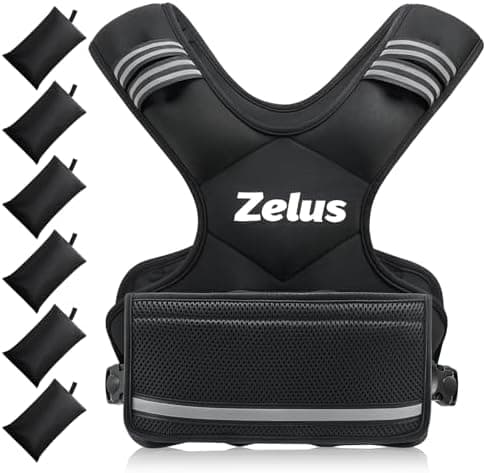
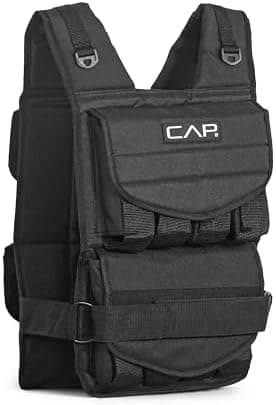
Iron-sand or ironsand-pouch vests (common on budget ZELUS, Zeerun and VEVOR models) tend to be flexible and low-profile but offer coarse, fixed weight steps. Plate- or block-based vests like the Eric Flag (2.4 lb iron plates) or CAP (stackable bars) let you fine-tune the load and generally distribute weight more evenly, which specialist calisthenics threads prefer for heavier training.
Are cheap weighted vests durable enough?
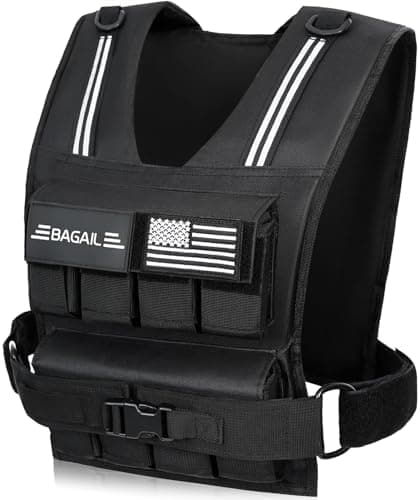
It depends on construction. High-trust outlet garagegymreviews.com flagged single-stitch designs on budget vests as less durable, while heavier-duty 1000D/1200D Oxford nylon models (Eric Flag, BAGAIL) drew praise for ruggedness. Verified-purchase reviewers on the cheapest neoprene vests are mostly happy, but a few report seam wear and iron-sand leakage over time.
Can I run in a weighted vest?
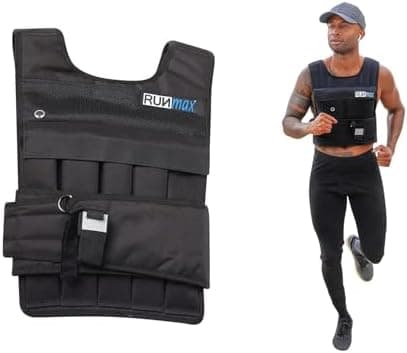
Reviewers say it depends on fit. OutdoorGearLab noted that some vests bounce while running even when they don't chafe, so a snug chest strap matters. Communities like r/Fitness also caution against jumping or high-impact movement in heavier vests because of joint strain, recommending walking and rucking over sprinting for heavy loads.
Are there weighted vests designed specifically for women?
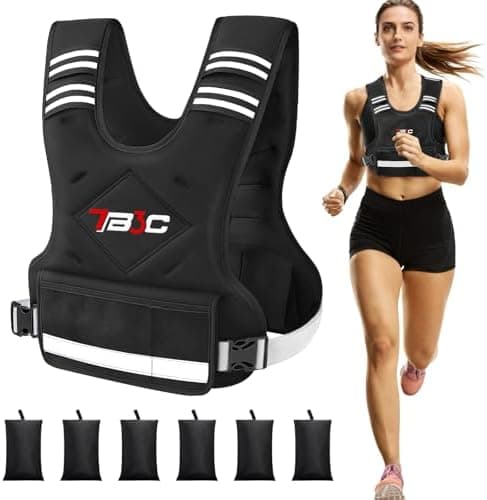
Yes. Models like the TB3C women's vest and several BAGAIL/ZELUS configurations are cut for a snugger torso fit, and r/walking threads from women note that shorter, well-padded vests sit better and dig in less than unisex designs during long walks.