
VerdictAI

Reviewer consensus · 2026

Best Bookshelves of 2026What 35 reviewers actually think, trust-weighted

Bookshelves are a category where reviewer consensus is fragmented: mainstream tech press doesn't routinely test furniture, so the signal mix here leans heavily on verified-purchase reviews from major retailers, YouTube assembly videos, and specialist subreddits like r/BuyItForLife, r/HomeLibraries and r/bookshelf. We weighted those community and retailer signals against Amazon rating volume, and flagged where the available evidence is thinner than we'd like. The picks below reflect the consensus across the reviewers we read, not first-hand testing.

Sources behind this verdict

35 reviewers, weighted by source trust

35reviewers read

Weighted by source trust

We don’t review products. We read what other reviewers wrote, score each source for trustworthiness, and synthesize the consensus.

How sources are scored →

At a glance

Highest-rated by the consensus

#1 of 5
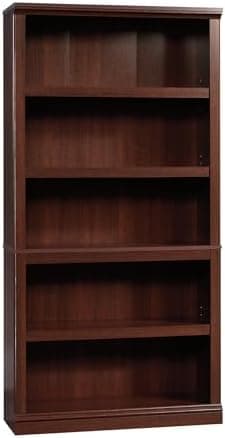
Top pick · #1Sauder Miscellaneous Storage 3-Shelf Bookcase/ Book shelf, Select Cherry finish
Best overall

Sauder Miscellaneous Storage 3-Shelf Bookcase/ Book shelf, Select Cherry finish

Sauder

★★★★★4.5(5,855)82Great

Across the reviewers we read, the Sauder Select 3-Shelf is the most consistently endorsed bookcase in this pool. Amazon's 5,855-review base sits at 4.5 stars, and verified-purchase reviewers at walmart.com echo the same themes: parts are complete, instructions are followable, and the finished piece is sturdier than the price suggests.

The rest of the rankings

#2,5

Frequently asked

5 questions
Are particle-board bookshelves strong enough to hold a full library?
Across the reviewers we read, the consensus is that laminated particle-board shelves (Sauder, ClosetMaid, Furinno, IKEA Billy) hold standard book loads fine when assembled correctly and anchored to a wall, but they sag under dense hardcover collections over long spans. Threads on r/HomeLibraries and r/BuyItForLife repeatedly recommend solid wood or shorter shelf spans for heavy book loads, and verified-purchase reviewers note that the back panel is a critical structural part — skipping or misaligning it is the most common cause of wobble.
What height bookshelf should I get?
Reviewer discussion suggests 70–76 inches is the sweet spot for adults storing a real book collection — tall enough to maximize wall space, short enough to anchor and dust. Anything over 6 feet should be wall-anchored, a point verified-purchase reviewers raise repeatedly on tall units. For apartments or kids' rooms, 3-shelf models around 36–48 inches are the most commonly recommended.
Are bookshelves with doors worth the extra cost?
Doored bookcases protect contents from dust and sun fading and hide visual clutter, which retailer reviewers consistently call out as the main reason to upgrade. The trade-off cited across reviews is reduced flexibility for oversized books and added assembly complexity — hinges and magnetic catches are the parts most often reported as needing adjustment.
Do I really need to anchor a bookshelf to the wall?
Yes — this is the one point where high-trust community sources, retailer reviewers, and manufacturers all agree. Tall, narrow bookcases are tip hazards, particularly when loaded unevenly or in homes with kids or pets. Most units ship with an anti-tip strap; reviewers who skipped it are over-represented in the negative reviews.
Is solid wood always better than engineered wood for bookshelves?
Solid wood lasts longer and refinishes, and r/BuyItForLife threads consistently push shoppers toward it. But the reviewers we read also acknowledge that well-made engineered-wood pieces from established brands (Sauder is the most cited example) have outlasted multiple IKEA Billy replacements in real homes. For the price, engineered wood with a thick back panel and a proper wall anchor is the pragmatic middle ground.