
VerdictAI

Reviewer consensus · 2026

Best Cold Brew Coffee Makers of 2026What 52 reviewers actually think, trust-weighted

Cold brew makers span a wide range, from sub-$20 mason-jar pitchers to airtight beaker-style carafes and dual-filter "fast" brewers. This roundup synthesizes what specialist communities like r/coldbrew, mainstream tech and food press, and thousands of verified-purchase reviewers have written, weighted by source trust rather than any first-hand testing of our own. Where high-trust testers and community threads disagree, we surface the conflict instead of smoothing it over.

Sources behind this verdict

52 reviewers, weighted by source trust

52reviewers read

Weighted by source trust

We don’t review products. We read what other reviewers wrote, score each source for trustworthiness, and synthesize the consensus.

How sources are scored →

Trust hierarchy

Trusted0
Verified1
Supporting12
Flagged0

Source mix

52signals
  • 1Press
  • 1Retailer
  • 30Community
  • 20Video

Verified · 1 source

Documented methodology · commerce-owned

At a glance

Compare

Pick any two for a head-to-head

Scores, pros, cons, and our verdict — side by side.

vs

Highest-rated by the consensus

#1 of 5
Top pick · #1OVALWARE Airtight Cold Brew Iced Coffee Maker Pitcher and Tea Infuser with Spout - 1.0L / 34oz Ovalware RJ3…
Best overall

OVALWARE Airtight Cold Brew Iced Coffee Maker Pitcher and Tea Infuser with Spout - 1.0L / 34oz Ovalware RJ3…

ovalware

★★★★★4.5(13,508)88Great

Across the reviewers we read, the Ovalware RJ3 is the rare pick that earns a specific nod from a high-trust tester: seriouseats.com singled out its "sleek glass body, which is reminiscent of a laboratory beaker." That design language carries through the rest of the coverage, with verified-purchase reviewers and r/coldbrew members highlighting the airtight hard-plastic lid that keeps fridge odors out and a simple, easy-to-clean construction. Manufacturer and retailer listings claim the airtight seal keeps brew fresh up to two weeks, and community members corroborate keeping a batch for roughly five days to two weeks without noticeable degradation.

The rest of the rankings

#2,5

Frequently asked

5 questions
What's the difference between a glass and plastic cold brew maker?
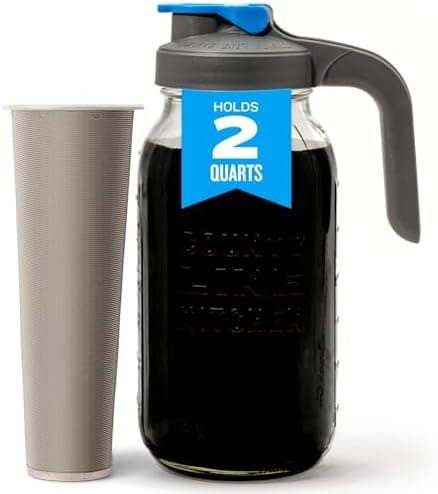
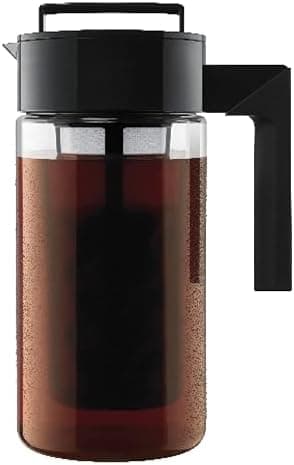
Glass and borosilicate carafes (like the Ovalware) are praised by reviewers for not staining or retaining odors, but r/coldbrew members repeatedly warn that the thinner glass can crack or shatter with rough handling. Tritan plastic pitchers such as the Takeya are shatter-proof and lighter, which verified-purchase reviewers favor for fridge-door storage and travel, at the cost of potential long-term staining.
Do I need a fast cold brew maker?
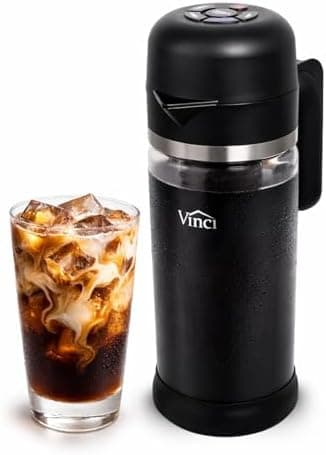
Brewers like the VINCI Cold Brew 360 advertise dual-filter designs that cut steep time to roughly 8-12 hours, and community members confirm the faster ones can produce decent results. But across the reviewers we read, the consensus is that traditional 16-24 hour steeping in a simple pitcher costs far less and produces comparable flavor, so speed is a convenience feature rather than a quality upgrade.
Are metal mesh filters or paper filters better for cold brew?
Stainless-steel mesh filters are reusable and the norm on nearly every model here, but r/coldbrew users note they let through more oils and fines, which some describe as a slightly more bitter or 'sludgy' cup. Several reviewers run their finished brew through a paper filter for a cleaner result, an extra step worth considering if you dislike sediment.
How much coffee should I use in a 64 oz cold brew maker?
Community threads on r/coldbrew commonly cite 100-145 grams of coarsely ground coffee for a 64 oz jar depending on how strong you like it, aiming for a 'slurry' with no dry grounds floating on top. Recipes vary widely, so most reviewers recommend dialing in your ratio over a couple of batches.
Is cold brew really less acidic?
Manufacturers across these listings claim 50-70% lower acidity than hot brewing, and community members who switched to cold brew specifically cite low acidity and reduced bitterness as the reason. Independent confirmation of the exact percentages is thin in the sources we read, so treat the specific numbers as marketing rather than verified lab figures.