
VerdictAI

Reviewer consensus · 2026

Best Wood Cutting Boards of 2026What 41 reviewers actually think, trust-weighted

Wood cutting boards span a wide range of constructions—end-grain butcher blocks that self-heal and protect knife edges, edge-grain workhorses that are lighter and easier to maintain, and bamboo or acacia sets that prioritize value. This roundup synthesizes what mainstream tech and cooking press, specialist subreddits like r/Cuttingboards and r/chefknives, and verified-purchase reviewers have said about the most discussed boards on Amazon, weighting high-trust sources most heavily and discounting promotional snippets. Where reviewers disagree—particularly around quality control on mass-produced teak and walnut boards—we surface the conflict rather than smoothing it over.

Sources behind this verdict

41 reviewers, weighted by source trust

41reviewers read

Weighted by source trust

We don’t review products. We read what other reviewers wrote, score each source for trustworthiness, and synthesize the consensus.

How sources are scored →

At a glance

Highest-rated by the consensus

#1 of 5
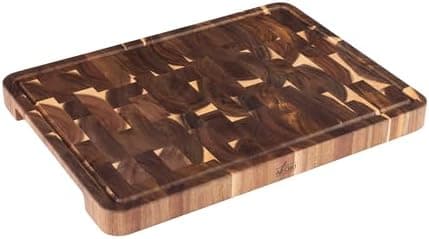
Top pick · #1Sonder Los Angeles Alfred Cutting Board Made in USA | Black Walnut End Grain Cutting Board for Kitchen with…
Best overall

Sonder Los Angeles Alfred Cutting Board Made in USA | Black Walnut End Grain Cutting Board for Kitchen with…

★★★★★4.7(10,632)86Great

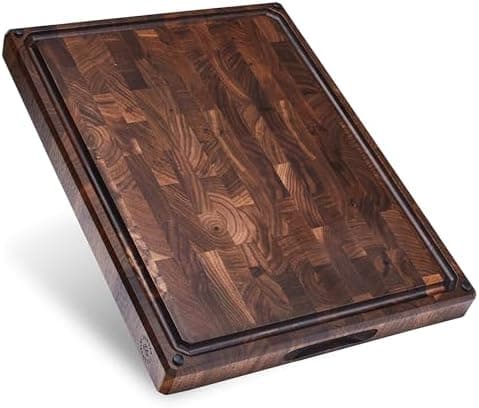
Across the reviewers we read, Sonder Los Angeles's Alfred board is the most consistently praised premium end-grain pick in this pool. Amazon's 4.7-star average across more than 10,000 ratings is corroborated by community threads on r/chefknives and r/BuyItForLife, where contributors highlight the 1.5-inch end-grain walnut construction as genuinely knife-friendly and the juice groove plus sorting compartments as well thought out for serious prep.

The rest of the rankings

#2,5

Frequently asked

5 questions
Is end-grain or edge-grain better for a wood cutting board?
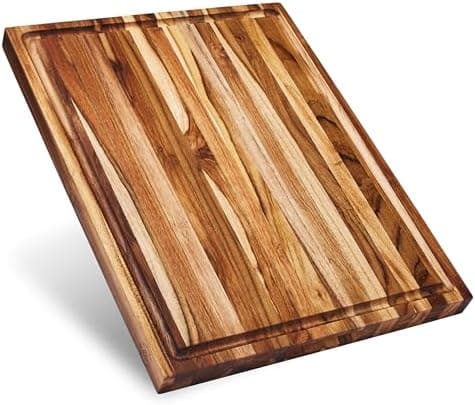
Across specialist communities like r/chefknives and r/woodworking, the consensus is that end-grain boards are gentler on knife edges because the blade slides between vertical wood fibers rather than slicing across them, and they tend to 'self-heal' over time. Edge-grain boards are lighter, generally cheaper, easier to maintain, and still perfectly knife-safe—reviewers note they're often the more practical everyday choice.
How do I care for a wood cutting board so it doesn't crack?
The dominant advice across r/Cuttingboards and r/woodworking is to hand-wash only (never the dishwasher), dry it upright, and re-oil regularly with food-grade mineral oil—optionally topped with a beeswax blend. Boards that split or cup almost always do so because they were soaked, left wet, or never re-oiled.
Are bamboo cutting boards safe and knife-friendly?
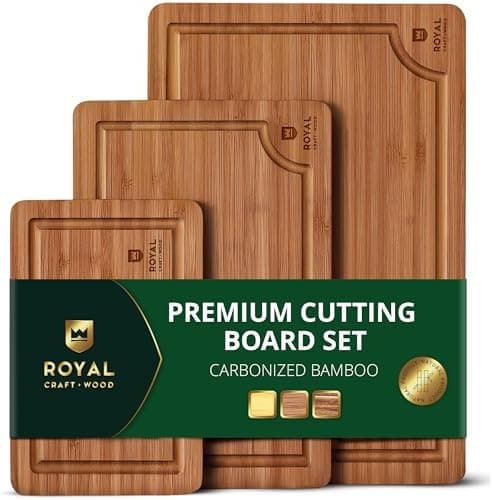
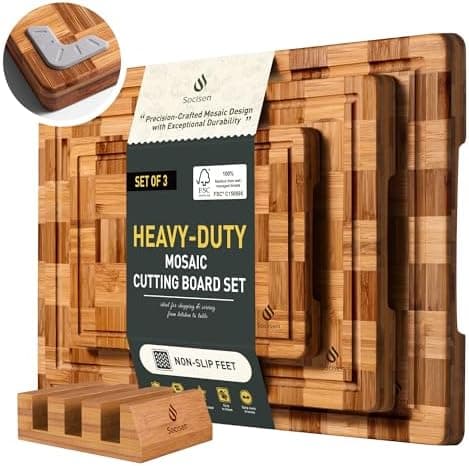
Bamboo is harder than most hardwoods, which means it can dull knives faster than maple or walnut, according to community discussions. However, it's inexpensive, sustainable, and resistant to moisture. For occasional prep and serving it's fine; for daily heavy chopping with premium knives, hardwood end-grain is the preferred option.
Is a juice groove worth it on a cutting board?
Verified-purchase reviewers consistently call out the juice groove as the single most useful feature when breaking down meats, fruits, or anything that releases liquid. The trade-off is slightly less usable surface area and a groove that needs periodic cleaning—reviewers say it's worth it if you carve or butcher regularly.
How much should I spend on a quality wood cutting board?
Specialist communities suggest a usable hardwood edge-grain board can be had for $40–$70, while a heavy end-grain butcher block from a reputable maker typically runs $100–$200. Reviewers note that under about $40, quality control and wood selection tend to drop noticeably, and ultra-cheap acacia or bamboo boards from unknown sellers often arrive with cracks or warping.