
VerdictAI

Reviewer consensus · 2026

Best Nonstick Frying Pans of 2026What 47 reviewers actually think, trust-weighted

Nonstick frying pans split sharply along two lines: durable PTFE and hard-anodized pans that prioritize performance, versus ceramic and "non-toxic" pans that trade longevity for a PFAS-free pitch. To build this ranking we read independent testing coverage, mainstream tech and food press, verified-purchase reviews at major retailers, and specialist cookware communities, then weighted each source by trust tier. The recurring theme across the reviewers we read is that almost every nonstick coating is effectively consumable, so value depends as much on price and replacement cadence as on out-of-box slickness.

Sources behind this verdict

47 reviewers, weighted by source trust

47reviewers read

Weighted by source trust

We don’t review products. We read what other reviewers wrote, score each source for trustworthiness, and synthesize the consensus.

How sources are scored →

At a glance

Compare

Pick any two for a head-to-head

Scores, pros, cons, and our verdict — side by side.

vs

Highest-rated by the consensus

#1 of 5
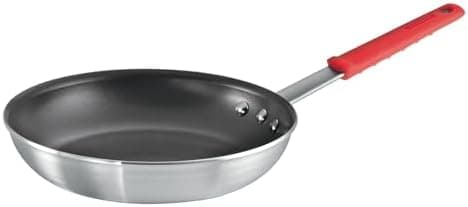
Top pick · #1Tramontina Professional 10-Inch Non Stick Frying Pan, Heavy-Gauge Aluminum Skillet with Reinforced Nonstick…
Best overall

Tramontina Professional 10-Inch Non Stick Frying Pan, Heavy-Gauge Aluminum Skillet with Reinforced Nonstick…

Tramontina

★★★★★4.6(26,212)88Great

Across the reviewers we read, the Tramontina Professional 10-inch is the closest thing to a consensus pick in this pool because it is the one product with high-trust independent backing: nytimes.com describes it as 'superbly nonstick, excellent at evenly distributing heat, easily maneuverable.' That technical praise is echoed at the budget end of the community spectrum, where r/Frugal commenters call the Pro line 'the longest lasting nonstick skillet I've had' for around $25, and r/cookware describes it as 'a pretty good choice' for nonstick duty. The disagreements are about durability expectations and care, not core performance.

The rest of the rankings

#2,5

Frequently asked

5 questions
Are PFAS-free ceramic pans actually better than PTFE nonstick?
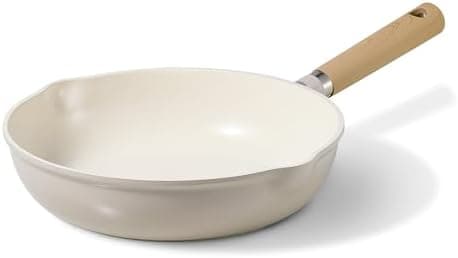
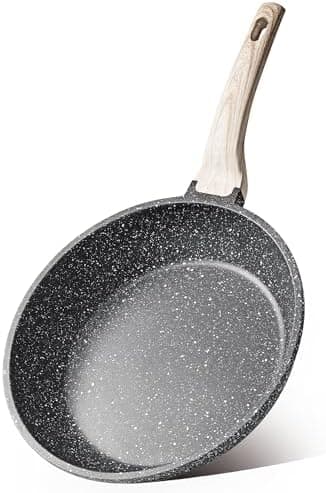
Not necessarily in performance. High-trust food coverage we read (seriouseats.com) notes ceramic coatings tend to be more brittle than PTFE and are prone to chipping and scratching, and specialist cookware community threads repeatedly warn that ceramic often loses its nonstick properties faster than Teflon-style coatings. Ceramic's main advantage is the PFAS/PFOA-free marketing; if you want the slickest, longest-lasting release and don't mind PTFE, a hard-anodized PTFE pan generally lasts longer.
How long should I expect a nonstick frying pan to last?
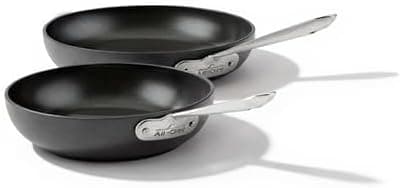
Treat all of them as semi-disposable. Across the reviewers we read, even premium picks like the All-Clad HA1 draw comments in r/BuyItForLife and r/AllClad that the coating eventually degrades and the pan needs replacing, while budget ceramic pans are sometimes reported failing within months. Low-to-medium heat, no metal utensils, and hand-washing meaningfully extend life regardless of brand.
What is the best nonstick pan for eggs?
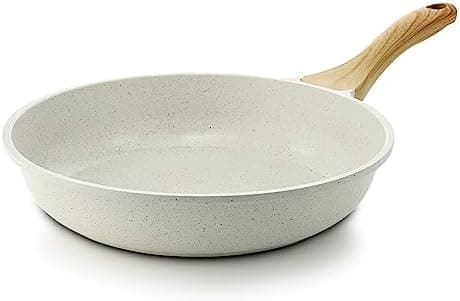
Eggs are the easiest test for any nonstick surface, so most pans here handle them well when new. Verified-purchase reviewers repeatedly praise the SENSARTE ceramic skillets specifically for eggs sliding right off with little oil. For longer-term egg duty, a PTFE pan like the Tramontina Professional tends to hold its release longer per the sources we read.
Can I use these nonstick pans on an induction cooktop?
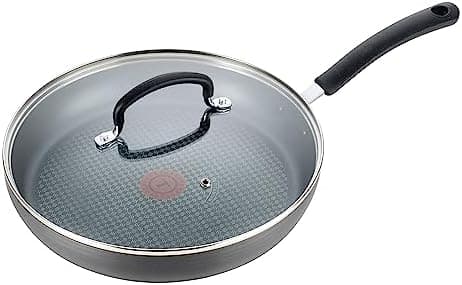
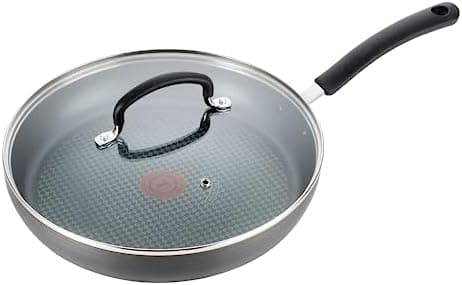
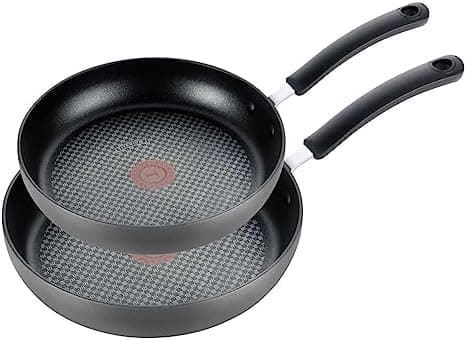
Several here are explicitly induction-compatible, including the SENSARTE ceramic pans, the All-Clad HA1, and the T-fal Ultimate hard-anodized set. The Tramontina Professional 10-inch is aluminum-bodied, so confirm the specific SKU's induction rating before buying if induction is a requirement.
Is it safe to bake or broil a nonstick pan in the oven?
Oven limits vary widely and matter. The All-Clad HA1 is rated to 500F, the T-fal Ultimate only to roughly 400F, and high-trust coverage (seriouseats.com) notes SENSARTE recommends removing the bakelite handle before baking. Always check the temperature rating and never exceed it, since overheating accelerates coating breakdown.