
VerdictAI

Reviewer consensus · 2026

Best Dog Collars of 2026What 78 reviewers actually think, trust-weighted

Dog collars span a huge range, from $6 everyday nylon bands to $500 GPS track-and-train systems, so what counts as the "best" depends entirely on what your dog needs. This roundup is a trust-weighted synthesis of what verified-purchase reviewers, specialist communities like r/dogs and r/Dogtraining, and mainstream gear reviewers have actually reported, rather than our own hands-on testing. Where high-trust sources disagree with retailer star averages, we surface the conflict rather than smoothing it over.

Sources behind this verdict

78 reviewers, weighted by source trust

At a glance

Compare

Pick any two for a head-to-head

Scores, pros, cons, and our verdict — side by side.

vs

Highest-rated by the consensus

#1 of 8
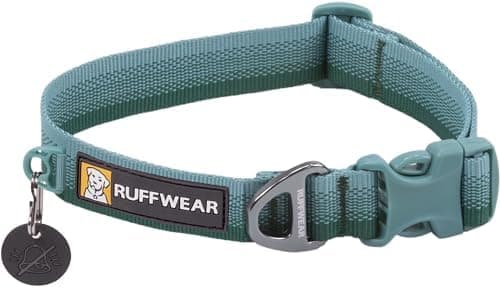
Top pick · #1Ruffwear, Front Range Dog Collar, Adjustable Tubelok Webbing, Lightweight, Side Release Buckle, Aluminum…
Best overall

Ruffwear, Front Range Dog Collar, Adjustable Tubelok Webbing, Lightweight, Side Release Buckle, Aluminum…

Ruffwear

★★★★★4.8(4,284)90Excellent

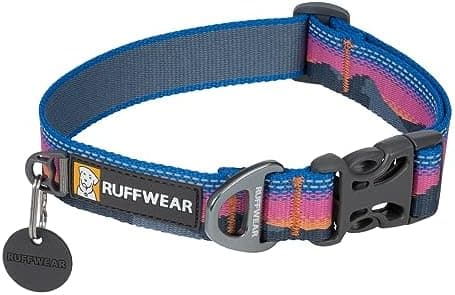
Across the reviewers we read, the Ruffwear Front Range is the most consistently praised everyday collar in this pool. Verified-purchase reviewers on Amazon (4.8 across more than 4,000 ratings) and Chewy describe it as lightweight, comfortable, and well-built for the price, with the colorfast Tubelok webbing holding up to mud, rain, and trail use.

The rest of the rankings

#2,8

Frequently asked

5 questions
What's the difference between a flat collar and a martingale collar?
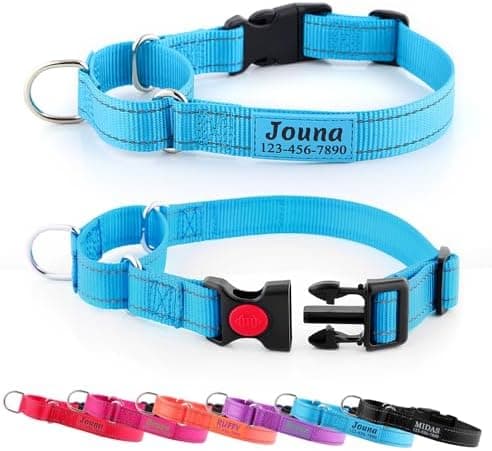
A flat collar buckles or clips to a fixed circumference, while a martingale (no-slip) collar tightens a limited amount when a dog pulls back, making it harder for narrow-headed or escape-prone dogs to back out. Reviewers in r/dogs and r/reactivedogs frequently recommend martingales for that reason, though many prefer versions with a quick-release buckle for easy on/off.
Do I need a GPS collar if my dog is microchipped?
A microchip only helps after someone finds and scans your dog, whereas a GPS collar or tracker lets you locate a dog in real time. Across the reviewers we read, owners often pair both, plus an embroidered ID collar, since each covers a different failure mode. GPS units add ongoing costs and battery management, so they're best for escape artists, rural properties, or off-leash dogs.
Are GPS dog trackers worth the subscription cost?
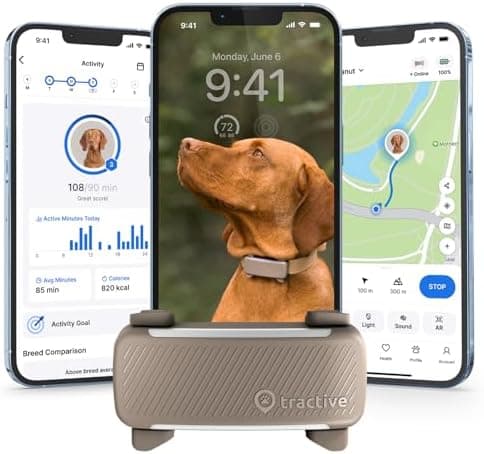
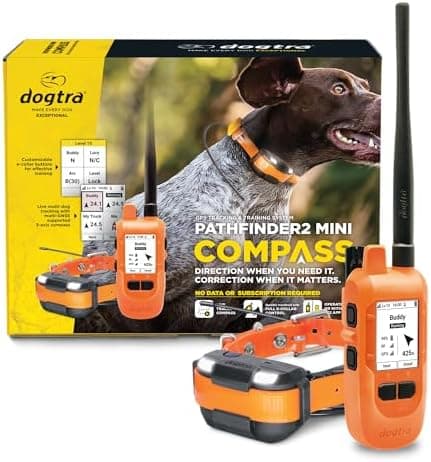
It depends on coverage and use case. Community comparisons on r/dogs generally rate subscription-based trackers like Tractive highly for real-time accuracy, while no-subscription systems like the Dogtra Pathfinder2 appeal to hunters who don't want recurring fees. Reviewers in rural or low-signal areas repeatedly warn that any cellular-based tracker can struggle without coverage.
What collar is best for a strong dog that pulls?
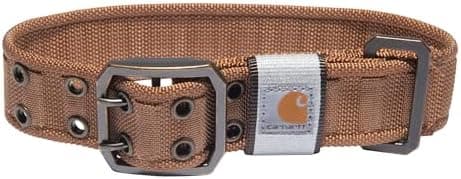
Reviewers point to wide, heavy-duty nylon collars (like Carhartt's extra-wide webbing) for distributing pressure, or martingales for dogs that slip standard collars. For serious pullers, multiple specialist threads note that a front-clip harness paired with the collar tends to work better than a collar alone.
Should an ID collar have the phone number embroidered or on a tag?
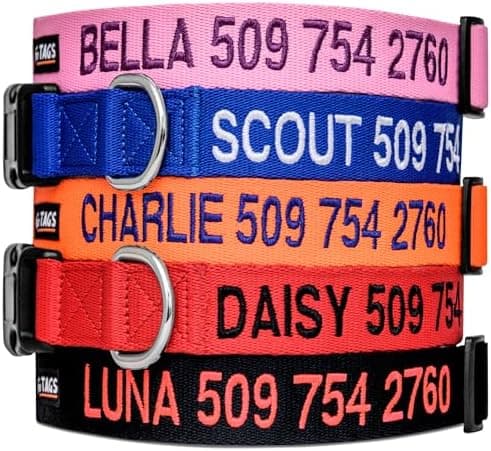
Many owners in r/dogs favor embroidered name-and-phone collars because there's no jingling tag to lose, though a common complaint is that the buckle or sizing adjustment can partially cover the stitched number. Plenty of owners run both an embroidered collar and a hanging tag for redundancy.