
VerdictAI

Reviewer consensus · 2026

Best Smart Air Quality Monitors of 2026What 54 reviewers actually think, trust-weighted

Smart air quality monitors range from sub-$70 plug-ins that flag obvious pollution events to $300+ multi-sensor units that track radon alongside CO2, particulates, and VOCs. The picks below synthesize what mainstream tech press, specialist air-quality subreddits, and verified-purchase reviewers have written across the web, weighted toward independent testing and long-running community consensus rather than any single headline. Where reviewers disagree — particularly around long-term sensor accuracy and app reliability — we surface the disagreement honestly.

Sources behind this verdict

54 reviewers, weighted by source trust

54reviewers read

Weighted by source trust

We don’t review products. We read what other reviewers wrote, score each source for trustworthiness, and synthesize the consensus.

How sources are scored →

At a glance

Highest-rated by the consensus

#1 of 5
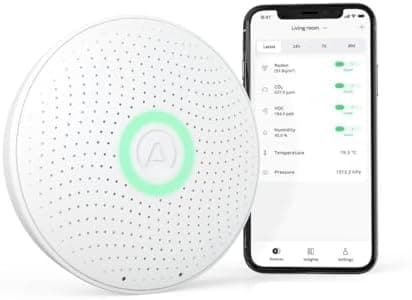
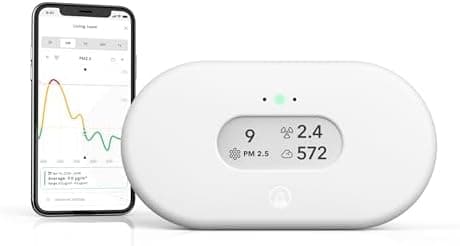
Top pick · #1Airthings 2960 View Plus - Battery Powered Radon & Air Quality Monitor (PM, CO2, VOC, Humidity, Temp…
Best overall

Airthings 2960 View Plus - Battery Powered Radon & Air Quality Monitor (PM, CO2, VOC, Humidity, Temp…

Airthings

★★★★★4.1(1,866)84Great

Across the reviewers we read, the Airthings View Plus is the consensus pick when buyers want one monitor that covers everything — radon, PM2.5, CO2, VOCs, humidity, temperature, and pressure — without a hub or a subscription. Breathesafeair.com's long-form review focuses specifically on measurement accuracy and concludes the View Plus performs as advertised, and cepro.com calls it among the most expansive consumer units on the market.

The rest of the rankings

#2,5

Frequently asked

5 questions
Do I really need a smart air quality monitor, or is a cheap PM2.5 meter enough?
A cheap PM2.5 meter tells you about particulate matter only. Smart monitors add CO2 (the single best proxy for ventilation in occupied rooms), VOCs, humidity, and in higher-tier units radon — and they log trends over weeks so you can correlate spikes with cooking, HVAC cycles, or outdoor smoke. Specialist subreddits like r/AirQuality consistently push buyers toward units with an NDIR CO2 sensor specifically, because the cheap MOX-based 'eCO2' estimates in budget meters are widely considered unreliable.
Which sensors actually matter for indoor air quality?
For most homes: PM2.5 (combustion, cooking, wildfire smoke), CO2 (ventilation), humidity (mold risk), and VOCs (off-gassing, cleaning products). If you have a basement or live in a radon-prone region, add a dedicated radon sensor — that's the single biggest reason to step up to an Airthings Wave Plus or View Plus rather than a $70 generic monitor.
Are Amazon-listed 'professional 15-in-1' air monitors trustworthy?
Specialist communities are skeptical. Threads on r/AirQuality repeatedly warn that many cheap multi-sensor units use a single low-cost MOX element and derive most of their 'parameters' (CO2, HCHO, TVOC) algorithmically from it, producing readings that look precise but aren't independently calibrated. PM2.5 readings on these units are usually the most defensible number; treat the rest as directional.
Does an air quality monitor replace a CO alarm or smoke detector?
No. Most smart AQ monitors are not UL-listed life-safety devices and will not wake you up at code-required thresholds. Keep a dedicated CO alarm and smoke detector — units like the Kidde combination plug-in exist specifically because building codes require certified life-safety hardware that an Airthings or Govee monitor doesn't replace.
Do these work with HomeKit, Alexa, or Home Assistant?
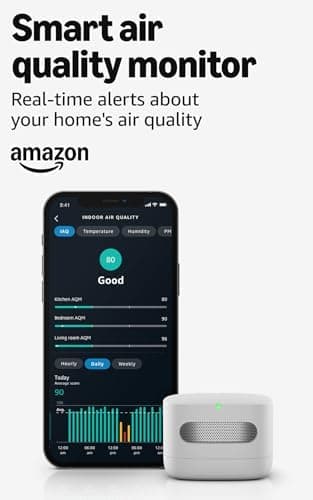
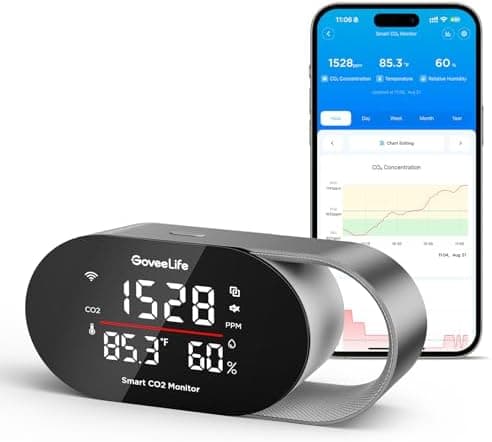
Coverage varies widely. The Amazon Smart Air Quality Monitor is Alexa-only. Airthings exposes data through its own app with broad Alexa/Google support and a Home Assistant integration the r/homeassistant community has documented at length. Newer Matter-over-WiFi units like the SONOFF AirGuard SAWF-07P are designed to bridge directly into Apple Home, Google Home, and SmartThings without a vendor cloud.