
VerdictAI

Reviewer consensus · 2026

Best Smart Carbon Monoxide Detectors of 2026What 54 reviewers actually think, trust-weighted

Smart carbon monoxide detectors blur the line between life-safety hardware and connected-home gadget, and the consensus across mainstream tech press, verified-purchase retailer reviewers and specialist subreddits is messier than the marketing pages suggest. This roundup is a trust-weighted synthesis of what reviewers across the internet have actually written about the leading models, with verified-test sources weighted above commerce-driven headlines and gameable star averages. We surface disagreements honestly, especially around false-alarm history and long-term reliability.

Sources behind this verdict

54 reviewers, weighted by source trust

54reviewers read

Weighted by source trust

We don’t review products. We read what other reviewers wrote, score each source for trustworthiness, and synthesize the consensus.

How sources are scored →

Trust hierarchy

Trusted6
Verified1
Supporting13
Flagged0

Source mix

54signals
  • 4Press
  • 30Community
  • 20Video

Trusted · 6 sources

Independent · documented methodology

Verified · 1 source

Documented methodology · commerce-owned

At a glance

Highest-rated by the consensus

#1 of 5
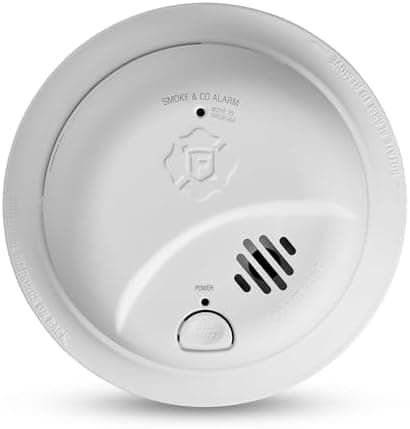
Top pick · #1Kidde Smart Smoke and Carbon Monoxide Detector, Ring App Enabled for Real-Time Notifications, Wire-Free…
Best combined smoke+CO

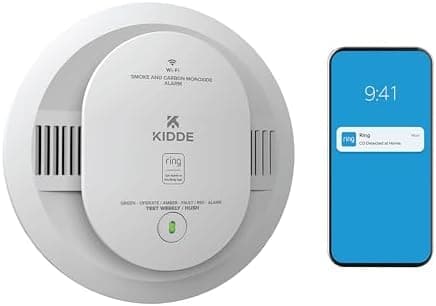
Kidde Smart Smoke and Carbon Monoxide Detector, Ring App Enabled for Real-Time Notifications, Wire-Free…

★★★★★4.4(125)85Great

Across the reviewers we read, this Kidde Ring-enabled combo unit is the strongest consensus pick when you want both smoke and CO detection in a single smart device. Goodhousekeeping.com gave it a 2026 Home Reno Award and called out the Wi-Fi alert speed when every second counts; pcmag.com's standalone review highlights the voice alerts and Ring app integration as meaningful upgrades over a dumb alarm.

The rest of the rankings

#2,5

Frequently asked

5 questions
Do I really need a 'smart' CO detector, or is a regular plug-in fine?
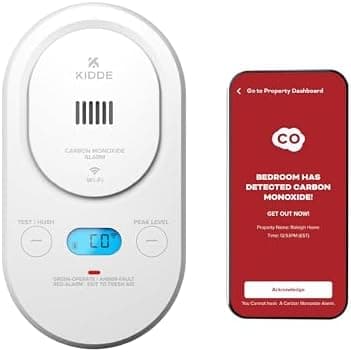
For pure life-safety, any UL 2034-listed alarm is adequate, and specialist communities like r/firealarms and r/AirQuality routinely point shoppers at the cheaper plug-in Kidde and First Alert models. The case for a smart unit is remote notification when you're away from home, integration with a Ring, SmartThings or Matter hub, and a digital readout of ambient CO ppm. If you have a gas furnace, attached garage, generator or rental property you don't live in, the app-alert feature is the main reason to pay the premium.
Should I get a combination smoke + CO detector or separate units?
Reviewers are split. Verified-purchase Costco buyers and Good Housekeeping's writeup of the Kidde Ring combo argue that one device on the ceiling is simpler and cheaper to maintain. Several r/firealarms and r/smarthome threads push back, noting that smoke and CO sensors have different ideal mounting heights and different replacement schedules, and that a failed combo unit takes out both protections at once.
Are Matter or Zigbee CO detectors ready for prime time?
Barely. r/MatterProtocol and r/homeassistant threads on the Heiman Matter CO detector note that life-safety devices have been the slowest category to adopt new smart-home standards, and that local-control via Home Assistant or SmartThings still requires some tinkering. They're a strong fit for committed smart-home users, but mainstream shoppers will have an easier time with a Wi-Fi or Ring-connected Kidde.
How long do smart CO detectors actually last?
UL 2034 5th Edition sensors are rated for roughly 10 years from the date of manufacture, and r/smarthome and r/firealarms commenters repeatedly remind buyers that the whole unit must be replaced at that point regardless of battery state. Battery-backup models typically need fresh AAs every 1-2 years, and chirping complaints in r/homeowners threads almost always trace back to either a weak backup battery or an end-of-life sensor.
Why do so many smart CO detectors have mixed Amazon ratings?
Across the reviewers we read, the recurring pain points are app setup friction, occasional chirping that's hard to diagnose, and false low-battery warnings, not sensor failures. r/firealarms commenters also note that Kidde has had quality-control complaints in recent years. Cross-checking expert reviews against verified-purchase Best Buy and Costco reviews gives a more reliable picture than the Amazon star average alone.