
VerdictAI

Reviewer consensus · 2026

Best Indoor Smart Plugs of 2026What 62 reviewers actually think, trust-weighted

Indoor smart plugs are one of the lowest-stakes ways to start a smart home, but the market is crowded with near-identical white bricks of varying reliability. We read across mainstream tech press, specialist subreddits, and verified-purchase reviews to surface which ones actually hold up after the honeymoon period, and which ones get yanked from outlets within a month. The picks below reflect the trust-weighted consensus across the reviewers we read, not a single editor's verdict.

Sources behind this verdict

62 reviewers, weighted by source trust

62reviewers read

Weighted by source trust

We don’t review products. We read what other reviewers wrote, score each source for trustworthiness, and synthesize the consensus.

How sources are scored →

Trust hierarchy

Trusted5
Verified1
Supporting14
Flagged0

Source mix

62signals
  • 10Press
  • 2Retailer
  • 30Community
  • 20Video

Trusted · 5 sources

Independent · documented methodology

Verified · 1 source

Documented methodology · commerce-owned

At a glance

Highest-rated by the consensus

#1 of 5
Top pick · #1TP-Link Tapo Matter Supported Smart Plug Mini, Compact Design, 15A/1800W Max, Super Easy Setup, Works with…
Best overall

TP-Link Tapo Matter Supported Smart Plug Mini, Compact Design, 15A/1800W Max, Super Easy Setup, Works with…

Tapo

★★★★★4.5(2,561)88Great

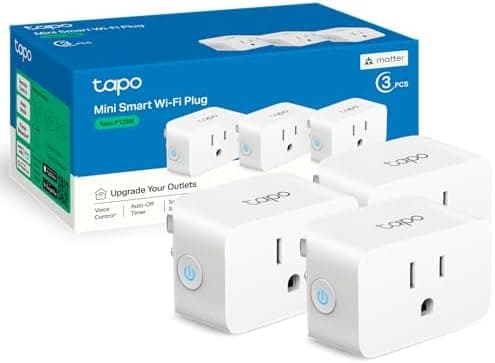
Across the reviewers we read, the Tapo P125M is the closest thing to a consensus pick in the current smart plug market. pcmag.com calls out that it "seamlessly integrates with just about every smart home platform and device on the market," and reviewed.com (a verified-tier source whose technical testing we weight heavily) corroborates with hands-on notes about quick response times and reliable Matter onboarding.

The rest of the rankings

#2,5

Frequently asked

5 questions
Do I need a hub to use a smart plug?
For almost all of the picks here, no. Wi-Fi smart plugs from TP-Link (Kasa and Tapo), Govee, and Amazon connect directly to a 2.4 GHz home network and pair with Alexa or Google Home through their respective apps. Matter-over-Wi-Fi plugs like the Tapo P125M technically benefit from a Matter controller (a HomePod, Echo, or Google Nest hub you likely already own), but they don't require a dedicated smart-home hub like Zigbee or Z-Wave plugs do.
What does Matter compatibility actually get me?
Matter lets a single plug work across Apple Home, Google Home, Alexa, and SmartThings simultaneously without juggling separate integrations. Reviewers at pcmag.com and reviewed.com flag this as the main reason to pay a small premium for a Matter-labeled plug like the Tapo P125M, especially if you mix ecosystems or expect to switch platforms later.
Are smart plugs safe to leave plugged in 24/7?
The mainstream picks here are UL- or ETL-certified for continuous use and rated up to 15A. Reviewers consistently note that the bigger risk is overloading the plug with high-draw appliances like space heaters, which exceed many plugs' safe limits. For high-wattage devices, look specifically for a 15A-rated plug with overload protection.
Why do so many Reddit threads complain about smart plugs dropping off Wi-Fi?
Cheaper 2.4 GHz plugs are sensitive to router placement, channel congestion, and mesh handoff behavior. Specialist subreddits like r/homeassistant repeatedly flag this with Kasa, Govee, and Meross plugs alike. Sticking the plug closer to the router, locking your router to a single 2.4 GHz channel, and avoiding co-located 5 GHz interference resolves most cases reviewers describe.
Do I need energy monitoring on a smart plug?
Only if you actually plan to look at the data. Reviewers at pcmag.com note the Tapo P110/P115 line provides surprisingly granular kWh reporting that's useful for tracking a fridge, space heater, or PC. If you just want to schedule a lamp, you can skip energy monitoring and save a few dollars.