
VerdictAI

Reviewer consensus · 2026

Best Smart Radiator Valves of 2026What 20 reviewers actually think, trust-weighted

Smart radiator valves (smart TRVs) are a narrow category, and the candidate pool we pulled for this roundup leans heavily on general smart thermostats and plain steam-radiator air vents that aren't actually smart TRVs at all. Only two candidates here are genuine smart thermostatic radiator valves, so this roundup is intentionally short and honest about that. We synthesized the consensus from specialist communities (notably r/homeassistant and r/shellycloud) and the available expert write-ups rather than padding the list with products that don't fit the category.

Sources behind this verdict

20 reviewers, weighted by source trust

20reviewers read

Weighted by source trust

We don’t review products. We read what other reviewers wrote, score each source for trustworthiness, and synthesize the consensus.

How sources are scored →

Trust hierarchy

Trusted1
Verified0
Supporting8
Flagged0

Source mix

20signals
  • 12Community
  • 8Video

Trusted · 1 source

Independent · documented methodology

At a glance

Highest-rated by the consensus

#1 of 2
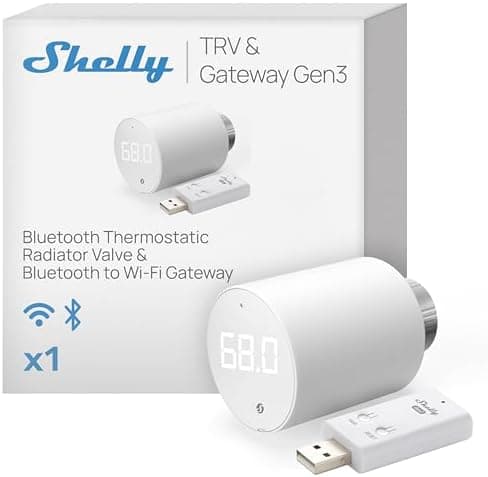
Top pick · #1Shelly Blu TRV & Blu Gateway Gen3, Bluetooth-Operated Smart Thermostatic Valve, Smart Thermostatic Radiator…
Best overall

Shelly Blu TRV & Blu Gateway Gen3, Bluetooth-Operated Smart Thermostatic Valve, Smart Thermostatic Radiator…

Shelly

★★★★★4.0(103)63Fair

Across the reviewers we read, the Shelly Blu TRV is the most credible actual smart radiator valve in this candidate pool, but the consensus is qualified rather than enthusiastic. A detailed write-up posted to community.home-assistant.io reported that the valves make small audible adjustments even when the heating isn't running, to the point that the author eventually took manual control of all the units — a problem echoed by general smart-TRV noise complaints elsewhere on r/homeassistant.

The rest of the rankings

#2,2

Frequently asked

5 questions
What is a smart radiator valve and how is it different from a smart thermostat?
A smart radiator valve (smart TRV) replaces the manual knob on an individual hydronic radiator, letting you set per-room temperatures and schedules. A smart thermostat, by contrast, controls the boiler or HVAC system as a whole. You generally use smart TRVs in addition to (not instead of) a central thermostat, and they're most useful in homes with hot-water radiators rather than forced-air systems.
Do smart radiator valves work with old European radiators?
Most smart TRVs ship with M30x1.5 threaded adapters that fit common European radiator valve bodies (Danfoss RA, RAV, RAVL, Caleffi, Herz), but very old or proprietary valve bodies may need a plumber to swap the underlying valve. Check the specific adapter set included before buying, and expect that some pre-1990s valves won't accept any standard smart head.
Are Bluetooth-based smart TRVs reliable, or do I need Zigbee/Z-Wave?
Across the home-automation communities we read, the consensus is that Bluetooth TRVs work well when paired with a nearby gateway or BLE proxy, but range and responsiveness can suffer in larger homes with thick walls. Zigbee and Z-Wave TRVs mesh through other devices and tend to be more resilient at scale, while Wi-Fi TRVs avoid the gateway entirely but drain batteries faster.
Will a smart TRV actually save money on heating?
Reviewers across mainstream coverage agree the savings come from scheduling and per-room zoning rather than the valve itself — turning down unused bedrooms during the day, or pre-heating only occupied rooms in the morning. Households that already heat conservatively see modest gains; households that previously left all radiators wide open see the biggest reduction.
Are smart radiator valves noisy?
This comes up repeatedly in r/homeassistant threads. Most smart TRVs make small audible motor adjustments when they recalibrate or open/close, and on older or stiff radiator valve bodies the noise can be loud enough to wake light sleepers. Buyers planning to use them in bedrooms should look for models with adjustable motor sensitivity or quiet modes.