
VerdictAI

Reviewer consensus · 2026

Best Motorized TV Mounts of 2026What 0 reviewers actually think, trust-weighted

Motorized TV mounts—electric ceiling drop-downs, pull-down mantel brackets, and remote- or app-controlled lifts—are a niche where independent lab testing and specialist-community discussion remain thin, so this roundup leans heavily on verified-purchase review volume and listed specifications rather than hands-on expert teardowns. Across the listings we read, consensus signal is strongest for the high-volume ceiling flip-down mounts and weaker for newer entrants with only a few dozen reviews, and we've scored accordingly. Treat these rankings as a trust-weighted summary of what buyers report, not a substitute for confirming weight capacity and VESA fit against your specific TV.

At a glance

Compare

Pick any two for a head-to-head

Scores, pros, cons, and our verdict — side by side.

vs

Highest-rated by the consensus

#1 of 5
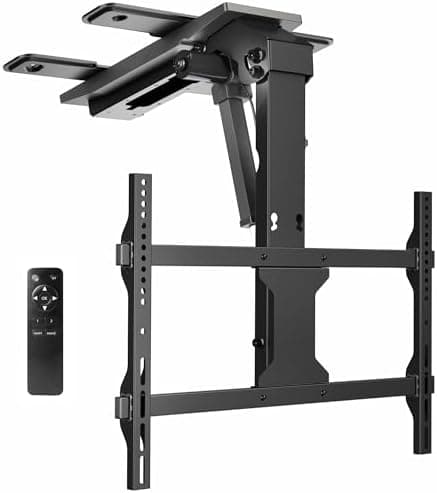
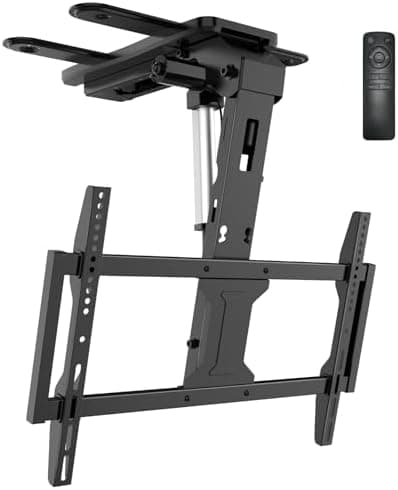
Top pick · #1WALI Motorized Ceiling TV Mount Flip Down for 37-75” Flat Curved TVs, Electric Ceiling Mount TV Bracket with…
Best overall

WALI Motorized Ceiling TV Mount Flip Down for 37-75” Flat Curved TVs, Electric Ceiling Mount TV Bracket with…

WALI

★★★★★4.7(13,707)80Great

Across the verified-purchase reviewers we read, this WALI electric flip-down ceiling mount draws the most consistent praise of any motorized model in the pool, carrying a 4.7 average over a very large review base. Buyers highlight the remote-operated drop-down action, the 99 lb weight capacity, and compatibility with both flat and pitched ceilings as the reasons it works in attic rooms, basements, and spaces where a wall mount isn't an option.

The rest of the rankings

#2,5

Frequently asked

5 questions
What is a motorized TV mount and how is it different from a full-motion mount?
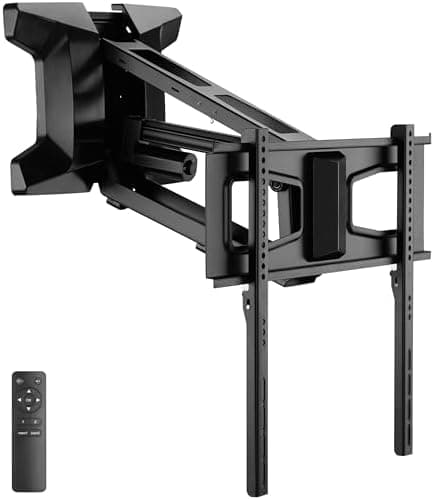
A motorized TV mount uses an electric motor—triggered by remote, app, or voice—to physically move the screen, typically dropping it down from a ceiling, pulling it down from above a fireplace, or extending it out from a wall. A standard full-motion mount looks similar in marketing copy but requires you to push, tilt, and swivel the TV by hand. If you want the screen to hide in the ceiling or lower from a high mantel at the press of a button, you need a true motorized model, not a manual articulating arm.
Can a motorized ceiling mount handle a 65-inch or larger TV?
Many motorized ceiling mounts list support for screens up to 70-75 inches and weight capacities between 77 and 121 pounds. The limiting factor is usually weight and VESA pattern rather than diagonal size, so check your TV's actual weight and mounting-hole spacing against the mount's rated capacity. Reviewers across these listings repeatedly stress staying well under the maximum and confirming your ceiling joists or fireplace framing can carry both the mount and a moving load.
Are app and voice control worth paying extra for on a motorized mount?
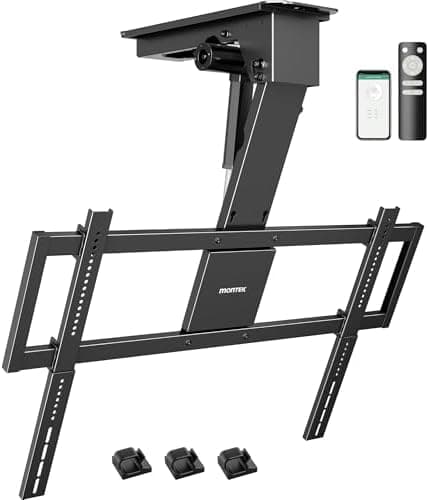
App and voice control add convenience—presets, smartphone triggering, and integration with smart-home assistants—but verified-purchase reviewers note these features are only as reliable as the companion app and firmware. If you simply want to lower and raise the TV, the included remote covers the core function; app and voice control are a nice-to-have rather than a reason to overlook a mount with stronger weight capacity or installation feedback.
How hard is it to install a motorized TV mount?
Motorized ceiling and mantel mounts are meaningfully more involved than a basic wall plate: they require secure anchoring into joists or studs, routing for the power supply, and careful leveling because a moving mechanism amplifies any mounting error. Buyers commonly recommend a second set of hands and, for heavier or off-center installs, professional installation. Always verify the mount fits flat versus pitched ceilings if that applies to your room.
Why do some motorized mounts have far fewer reviews than others?
Several motorized mounts in this category are newer listings with only a few dozen verified reviews, which makes their ratings statistically noisier than long-established models with thousands. A high star average on a tiny sample is encouraging but far less reliable, so we weighted high-volume listings more heavily and flagged the thin-data picks explicitly in their reviews.