
VerdictAI

Reviewer consensus · 2026

Best Wired Video Doorbells of 2026What 60 reviewers actually think, trust-weighted

Wired video doorbells trade battery convenience for always-on power, sharper video, and more reliable motion alerts, but the category now spans $40 entry-level units to $500 PoE flagships. This roundup synthesizes what reviewers across mainstream tech press, specialist communities, and verified-purchase retailer reviews have written about the leading wired doorbells. We weight independent test outlets and specialist forums most heavily and discount any signal that rests on a single retailer rating.

Sources behind this verdict

60 reviewers, weighted by source trust

60reviewers read

Weighted by source trust

We don’t review products. We read what other reviewers wrote, score each source for trustworthiness, and synthesize the consensus.

How sources are scored →

Trust hierarchy

Trusted4
Verified1
Supporting17
Flagged0

Source mix

60signals
  • 9Press
  • 1Retailer
  • 30Community
  • 20Video

Trusted · 4 sources

Independent · documented methodology

Verified · 1 source

Documented methodology · commerce-owned

At a glance

Highest-rated by the consensus

#1 of 5
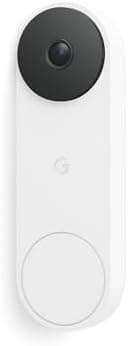
Top pick · #1Google Nest Doorbell (Wired, 3rd Gen) - 2K Video and Gemini, Live View, Night Vision, 2-Way Audio - Works…
Best overall

Google Nest Doorbell (Wired, 3rd Gen) - 2K Video and Gemini, Live View, Night Vision, 2-Way Audio - Works…

★★★★★4.4(707)87Great

Across the reviewers we read, the consensus on the 3rd-gen wired Nest Doorbell is that it's the most well-rounded wired option Google has shipped. PCMag reported sharp 2K video with well-saturated daytime colors and clean black-and-white night footage, and highlighted Gemini-generated event descriptions as a genuinely useful search tool rather than a gimmick.

The rest of the rankings

#2,5

Frequently asked

5 questions
Do I need a subscription to use a wired video doorbell?
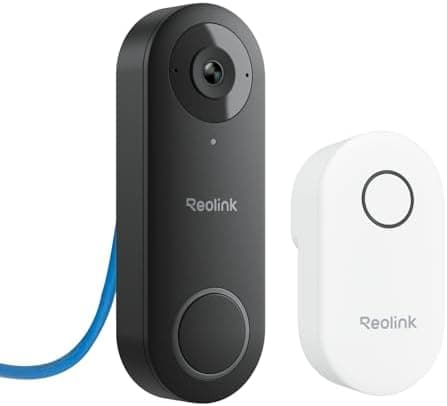
It depends on the brand. Ring and Nest both gate event history and many smart features (package detection, familiar-face alerts, recorded clips beyond a short window) behind monthly subscriptions, though Nest does offer a free three-hour clip rolling window. Reolink and Tapo are the standout no-subscription options in this set, recording locally to a microSD card or NVR with full event history at no recurring cost.
Is 4K worth it on a video doorbell, or is 2K enough?
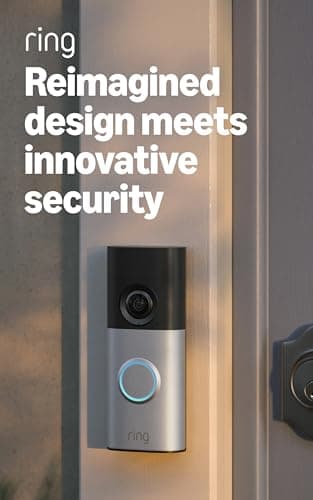
Across the reviewers we read, 2K (roughly 1536p–1600p) is the practical sweet spot for identifying faces and packages at typical doorbell distances. 4K models like the Ring Wired Doorbell Pro and Elite add usable digital zoom for license plates or detail at the curb, but they require stronger Wi-Fi (or PoE) and a Ring subscription to unlock the full benefit. For most homes, 2K with a wide field of view delivers more day-to-day value than chasing pixel count.
Will a wired video doorbell work with my existing chime and transformer?
Most wired doorbells need a 16–24V AC transformer, which is standard in newer U.S. homes but not always present in older houses or apartments. Compatibility with mechanical chimes is a known sticking point — community discussion specifically flags the newest Ring Wired Doorbell Pro 4K as not working with mechanical chimes out of the box. Always check the manufacturer's transformer voltage spec and chime compatibility list before buying.
Which wired doorbell is best if I'm in the Google Home ecosystem versus Alexa?
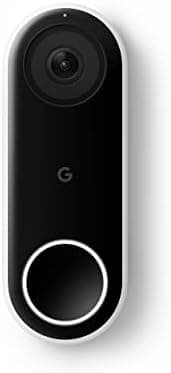
For Google Home / Nest households, the wired Nest Doorbell (2nd or 3rd Gen) is the natural fit, with native Google Assistant routines, Gemini event descriptions on the 3rd Gen, and free three-hour event history. For Alexa users, Ring's wired lineup integrates most tightly (announcements through Echo devices, Alexa Greetings). Arlo, Reolink, and Tapo all work with Alexa and Google Assistant but offer less deep integration with either.
How important is head-to-toe (tall aspect ratio) video on a doorbell?
Head-to-toe — a taller 1:1 or 4:3 field of view — matters most if packages are routinely left at the base of your door. A standard 16:9 doorbell crops out the porch floor, while head-to-toe captures the full person plus any package on the ground. Reviewers single out the Ring Wired Doorbell Plus and Arlo's head-to-toe framing as the practical reason to choose those over flatter wide-angle competitors.