
VerdictAI

Reviewer consensus · 2026

Best Crimping Tools of 2026What 46 reviewers actually think, trust-weighted

Crimping tools span a wide range of jobs, from insulated spade terminals on automotive harnesses to ferrules for control panels and RJ45 ends for network cabling, and no single tool covers all of them well. The picks below synthesize what mainstream tech press, specialist communities like r/electricians and r/Tools, and verified-purchase retailer reviewers have written about each model, weighted toward high-trust expert and community consensus. Use the Best For labels to match a tool to the job you actually do most often.

Sources behind this verdict

46 reviewers, weighted by source trust

46reviewers read

Weighted by source trust

We don’t review products. We read what other reviewers wrote, score each source for trustworthiness, and synthesize the consensus.

How sources are scored →

Trust hierarchy

Trusted2
Verified0
Supporting13
Flagged0

Source mix

46signals
  • 26Community
  • 20Video

Trusted · 2 sources

Independent · documented methodology

At a glance

Highest-rated by the consensus

#1 of 5
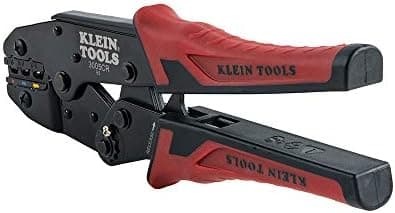
Top pick · #1Klein Tools 3005CR Wire Crimper Tool, Ratcheting Insulated Terminal Crimper for 10 to 22 AWG Wire
Best overall

Klein Tools 3005CR Wire Crimper Tool, Ratcheting Insulated Terminal Crimper for 10 to 22 AWG Wire

★★★★★4.7(6,464)90Excellent

Across the reviewers we read, the Klein 3005CR is the most frequently recommended ratcheting crimper for insulated terminals in the 10-22 AWG range. Multiple high-trust r/Tools threads describe it as the tool people land on after cycling through cheaper plier-style crimpers, with comments like "it ratchets until it is adequately crimped and releases" and "worth the $5 premium over the Klein pliers crimper." r/electricians discussions echo that view for sta-kon style terminals.

The rest of the rankings

#2,5

Frequently asked

5 questions
Do I really need a ratcheting crimper instead of plier-style?
For repeatable, consistent crimps on insulated or non-insulated terminals, specialist communities like r/electricians and r/Tools strongly favor ratcheting designs because they apply full crimping force every cycle and only release once the crimp is complete. Plier-style crimpers work for occasional DIY use but vary with hand strength, which is why most pro-leaning reviewers we read recommend stepping up to a ratchet.
What's the difference between square and hex ferrule crimps?
Square (or trapezoidal) crimps produce a flat-sided result that mates well with screw and cage-clamp terminals common in PLC and control-panel work. Hex crimps produce a six-sided result preferred for round screw terminals and many European-style connectors. Threads on r/PLC and r/AskElectronics note that both are acceptable when paired with the correct terminal style, hex is more universal, square is preferred where panel terminals are designed for it.
Can one crimper handle insulated terminals, ferrules, and RJ45?
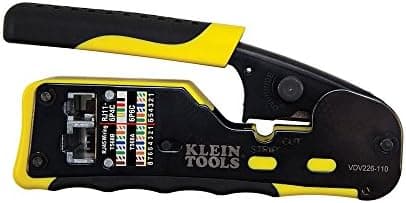
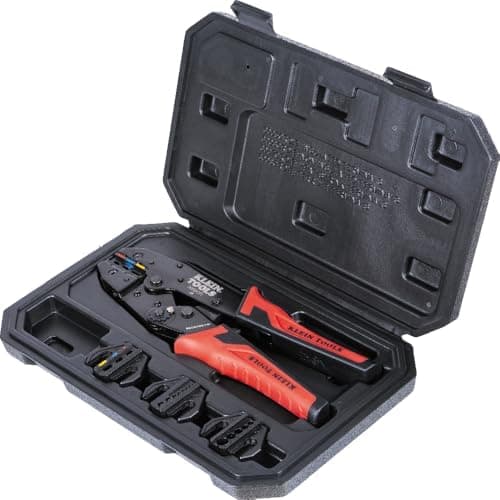
Generally no. Insulated/non-insulated terminals, ferrules, and modular data connectors all use different die geometries. A multi-die kit like the Klein 3000CRKIT swaps dies to cover several terminal styles, but RJ45 pass-through work still calls for a dedicated data crimper such as the VDV226-110.
Is a budget crimper good enough for occasional DIY?
For light home and hobby work, verified-purchase reviewers report acceptable results from inexpensive multi-tools like the WGGE WG-015. However, high-trust community threads on r/electricians and r/harborfreight consistently warn that cheap tools struggle with consistent crimp force and clean strips, so anyone doing electrical work regularly is better served by a Klein or comparable ratcheting model.
What AWG range should I look for?
For general electrical and automotive work, 22-10 AWG covers most insulated spade, ring, and butt connectors. Ferrule work for control panels often needs to extend down to 26-28 AWG and up to 5-7 AWG for larger conductors. Match the printed AWG range on the tool to the wire gauges you actually use rather than buying the widest spec available.