
VerdictAI

Reviewer consensus · 2026

Best Hammers of 2026What 64 reviewers actually think, trust-weighted

Hammers are a category where consensus runs deep and old-school: across the reviewers we read, decades-old steel one-piece hammers and a handful of newer titanium framers dominate the conversation, while bargain fiberglass models earn surprising goodwill for the money. This roundup is a trust-weighted synthesis of what verified-purchase buyers, specialist carpentry and tool communities, and mainstream reviewers have written, not our own bench testing. Where high-trust community sources push back on the marketing (notably on titanium claims and prying durability), we surface the disagreement rather than smooth it over.

Sources behind this verdict

64 reviewers, weighted by source trust

64reviewers read

Weighted by source trust

We don’t review products. We read what other reviewers wrote, score each source for trustworthiness, and synthesize the consensus.

How sources are scored →

Trust hierarchy

Trusted3
Verified0
Supporting5
Flagged0

Source mix

64signals
  • 36Community
  • 28Video

Trusted · 3 sources

Independent · documented methodology

At a glance

Compare

Pick any two for a head-to-head

Scores, pros, cons, and our verdict — side by side.

vs

Highest-rated by the consensus

#1 of 7
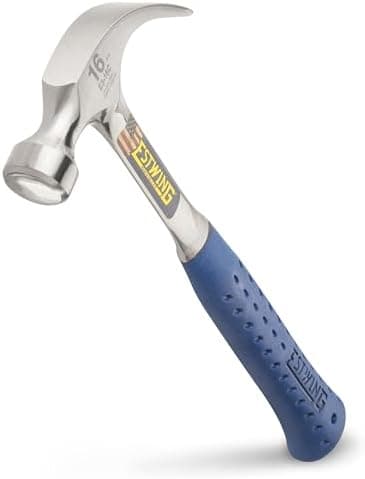
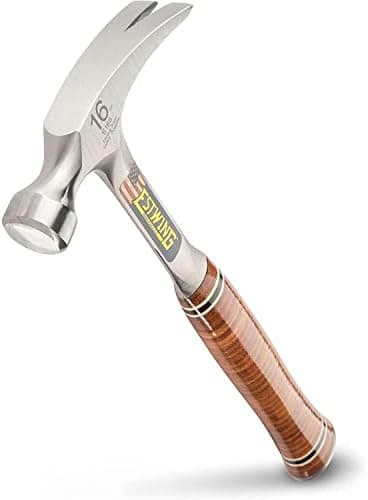
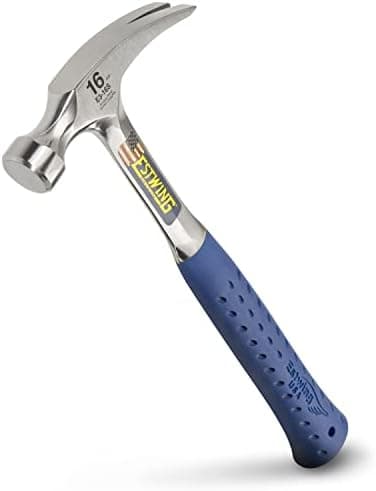
Top pick · #1ESTWING Hammer - 16 oz USA Made Straight Rip Claw Hammer with Smooth Face & Shock Reduction Grip - E3-16S
Best overall

ESTWING Hammer - 16 oz USA Made Straight Rip Claw Hammer with Smooth Face & Shock Reduction Grip - E3-16S

Estwing

★★★★★4.8(4,855)92Excellent

Across the reviewers we read, the Estwing E3-16S one-piece forged steel rip-claw is the closest thing to a default recommendation in this category. High-trust r/Carpentry and r/Tools threads repeatedly cite Estwing for great balance, reliability and longevity, with one poster reporting the same hammer in service for 20 years and another saying their smooth-face straight claw is 'the best hammer I've ever owned.' woodsmith.com and a garagejournal.com forum thread both stress the appeal of the seamless one-piece forging, which removes the welds and joints that fail on cheaper hammers.

The rest of the rankings

#2,7

Frequently asked

4 questions
What size hammer should I buy for general household use?
Across specialist communities, the dominant recommendation for general and finish work is a 16 oz claw hammer, with several r/Tools and r/Carpentry posters noting 16 oz is plenty for nearly all hammering tasks. Heavier 19-22 oz framing hammers come up for framing and demolition, but reviewers repeatedly warn that heavier heads add joint fatigue during all-day use.
Are titanium hammers worth the extra money?
The signals are genuinely split. High-trust carpentry community threads report less arm, elbow and wrist fatigue and striking force comparable to heavier steel, and many long-term owners love them. But the same communities run a recurring 'titanium hammer myth' debate, point out that a 14 oz titanium head 'just becomes a 14 oz hammer' when prying or knocking studs, and flag durability and quality-control issues. They suit daily, high-volume nailers more than occasional users.
Steel, fiberglass, or wood handle: which is better?
One-piece forged steel hammers draw the strongest durability consensus across high-trust communities, with multiple owners reporting 20-plus years of service and praising the shock-reduction grip. Fiberglass is favored for low cost and decent vibration damping, while wood and titanium-with-wood handles get praise for feel but periodic complaints about weakness when prying.
Why do reviewers complain about vibration and arm fatigue?
Solid-steel hammers transmit more shock than titanium or anti-vibration designs. Several high-trust community posters say basic steel hammers cause joint stress during all-day use, and one switched away from a competitor back to a shock-reduction-grip model to stop arm pain. For occasional use this rarely matters; for daily pounding it is the main reason buyers move to titanium or premium grips.