
VerdictAI

Reviewer consensus · 2026

Best Infrared Thermometers of 2026What 57 reviewers actually think, trust-weighted

Infrared (non-contact) thermometers span a wide range, from sub-$20 cooking guns to rugged industrial units that survive drops and dust. This roundup synthesizes what verified-purchase reviewers, mainstream tech and trade press, and specialist cooking and trade communities (HVAC, BBQ, metalworking, griddle forums) have said across the web, weighting independent and high-trust sources most heavily. One theme is consistent everywhere we read: these tools read surface temperature only, struggle on shiny or reflective surfaces, and average over a spot whose size grows with distance, so the right pick depends heavily on what you're measuring.

Sources behind this verdict

57 reviewers, weighted by source trust

57reviewers read

Weighted by source trust

We don’t review products. We read what other reviewers wrote, score each source for trustworthiness, and synthesize the consensus.

How sources are scored →

At a glance

Compare

Pick any two for a head-to-head

Scores, pros, cons, and our verdict — side by side.

vs

Highest-rated by the consensus

#1 of 7
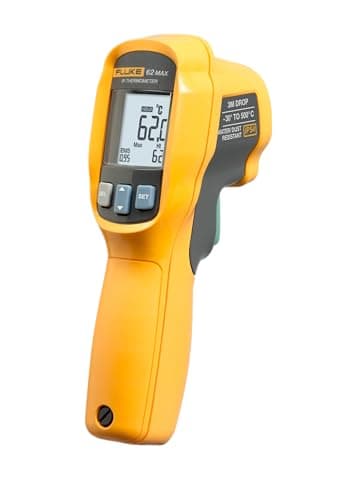
Top pick · #1Fluke 62 Max Industrial Infrared Thermometer, -22 to +932 Degree F Range, Single Laser Targeting, 10:1…
Best overall

Fluke 62 Max Industrial Infrared Thermometer, -22 to +932 Degree F Range, Single Laser Targeting, 10:1…

Fluke

★★★★★4.7(2,076)89Great

Across the reviewers we read, the Fluke 62 Max is the unit professionals reach for when durability matters. Reseller and spec pages including coleparmer.com and instrumentchoice.com.au emphasize its IP54 dust/water rating and ability to survive a three-meter drop, and verified-purchase reviewers reward it with a 4.7 average across roughly 2,076 ratings.

The rest of the rankings

#2,7

Frequently asked

5 questions
Can I use a cooking infrared thermometer to check body temperature?
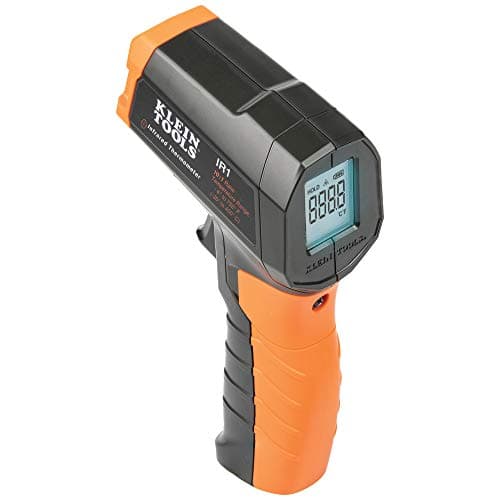
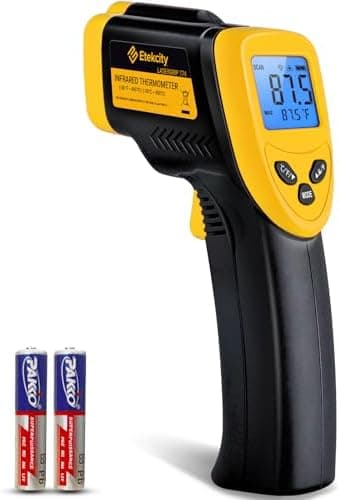
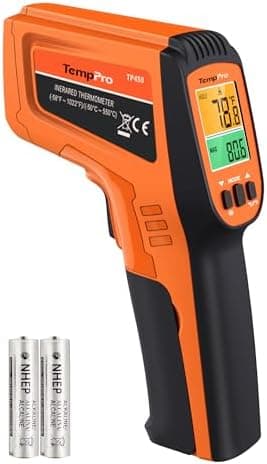
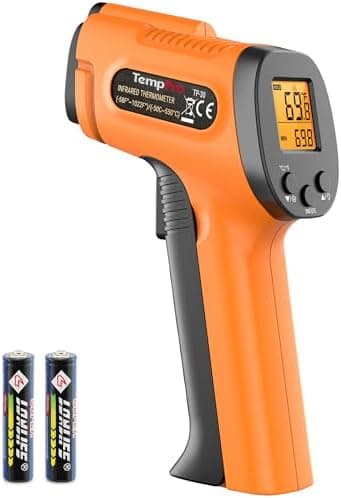
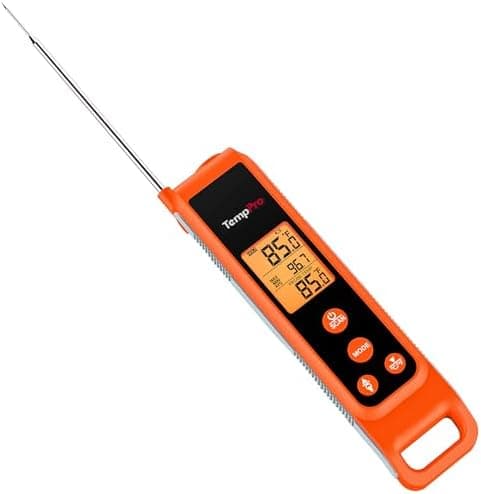
No. The surface guns in this roundup (Etekcity, Klein, Fluke, TempPro models) are explicitly labeled 'not for human temperature,' and retailer listings warn that readings on skin will be inaccurate. For fever screening you need a dedicated medical forehead thermometer designed and calibrated for that purpose.
Why does my infrared thermometer give wrong readings on stainless steel pans?
Reviewers across cooking communities like r/carbonsteel repeatedly warn that IR thermometers don't work well on shiny or reflective surfaces because low, variable emissivity throws off the reading. Models with adjustable emissivity help somewhat, but for bare stainless many users fall back to the water-droplet test.
Is an expensive Fluke worth it over a $20 cooking gun?
It depends on use. Specialist trade threads (r/HVAC, r/BuildingAutomation) favor the Fluke 62 Max for durability, drop and IP54 resistance, and long calibration life in professional service, while budget cooking guns from Etekcity and TempPro earn praise for accuracy-per-dollar in kitchen and grill use. Several reviewers note even cheap units hit roughly 1% accuracy on matte surfaces.
What distance-to-spot ratio do I need?
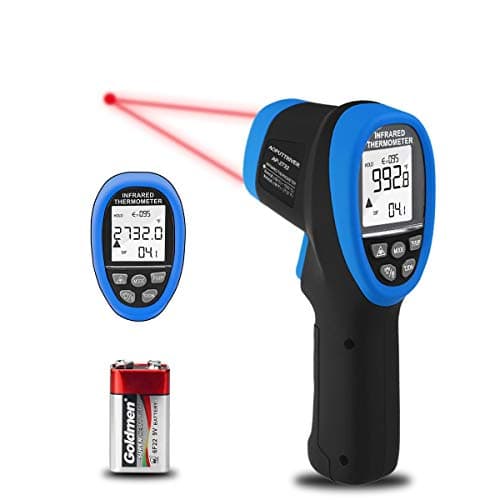
A higher ratio (e.g. 12:1, 16:1, 30:1) lets you measure a smaller target area from farther away. Cooking and home use is fine at 10:1 to 12:1; high-temp industrial tasks like kilns or forging benefit from 30:1 or higher so you can stay back from the heat. Remember the measured spot grows as you back away.
Why does my reading drift out of calibration?
Trade users report that all of these units, including premium ones, can drift over time, especially in extreme heat. r/BuildingAutomation users send Flukes out for calibration and find them good for 3-5 years; HVAC pros recommend periodically checking any gun against ice water or boiling water.