
VerdictAI

Reviewer consensus · 2026

Best Stud Finders of 2026What 77 reviewers actually think, trust-weighted

Stud finders split sharply into two camps, and the reviewers we read rarely agree on which is better: battery-free rare-earth magnets that snap to fasteners, and multi-sensor electronic scanners that light up the full width of a stud. This roundup synthesizes verified-purchase reviews from major retailers, specialist communities like r/Tools, r/Carpentry and r/handyman, and an independent roundup from nytimes.com to weigh the consensus rather than deliver a single hands-on verdict. Across sources, Franklin Sensors' multi-sensor scanners and simple magnetic finders dominate the conversation, while cheap LCD-style scanners draw the most skepticism.

Sources behind this verdict

77 reviewers, weighted by source trust

77reviewers read

Weighted by source trust

We don’t review products. We read what other reviewers wrote, score each source for trustworthiness, and synthesize the consensus.

How sources are scored →

At a glance

Compare

Pick any two for a head-to-head

Scores, pros, cons, and our verdict — side by side.

vs

Highest-rated by the consensus

#1 of 8
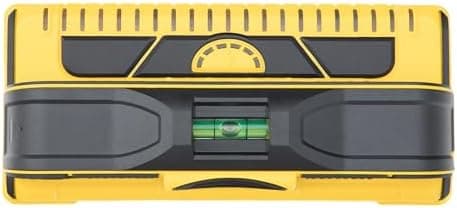
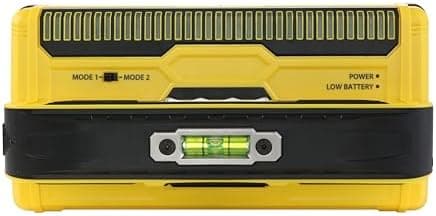
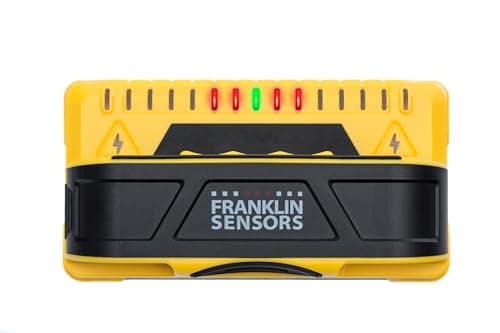
Top pick · #1Franklin Sensors ProSensor M150/X990 Stud Finder with Live Wire Detection and 9-Sensors, Wood & Metal Stud…
Best overall

Franklin Sensors ProSensor M150/X990 Stud Finder with Live Wire Detection and 9-Sensors, Wood & Metal Stud…

Franklin Sensors

★★★★★4.6(4,050)88Great

Across the reviewers we read, the ProSensor M150/X990 lands as the best-rounded electronic pick: nine sensors and a full-width LED display that shows both edges and the center of a stud without any calibration. Homedepot verified-purchase reviewers repeatedly call out how easy it is to see the entire stud at a glance, and r/diynz commenters say once they switched to a Franklin ProSensor, "anything else now feels inferior." r/Tools threads echo that the multi-sensor approach guides you to the stud more reliably than single-point finders.

The rest of the rankings

#2,8

Frequently asked

5 questions
Are magnetic stud finders better than electronic ones?
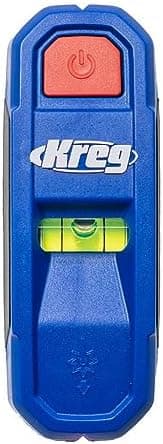
It depends on the job. Across specialist communities, magnetic finders (StudBuddy, CH Hanson, StudPoP) are praised as cheap, battery-free and reliable because they lock onto the screws and nails already driven into studs, with no false reads from pipes or wires. The tradeoff reviewers note is that they only find fasteners, not the stud itself, and struggle on thick plaster. Electronic multi-sensor scanners like the Franklin ProSensor line are favored when you need to see the full width and exact center of a stud, especially on double drywall or tile.
Why do reviewers recommend Franklin Sensors so often?
The recurring point across r/handyman, r/Tools and r/diynz is that Franklin's 9- and 13-sensor designs show the entire width of a stud at once via a row of LEDs, with no calibration step. Reviewers describe this as faster and more foolproof than single-point electronic finders. The main criticisms are price and a few reports of inconsistent reads on unusual wall assemblies.
What's the best budget stud finder?
For under $15, magnetic finders like the StudBuddy and CH Hanson 3040 collect the strongest grassroots support. They require no batteries, rarely give false positives, and verified-purchase reviewers report years of reliable use. They are the most-recommended value picks across the communities we read.
Can a stud finder work on plaster or tile walls?
Reviewers caution that performance drops sharply on plaster, lath, and tile. Some magnetic finders work on thinner plaster but many are explicitly not rated for it. For deep or layered walls, the Franklin ProSensor MAX advertises detection up to about 2.5 inches, and community threads confirm electronic multi-sensor scanners handle double drywall and tile-over-drywall better than basic models.
Do I really need an expensive stud finder?
Not necessarily. A recurring sentiment in r/DIY and r/Construction is that stud finders are overrated for most household tasks and a strong magnet is cheaper, faster and more reliable. Reviewers who do recommend spending more point to Franklin's multi-sensor scanners for trim carpentry, repeated professional use, or tricky walls where seeing the full stud width saves time.