
VerdictAI

Reviewer consensus · 2026

Best Welders of 2026What 50 reviewers actually think, trust-weighted

Welders in this roundup span everything from sub-$100 flux-core machines to a $2,000-plus professional multiprocess unit, so we read across mainstream tech and trade press, brand demo channels, verified-purchase retailer reviews, and specialist communities like r/Welding, r/metalworking and r/harborfreight to synthesize where the consensus actually lands. The pattern that emerges repeatedly: budget multiprocess machines deliver remarkable value for hobby and DIY use but draw consistent caution about duty cycle, stick performance and 110V circuit limits, while premium units earn praise for arc quality at a steep price. What follows is a trust-weighted summary of that consensus, not our own bench testing.

Sources behind this verdict

50 reviewers, weighted by source trust

50reviewers read

Weighted by source trust

We don’t review products. We read what other reviewers wrote, score each source for trustworthiness, and synthesize the consensus.

How sources are scored →

At a glance

Compare

Pick any two for a head-to-head

Scores, pros, cons, and our verdict — side by side.

vs

Highest-rated by the consensus

#1 of 5
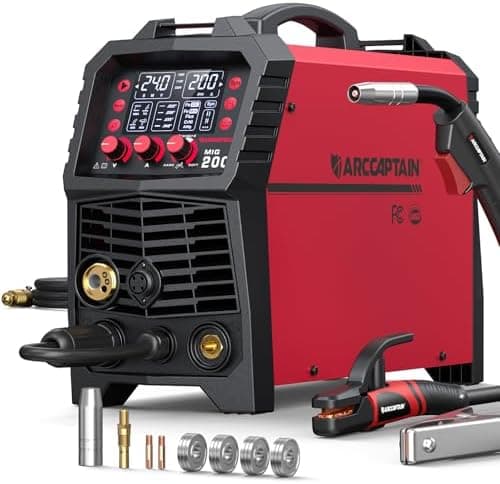
Top pick · #1ARCCAPTAIN MIG Welder, 200Amp 6 in 1 Gas MIG/Gasless Flux Core MIG/Stick/Lift TIG/Spot welding/Spool Gun…
Best overall

ARCCAPTAIN MIG Welder, 200Amp 6 in 1 Gas MIG/Gasless Flux Core MIG/Stick/Lift TIG/Spot welding/Spool Gun…

ARCCAPTAIN

★★★★★4.7(913)86Great

Across the reviewers we read, the ARCCAPTAIN MIG200 is the most consistently praised value pick in this group. It carries the highest customer rating here (4.7 across roughly 913 reviews), and r/Welding threads repeatedly describe it in concrete terms: one owner calls it 'a great deal for the money,' bought 'as a backup/beater machine and for mobile work,' while another flatly says it's 'absolutely the best cheap stick welder I've ever used...

The rest of the rankings

#2,5

Frequently asked

5 questions
What's the best welder for a complete beginner?
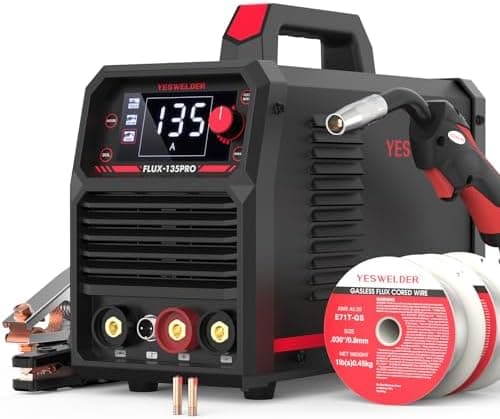
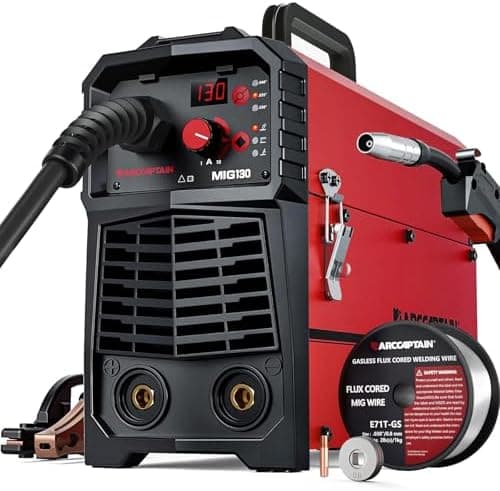
Across the reviewers we read, the consensus favors an inexpensive 110V multiprocess machine that runs gasless flux-core out of the box, so you can practice without committing to a gas bottle. The YESWELDER 135A and ARCCAPTAIN 130A are repeatedly cited in r/Welding and r/harborfreight threads as forgiving entry points, with the caveat that they are hobby tools rather than production machines.
Do cheap multiprocess welders really do MIG, TIG and stick well?
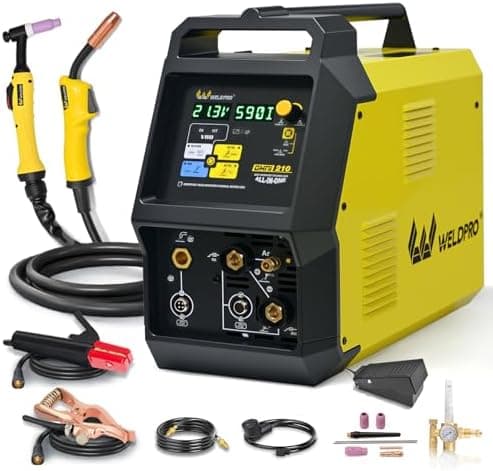
Reviewers say yes for MIG and flux-core, but with real asterisks on the other modes. Specialist-community threads note the budget 3-in-1 and 6-in-1 units typically offer only lift-start (not high-frequency) TIG, often need an extra torch and argon for TIG, and several owners report uneven stick (MMA) results — one high-trust r/metalworking thread flagged poor 6010/7018 performance on a pricier ArcCaptain model.
Is 110V enough, or do I need 220V?
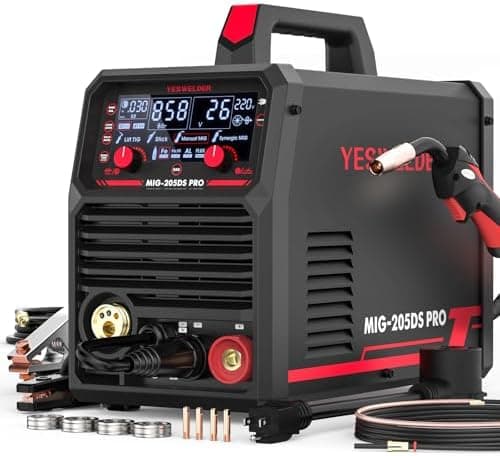
A high-trust r/metalworking discussion stresses that 110V machines are very limited on a standard 15–20A household circuit, fine for sheet metal and light tacking but not sustained welds on thicker stock. Reviewers recommend dual-voltage (110V/220V) machines like the YESWELDER 205A if you expect to weld thicker material.
Is the Miller Multimatic 215 PRO worth several times the price of an Amazon multiprocess welder?
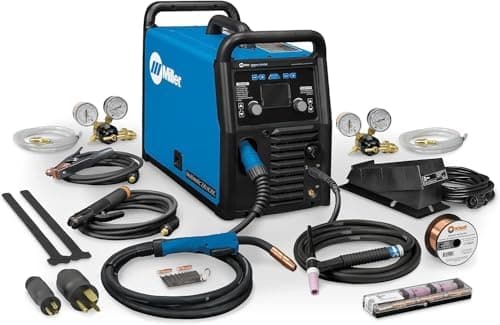
r/Welding consensus frames it as a 'buy once, cry once' machine with smoother arc starts and strong reliability, but reviewers are blunt that it's overkill for occasional hobby work and that it lacks AC TIG and high-frequency start. If you weld regularly or want long-term resale and support, the spend is defensible; for light DIY, the budget machines are the better value.
What should I watch out for with budget Amazon welders?
Common pain points cited across communities and verified-purchase reviews include low duty cycle, occasional dead-on-arrival accessories (a broken connector before first use was noted), 'rough around the edges' wire-feed and voltage control, and lackluster manufacturer support that may push replacement subassemblies rather than repairs.