
VerdictAI

Reviewer consensus · 2026

Best Board Games for Kids (Ages 4-8) of 2026What 37 reviewers actually think, trust-weighted

Picking a board game for a 4-to-8-year-old means balancing attention span, reading ability, and how much luck-versus-strategy a kid can stomach without a meltdown. This roundup synthesizes what verified-purchase reviewers, specialist board-game communities (notably r/boardgames threads), and mainstream retailer listings say about the most-discussed kids' games, weighted by source trust rather than marketing copy. Where the consensus is thin or based mostly on Amazon star averages, we say so plainly.

Sources behind this verdict

37 reviewers, weighted by source trust

37reviewers read

Weighted by source trust

We don’t review products. We read what other reviewers wrote, score each source for trustworthiness, and synthesize the consensus.

How sources are scored →

Trust hierarchy

Trusted2
Verified0
Supporting12
Flagged0

Source mix

37signals
  • 2Retailer
  • 19Community
  • 16Video

Trusted · 2 sources

Independent · documented methodology

At a glance

Compare

Pick any two for a head-to-head

Scores, pros, cons, and our verdict — side by side.

vs

Highest-rated by the consensus

#1 of 7
Top pick · #1Hasbro Gaming Trouble Board Game for Kids Ages 5 and Up 2-4 Players
Best overall

Hasbro Gaming Trouble Board Game for Kids Ages 5 and Up 2-4 Players

Hasbro

★★★★★4.7(39,940)88Great

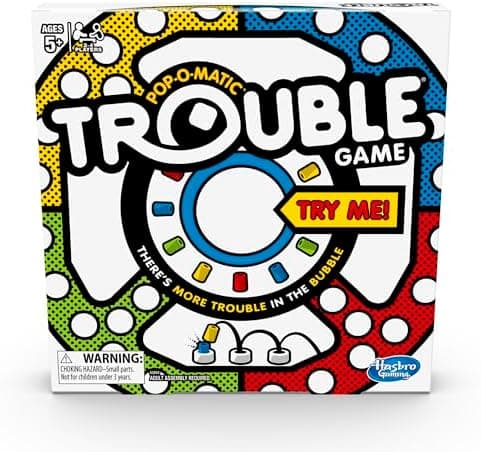
Across the reviewers we read, Trouble is the most consistently endorsed kids' game in this group. High-trust r/boardgames posts describe it as 'simple and fast,' with one parent noting they could play 'exactly as much as my kid had appetite,' and an r/Preschoolers thread calling it among the best for taking turns and game setup with toddlers.

The rest of the rankings

#2,7

Frequently asked

5 questions
What's the best board game for a 4-year-old who can't read yet?
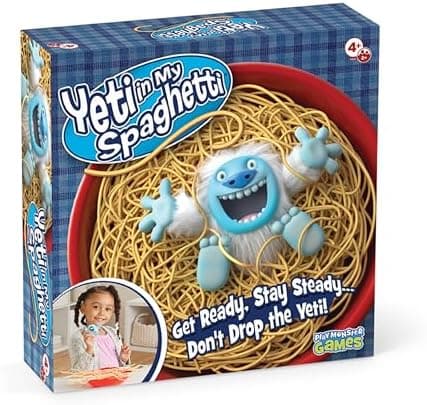
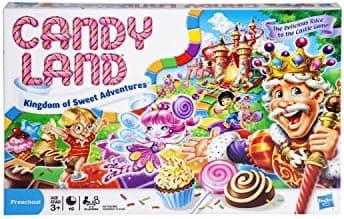
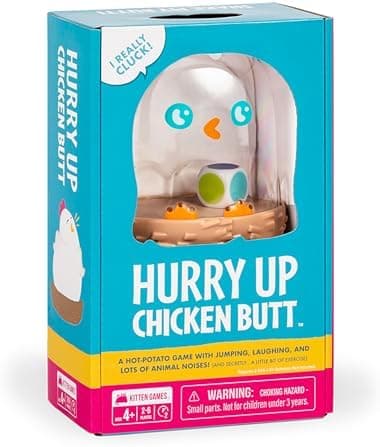
No-reading games dominate this age. Candy Land and Yeti in My Spaghetti are color- and dexterity-based with no reading required, and Hurry Up Chicken Butt uses pictures and physical actions. Verified-purchase reviewers and retailer listings repeatedly highlight that these work for pre-readers, though r/boardgames threads note Candy Land involves no real choices.
Are cooperative games better than competitive ones for young kids?
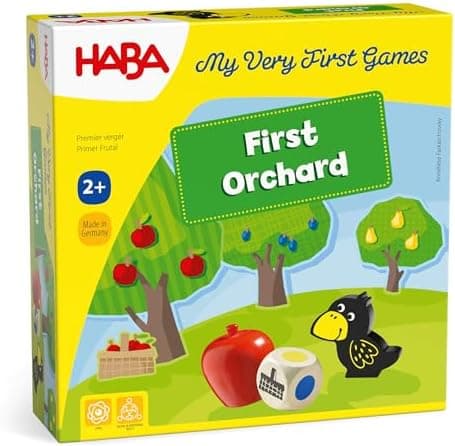
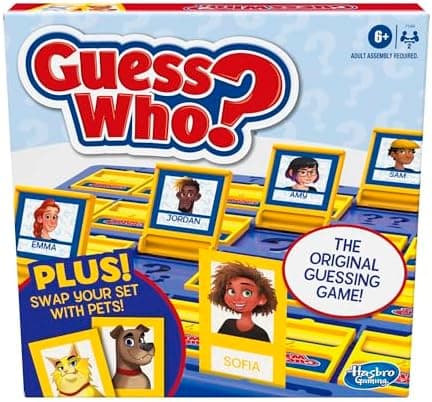
For the youngest players, cooperative games like HABA's First Orchard avoid the meltdowns that come with losing, and it carries one of the highest verified-purchase ratings in this group. Competitive games like Trouble and Guess Who suit slightly older kids (5+) who can handle winning and losing, which several community reviewers actually cite as a teaching benefit.
Which kids' board game plays the fastest?
Hurry Up Chicken Butt is marketed and reviewed as a roughly 2-minute hot-potato game, the quickest in this roundup. Trouble and Candy Land are also short, and r/boardgames reviewers praise Trouble specifically for being simple and fast enough to match a young child's appetite for one more round.
Is Candy Land actually a good game or just nostalgic?
It's polarizing. High-trust r/boardgames threads criticize it as fully predetermined with 'no choices that matter,' while other community posts praise it as ideal for nonverbal and non-reading kids learning to win, lose, and take turns. With a 4.8 average across 37,000+ Amazon reviews, it remains a popular first game despite the strategic criticism.
What should I look for in a board game for ages 6-8?
At this age kids can handle deduction and simple strategy. Guess Who introduces yes/no reasoning, while Trouble adds light racing tactics. Watch for build-quality complaints, community reviewers flag that recent Guess Who editions have cards that fall out of the door slots easily.