
VerdictAI

Reviewer consensus · 2026

Best Microscopes for Kids of 2026What 42 reviewers actually think, trust-weighted

Kids' microscopes split into two very different worlds: traditional optical compound scopes that real specialist communities take seriously, and digital handheld units that lean toward toy-grade fun. This roundup synthesizes what mainstream tech reviewers, verified-purchase retailer reviews, and specialist subreddits like r/microscopy and r/ScienceParents have said about the leading models, weighted by source trust. No high-tier independent test lab covered this category in our pulled data, so we lean heavily on retailer-customer volume and specialist-community consensus and we flag where reviewers disagree.

Sources behind this verdict

42 reviewers, weighted by source trust

42reviewers read

Weighted by source trust

We don’t review products. We read what other reviewers wrote, score each source for trustworthiness, and synthesize the consensus.

How sources are scored →

At a glance

Highest-rated by the consensus

#1 of 5
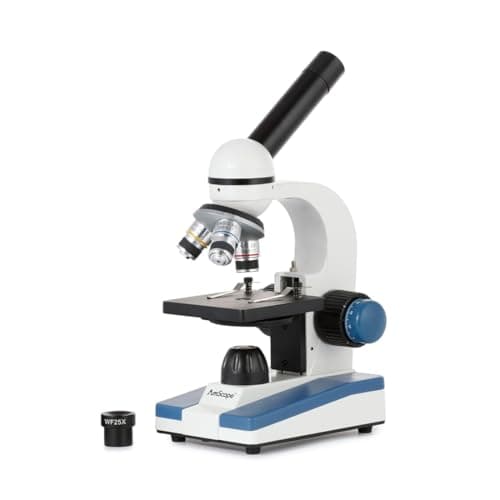
Top pick · #1AmScope M150C / M150C-I 40X-1000X All-Metal Optical Glass Lenses Cordless LED Student Biological Compound…
Best overall

AmScope M150C / M150C-I 40X-1000X All-Metal Optical Glass Lenses Cordless LED Student Biological Compound…

AmScope

★★★★★4.5(3,013)86Great

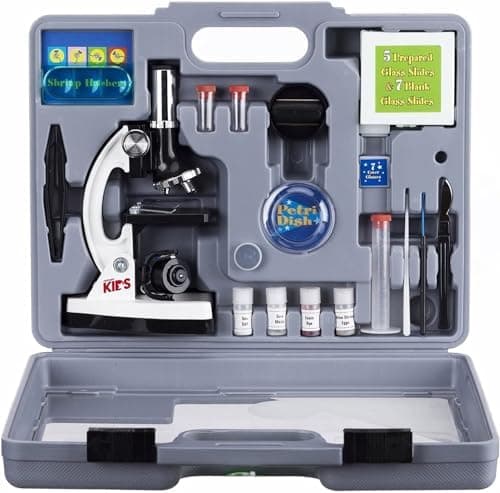
Across the reviewers we read, the AmScope M150C is the default specialist-community pick for a child who is past the toy stage and ready for a real compound microscope. r/microscopy commenters in the pulled threads describe it as 'a very good microscope when compared with the ones below it, which are toys with plastic objectives,' and an r/biology thread on microscopes for an 8-year-old points to this exact model.

The rest of the rankings

#2,5

Frequently asked

5 questions
What magnification does a kid actually need?
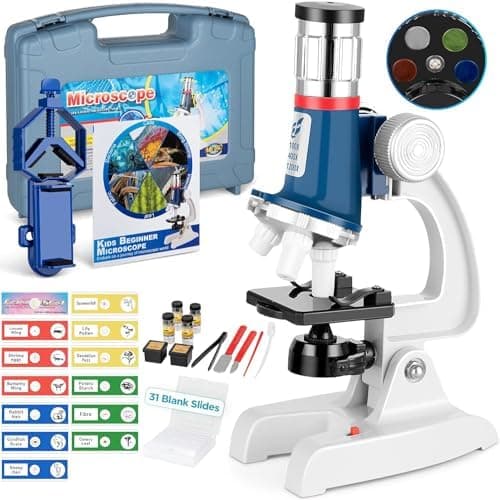
Specialist subreddit consensus (notably r/microscopy threads in the data) is that advertised numbers like 1200x or 2000x on cheap kids' scopes are largely marketing — the optics can't resolve real detail at those levels. For meaningful biology work, reviewers repeatedly recommend a genuine 40x-400x or 40x-1000x compound scope with glass objectives. For looking at bugs, rocks and leaves, lower magnification (around 40x-100x) is more useful and easier for young kids to focus.
Should I get an optical microscope or a digital screen microscope?
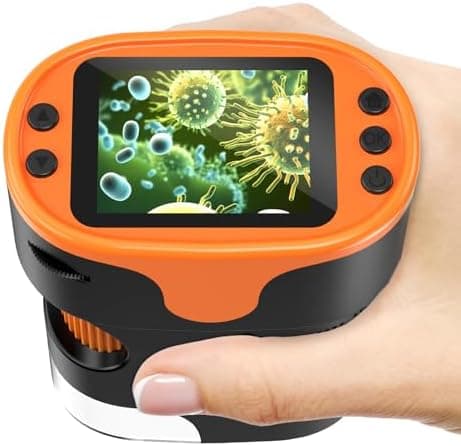
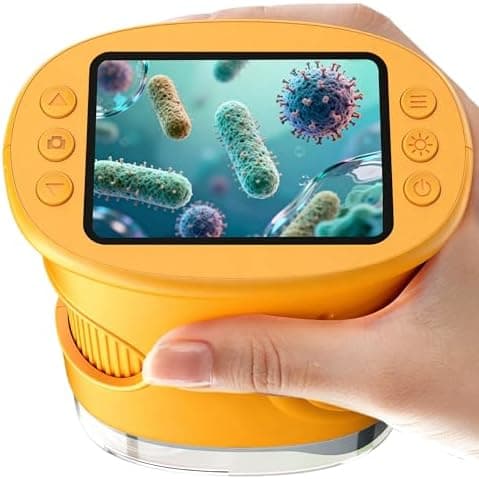
It depends on age and goal. Digital screen microscopes are easier for young children to share and require no eye-to-eyepiece coordination, which retailer reviewers cite as a big plus for ages 4-8. But r/microscopy commenters in our data point out that the built-in cameras on cheap digital units are often the weak link, and optical detail tops out quickly. For a child who's likely to stick with biology, a traditional compound scope with glass optics is the more future-proof choice.
Are AmScope microscopes actually good for kids?
r/microscopy threads in the pulled data describe AmScope's entry-level student models as 'good first scopes' and clearly better than plastic-optics toys, while also noting they're entry-level — fine optics for the price, but enthusiasts upgrade later. They tend to be the default specialist-community recommendation in the $100-$200 band.
What age is appropriate for a real compound microscope?
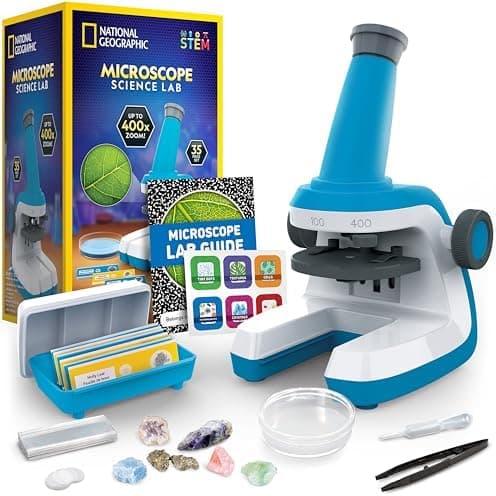
Verified-purchase reviewers and specialist commenters in the data suggest roughly age 8 and up for a traditional 40x-1000x compound scope, since slide prep and fine focus require patience. For ages 4-7, reviewers more often recommend a simple low-power scope (like the National Geographic kit) or a digital handheld with a screen.
Do prepared slides matter, or should kids make their own?
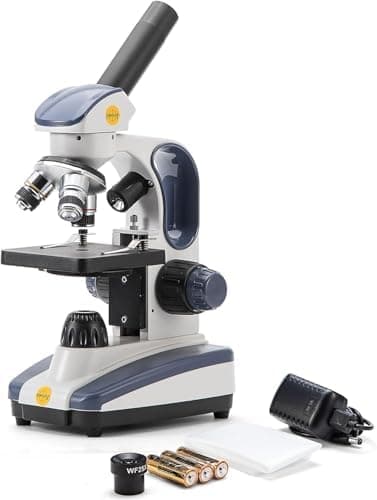
Both, according to the consensus. Prepared slides give kids an instant 'wow' moment so the scope doesn't sit in a closet, while blank slides and tools let them prep pond water, onion skin, hair, etc. Kits that bundle both — like the AmScope M162C bundle and the National Geographic set — get repeatedly praised in retailer reviews for this reason.