
VerdictAI

Reviewer consensus · 2026

Best STEM Kits for Kids of 2026What 30 reviewers actually think, trust-weighted

STEM kits for kids span a wide range, from snap-together electronics sets that teach circuit basics to LEGO-Technic builds and paper-and-mechanism engineering toys. This roundup synthesizes what mainstream tech press, specialist communities like r/snapcircuits and r/homeschool, and tens of thousands of verified-purchase reviewers have said about the most-discussed kits on the market. We weight high-trust independent testing and long-running enthusiast threads more heavily than retailer star averages alone.

Sources behind this verdict

30 reviewers, weighted by source trust

30reviewers read

Weighted by source trust

We don’t review products. We read what other reviewers wrote, score each source for trustworthiness, and synthesize the consensus.

How sources are scored →

At a glance

Highest-rated by the consensus

#1 of 5
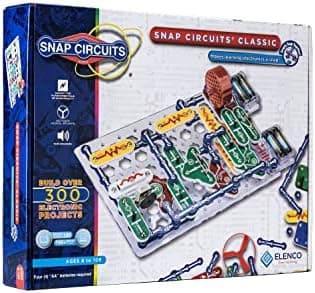
Top pick · #1Snap Circuits Classic SC-300 Electronics Exploration Kit | Over 300 Projects | Full Color Manual Parts | STEM…
Best overall

Snap Circuits Classic SC-300 Electronics Exploration Kit | Over 300 Projects | Full Color Manual Parts | STEM…

Snap Circuits

★★★★★4.8(29,047)92Excellent

Across the reviewers we read, the Snap Circuits Classic SC-300 is treated as the default recommendation when a kid is ready to go beyond the entry-level Snap Circuits Jr. The Amazon listing carries roughly 29,000 ratings at a 4.8 average, and verified-purchase reviewers at walmart.com echo the same pattern: kids open it, start building during the gift unwrapping, and keep coming back to it.

The rest of the rankings

#2,5

Frequently asked

5 questions
What age is best to start a STEM electronics kit?
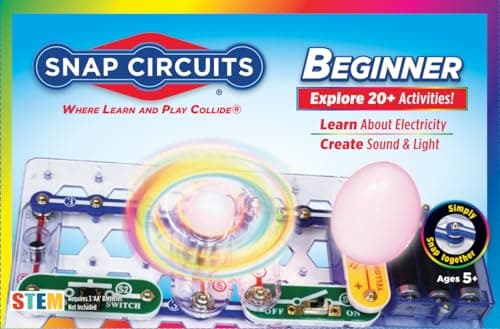
Most reviewers across the kits we read agree that 5-7 year olds do best with simplified, large-component sets like the Snap Circuits Beginner (SCB-20), where parts snap visibly together and projects are short. The 8+ kits like Snap Circuits Classic SC-300 and Klutz Lego Gear Bots assume the child can follow a multi-step diagram. Specialist-subreddit consensus is that an adult should plan to co-build with younger kids regardless of stated age.
Are Snap Circuits actually educational or just a toy?
Threads in r/snapcircuits, r/ElectroBOOM, and r/AskElectronics include adults who credit Snap Circuits with launching real electronics careers, and the line is repeatedly cited as the standard hands-on circuit introduction for kids. The caveat raised in those same threads is that the included manual focuses on building, not deep theory, so a parent who wants the 'why' behind each circuit will want to supplement.
Snap Circuits Classic SC-300 vs Snap Circuits Jr SC-100, which should I buy?
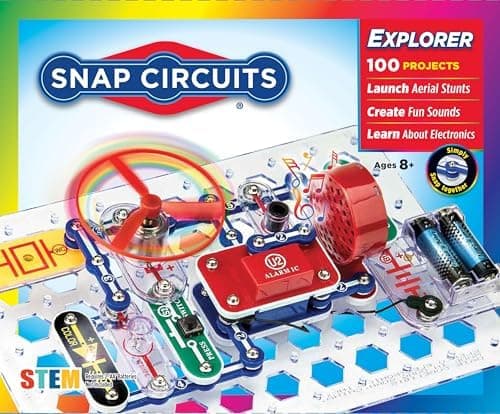
The SC-100 is the entry-level kit (around 30 parts, 100+ projects); the SC-300 nearly doubles the parts and triples the project count. Forum discussions on homeschool boards lean toward the SC-300 if budget allows, because kids tend to outgrow the Jr quickly. The SC-100 is the safer pick if you're unsure the child will stick with electronics.
Are cardboard/wood mechanical kits like Smartivity worth it compared to electronics kits?
They teach a different skill set: mechanical linkages, gearing, and structure rather than circuits. Reviewer sentiment is generally positive on build experience, but a high-trust thread on r/pinball flagged that the rubber-band-driven Smartivity Pinball can fail quickly with rough play, so durability expectations should be calibrated.
Do these kits require a tablet, app, or batteries?
Most of the picks here are screen-free. Snap Circuits kits need AA batteries (not included). Klutz Lego Gear Bots and Smartivity kits are fully mechanical and need no power. Retailer listings and reviewer notes consistently call out the lack of screen dependence as a selling point for parents.