
VerdictAI

Reviewer consensus · 2026

Best Travel Compression Socks of 2026What 21 reviewers actually think, trust-weighted

Travel compression socks are one of those categories where verified-purchase volume is enormous but rigorous independent testing is thin, so we weighted the handful of high-trust sources—Consumer Reports' methodology piece and The New York Times' compression-sock testing—heavily and used Amazon ratings and travel-community threads as corroboration. The picks below synthesize what reviewers across mainstream press, retailer reviews, and specialist subreddits like r/travel, r/TravelHacks and r/HerOneBag have actually said, with flagged and low-signal sources discounted. Most options here cluster around the travel-friendly 15-20 mmHg range, with a few firmer 20-30 mmHg picks for longer hauls.

Sources behind this verdict

21 reviewers, weighted by source trust

21reviewers read

Weighted by source trust

We don’t review products. We read what other reviewers wrote, score each source for trustworthiness, and synthesize the consensus.

How sources are scored →

Trust hierarchy

Trusted4
Verified0
Supporting10
Flagged0

Source mix

21signals
  • 3Press
  • 10Community
  • 8Video

Trusted · 4 sources

Independent · documented methodology

At a glance

Compare

Pick any two for a head-to-head

Scores, pros, cons, and our verdict — side by side.

vs

Highest-rated by the consensus

#1 of 7
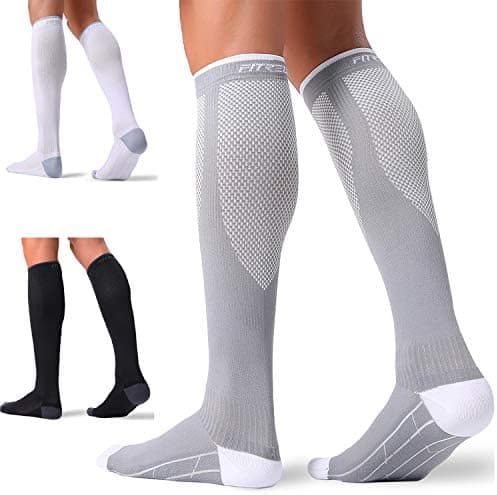
Top pick · #1FITRELL 3 Pairs Compression Socks for Women and Men 20-30mmHg-Circulation Support Socks OEKO-TEX STANDARD 100
Best overall

FITRELL 3 Pairs Compression Socks for Women and Men 20-30mmHg-Circulation Support Socks OEKO-TEX STANDARD 100

FITRELL

★★★★★4.5(38,391)87Great

Across the reviewers we read, FITRELL's 20-30 mmHg socks earn the most credible support of any candidate here. The New York Times' compression-sock testing describes them as firm-compression, thin, no-cushion socks that 'outperform many other options that cost' more—a notable endorsement from a high-trust source.

The rest of the rankings

#2,7

Frequently asked

4 questions
What compression level is best for flying?
Across the reviewers we read, 15-20 mmHg is the most commonly recommended range for general travel and long flights—it's enough graduated support to reduce swelling without being hard to put on. Firmer 20-30 mmHg socks come up for people prone to significant leg swelling or with medical guidance, but several travel-community threads note they're noticeably harder to pull on. If you have a clotting risk or medical condition, the consensus is to ask a doctor before going firmer.
Do compression socks actually help on long flights?
Reviewers and the high-trust sources we read are cautiously positive: Consumer Reports' coverage frames them as a tool to improve circulation and reduce swelling on long sits, and r/travel threads report comfort benefits, though some flyers say they noticed 'no significant remarks either way.' The general takeaway is that they help most on flights of roughly six hours or more, and for people who already experience swelling.
How tight should travel compression socks be?
They should feel firmly snug and graduated—tightest at the ankle, easing up the calf—without cutting in or leaving deep marks. Sizing complaints are the single most common pain point in the reviews we read, with calf circumference being more important than shoe size. Larger-calf reviewers specifically flag wide-calf options.
Are cheap multipack compression socks as good as premium brands?
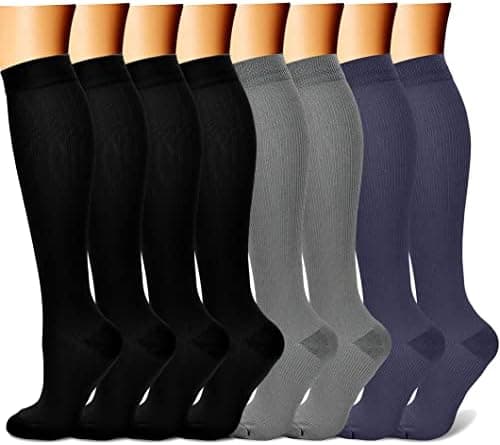
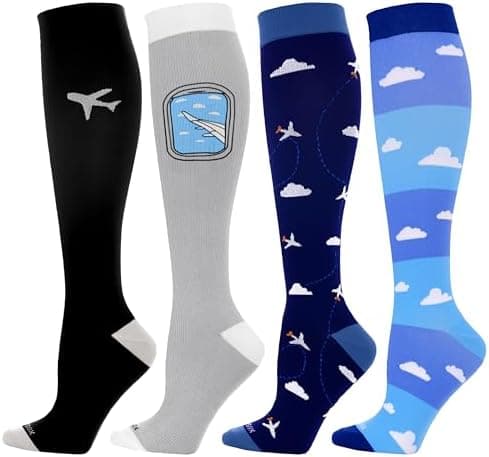
For travel use, the verified-purchase consensus is that budget multipacks (CHARMKING, Iseasoo, FITRELL) deliver most of the benefit at a fraction of premium prices, and The New York Times even rated one budget firm-compression sock as outperforming pricier options. The trade-offs reviewers note are less precise sizing, thinner cushioning, and shorter lifespan than premium knit socks.