
VerdictAI

Reviewer consensus · 2026

Best Luggage Trackers of 2026What 57 reviewers actually think, trust-weighted

Luggage trackers have splintered into three camps: Apple's Find My ecosystem, the cross-platform Tile/Life360 lineup, and a flood of cheaper third-party tags that piggyback on Find My. This roundup synthesizes what mainstream tech press, specialist subreddits, and verified-purchase reviewers across major retailers have said about the most-discussed picks, weighting independent expert testing and high-trust retailer review pools above flagged or low-signal sources. Where reviewers disagree — particularly around Tile's network reach versus Apple's — we surface the conflict rather than smooth it over.

Sources behind this verdict

57 reviewers, weighted by source trust

57reviewers read

Weighted by source trust

We don’t review products. We read what other reviewers wrote, score each source for trustworthiness, and synthesize the consensus.

How sources are scored →

At a glance

Highest-rated by the consensus

#1 of 5
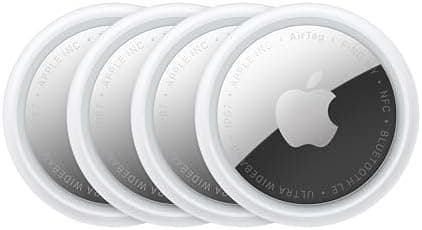
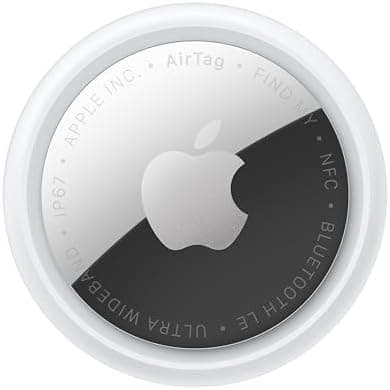
Top pick · #1Apple AirTag (2nd Generation): Tracker for Keychain, Wallet, and More; Locator with Sound; Simple One-Tap…
Best for iPhone users

Apple AirTag (2nd Generation): Tracker for Keychain, Wallet, and More; Locator with Sound; Simple One-Tap…

Apple

★★★★★4.6(3,670)91Excellent

Across the reviewers we read, the second-generation AirTag is the consensus pick for anyone living inside the Apple ecosystem. pcmag.com calls it "the best item tracker for iPhone users," citing easier connection, a louder speaker, and improved discoverability, while cnet.com frames the update as a familiar disc that is "a little louder, higher-pitched and easier to find." cnn.com echoes that the visual design is unchanged but the internals — notably the second-gen Ultra Wideband chip — meaningfully extend Precision Finding range.

The rest of the rankings

#2,5

Frequently asked

5 questions
Do AirTags work for checked luggage on flights?
Yes. AirTags use a non-rechargeable CR2032 coin cell that is below the lithium thresholds airlines restrict, and reviewers across travel-focused communities consistently report using them in checked bags. The bigger caveat is that AirTags rely on nearby iPhones to relay a location, so updates in cargo holds or remote airports can be sparse until the bag is near people again.
AirTag vs. Tile for travel — which is better?
For iPhone households, mainstream reviewers and travel-focused subreddit threads strongly favor AirTag because Apple's Find My crowd-sourced network is far denser than Tile's. Tile's advantage is that it works on both iOS and Android, making it the consensus pick for Android users or mixed-platform families, though reviewers note its location updates depend on other Tile app users being nearby.
Are cheaper Find My-compatible tags like ATUVOS or UGREEN as good as AirTag?
They use the same Find My network, so basic last-seen tracking is comparable for stationary items like luggage. What you give up, per expert reviews and r/AirTags threads, is Precision Finding (Apple's UWB-based close-range arrow), a louder speaker, and Apple's tighter privacy/anti-stalking implementation. For checked-bag use specifically, the gap narrows considerably.
How long do luggage tracker batteries last?
Apple AirTags and most CR2032-based third-party Find My tags are rated for roughly a year, with user-replaceable batteries. Tile Pro is similarly user-replaceable; older Tile Slim and Mate models were sealed and had to be discarded when depleted, a pain point that recurs in community discussion. Some third-party tags like UGREEN's FineTrack claim up to two years on a coin cell.
Will a luggage tracker actually help me recover a lost bag?
Reviewers and travelers consistently describe trackers as a recovery accelerator rather than a guarantee — they help you tell airline staff exactly where the bag was last seen, which often shortcuts the claims process. They don't transmit GPS independently; they rely on nearby phones in their respective networks, so dense Find My coverage (favoring Apple) tends to be the deciding factor in real-world recovery stories.