
VerdictAI

Reviewer consensus · 2026

Best Portable Power Banks of 2026What 52 reviewers actually think, trust-weighted

Portable power banks are one of the most signal-rich categories on the internet, mainstream tech press, specialist USB-C subreddits, and tens of thousands of verified-purchase reviewers have all weighed in on the same handful of dominant SKUs. The synthesis below weights independent testing and specialist-community consensus most heavily, treats commerce-media verdicts as corroboration, and surfaces disagreements (especially around real-world efficiency and sustained output) rather than smoothing them over. Picks are organized by use case, not by a single 'winner,' because the right power bank depends almost entirely on what you're charging.

Sources behind this verdict

52 reviewers, weighted by source trust

52reviewers read

Weighted by source trust

We don’t review products. We read what other reviewers wrote, score each source for trustworthiness, and synthesize the consensus.

How sources are scored →

At a glance

Highest-rated by the consensus

#1 of 5
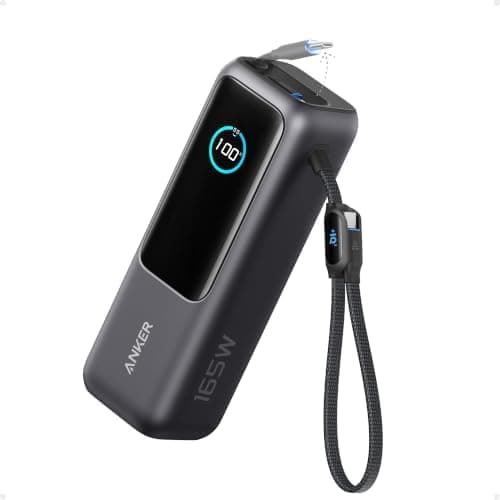
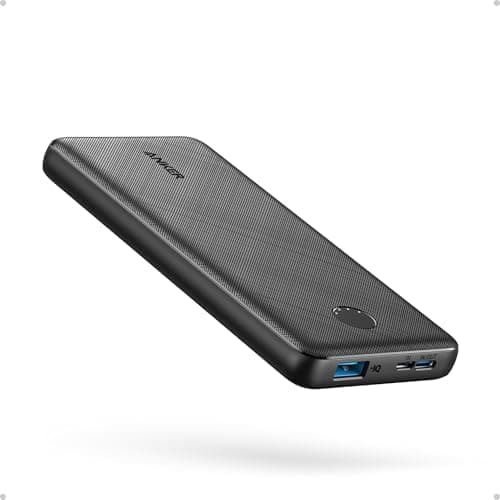
Top pick · #1Anker Prime Power Bank, 26,250mAh 3-Port Portable Charger with 300W Max Output, Two-Way Charging…
Best overall

Anker Prime Power Bank, 26,250mAh 3-Port Portable Charger with 300W Max Output, Two-Way Charging…

★★★★★4.7(1,077)89Great

Across the reviewers we read, the Anker Prime 26,250mAh 300W is the most consistently praised premium pick in this pool. fstoppers and digitalcameraworld both highlight the unusually high 300W total output and the ability to run two laptops simultaneously, and an r/anker long-form review summarized it as 'easily Top 3 in its field' for net capacity and sustained performance.

The rest of the rankings

#2,5

Frequently asked

5 questions
What size power bank do I need for travel?
For phone-only top-ups, a 10,000mAh pack gets most users two to three full phone charges and slips into a pocket. For laptops, tablets, or multi-day trips, step up to 20,000–27,000mAh, but stay under 100Wh (roughly 27,000mAh at 3.7V) to remain TSA-compliant for carry-on. Anything labeled 'flight-approved' or 'TSA-approved' by the manufacturer is sized below that limit.
Do I need 100W+ output to charge a laptop?
For 13- and 14-inch laptops, 65W is generally enough to charge while in use. For 16-inch MacBook Pros, Dell XPS 15, or gaming handhelds under load, look for 100W or the newer PD 3.1 140W spec. Specialist subreddit threads repeatedly note that at sustained 140W draw, even large packs drain quickly, so capacity matters as much as peak wattage.
Are higher-mAh power banks actually delivering their rated capacity?
No, and reviewers are increasingly transparent about this. Real-world output is typically 60–75% of the rated mAh once you account for voltage conversion losses and the battery's own overhead. A 20,000mAh pack labeled at 3.7V cells usually delivers roughly 13,000–15,000mAh worth of usable charge at 5V phone voltage.
Are built-in cables worth it on a power bank?
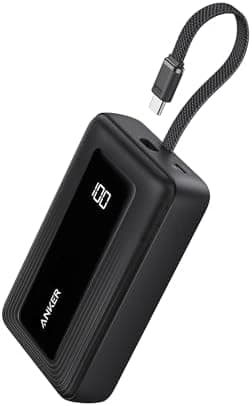
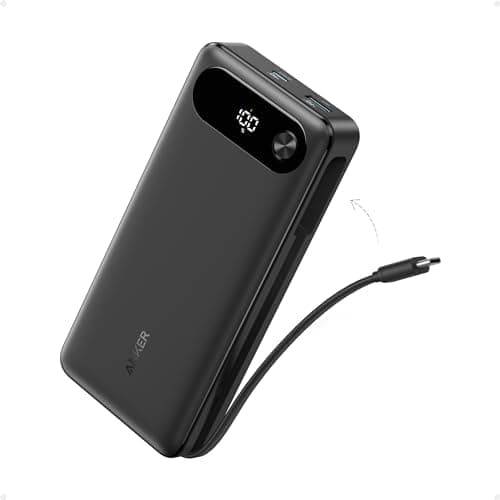
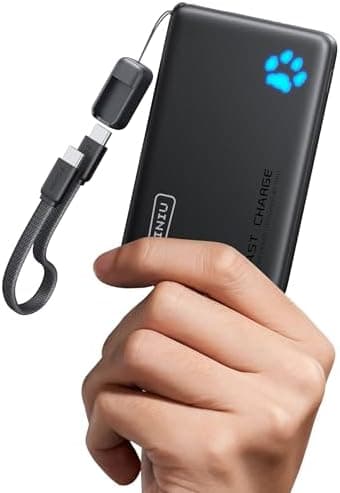
For most users, yes, integrated USB-C or retractable cables remove the single biggest pain point of forgetting an extra cable. The trade-off raised across reviewers is that a built-in cable is a wear point you can't easily replace, so models with detachable or retractable mechanisms tend to age better than those with permanently tethered cables.
Anker vs. INIU vs. UGREEN, which brand is most reliable?
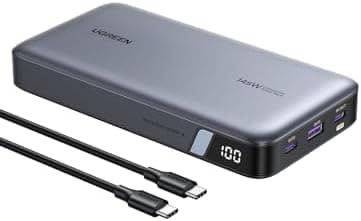
Anker has the deepest expert-review track record and the most mature firmware (especially on the Prime line), and it dominates the 'best of' lists from mainstream tech press. INIU is the budget standout with strong specialist-community endorsements, though scattered retailer reviews flag early-life failures. UGREEN is competitive on spec sheets but appears less frequently in independent testing coverage in this candidate pool.