
VerdictAI

Reviewer consensus · 2026

Best Battery Chargers / Maintainers of 2026What 0 reviewers actually think, trust-weighted

Battery chargers and maintainers are a category where reliability matters far more than headline specs, but the candidate pool we reviewed here is unusually signal-poor: the dominant evidence is verified-purchase Amazon ratings and review volume, with no independent lab tests, specialist-community threads, or expert teardowns attached to these specific listings. We've weighted what we have honestly, treating large, high-average rating bases as informative but gameable, and we flag throughout where the absence of independent testing limits confidence.

At a glance

Compare

Pick any two for a head-to-head

Scores, pros, cons, and our verdict — side by side.

vs

Highest-rated by the consensus

#1 of 7
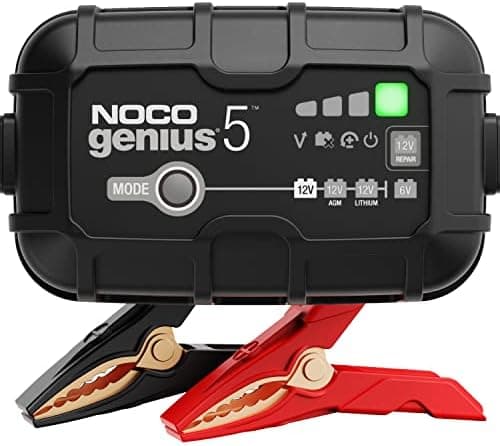
Top pick · #1NOCO GENIUS5: 5A 6V/12V Smart Battery Charger – Automatic Maintainer, Trickle Charger & Desulfator with…
Best overall

NOCO GENIUS5: 5A 6V/12V Smart Battery Charger – Automatic Maintainer, Trickle Charger & Desulfator with…

NOCO

★★★★★4.6(20,907)83Great

Across the verified-purchase reviewers we read, the NOCO GENIUS5 lands as the most well-rounded pick in this pool: a 5A output that's large enough to recharge a typical car battery in a sensible timeframe yet gentle enough to maintain a motorcycle or seasonal vehicle. Its roughly 4.6-star average across more than 20,000 ratings reflects broad satisfaction with its multi-chemistry support (6V/12V, lead-acid and lithium), desulfation mode, and temperature compensation.

The rest of the rankings

#2,7

Frequently asked

4 questions
What's the difference between a battery charger and a maintainer?
A charger replenishes a depleted battery, while a maintainer (or float charger) keeps an already-charged battery topped up over long idle periods without overcharging. Most modern smart units in this category do both automatically, switching to a maintenance float once the battery is full.
How many amps do I need?
For maintaining a motorcycle, ATV, or seasonally stored car, 1–2A is plenty. For routine car charging in a reasonable timeframe, 5A is the practical sweet spot. Choose 10A or higher only if you regularly recharge deeply discharged or large batteries and want faster turnaround.
Can these chargers handle AGM and lithium (LiFePO4) batteries?
Many in this roundup advertise dedicated AGM and lithium/LiFePO4 modes, including the NOCO GENIUS line and several budget units. Always select the correct chemistry mode, since lithium and lead-acid require different charge profiles, and confirm your specific battery is compatible before connecting.
Are smart chargers safe to leave connected all winter?
Smart maintainers are designed for exactly this and switch to a low float charge when the battery is full. That said, because we lack independent long-term safety testing for these specific listings, follow the manufacturer's guidance on ventilation and placement, especially with sealed AGM or lithium batteries.