
VerdictAI

Reviewer consensus · 2026

Best Ultralight Tents of 2026What 41 reviewers actually think, trust-weighted

Ultralight tents force a tough three-way trade between weight, weather protection, and price, and the consensus picture across mainstream tech press, specialist backpacking communities, and verified-purchase reviewers shifts depending on which corner of the triangle you care about most. This roundup synthesizes what reviewers across the internet have written about the candidates in our pool, weighting independent specialist sites and long-running ultralight communities more heavily than retailer-side coverage. None of these picks are tested in-house; the verdicts below summarize the trust-weighted reviewer consensus.

Sources behind this verdict

41 reviewers, weighted by source trust

41reviewers read

Weighted by source trust

We don’t review products. We read what other reviewers wrote, score each source for trustworthiness, and synthesize the consensus.

How sources are scored →

At a glance

Highest-rated by the consensus

#1 of 5
Top pick · #1Featherstone Backbone Ultralight Tent for Backpacking, Camping, Thru Hiking - Trekking Pole Backpacking Tent…
Best overall

Featherstone Backbone Ultralight Tent for Backpacking, Camping, Thru Hiking - Trekking Pole Backpacking Tent…

Featherstone

★★★★★4.5(115)82Great

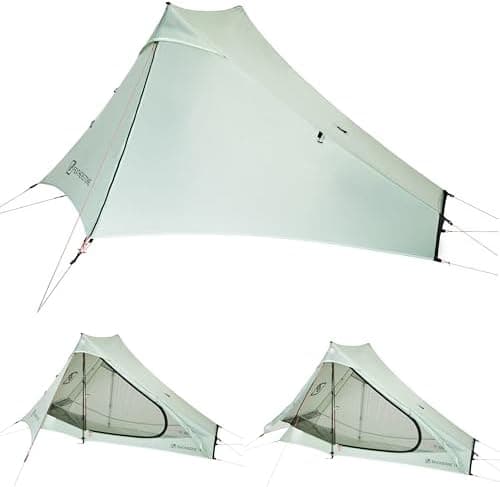
Across the reviewers we read, the Featherstone Backbone 2P is the most consistently well-rounded budget ultralight in this pool. sectionhiker.com, the highest-trust expert source covering it, frames it as 'an affordable ultralight trekking pole tent that's a pretty good value for the money' — measured praise rather than a rave, which matches the tone in r/Ultralight threads where owners describe it as 'great light tent value, not the lightest, not the best.' The trekking-pole single-wall design gets it to a claimed minimum trail weight of around 2 lbs 6 oz for a 2-person, which the specialist subreddit consensus treats as competitive for the price tier.

The rest of the rankings

#2,5

Frequently asked

5 questions
What counts as an 'ultralight' tent?
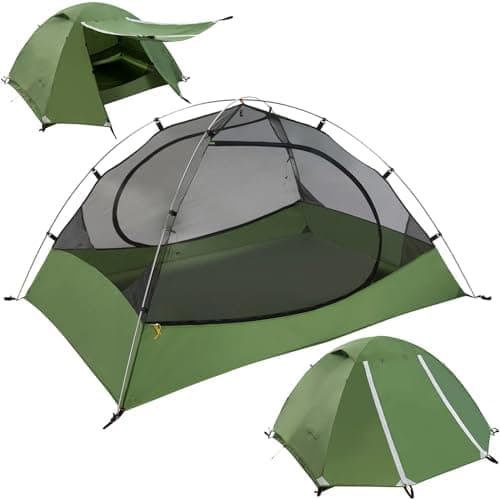
In the specialist communities we read, ultralight typically means a trail weight under roughly 3 lbs for a 1-person shelter and under about 4 lbs for a 2-person. Trekking-pole single-wall designs hit those numbers more easily than freestanding double-wall tents. Budget 'lightweight' tents from brands like Clostnature and entry-level Kelty models are heavier than that bar but get grouped in because they're marketed for backpacking.
Single-wall trekking-pole tent or double-wall freestanding?
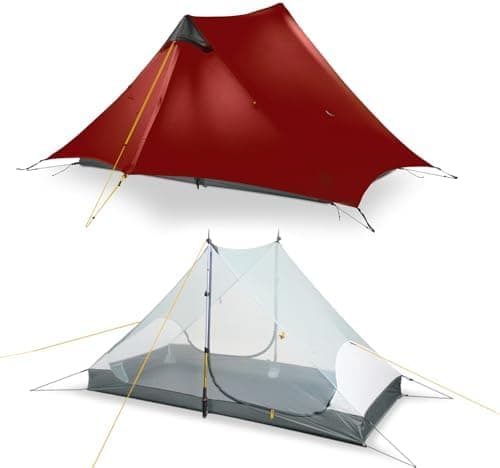
Reviewers consistently frame this as a condensation-versus-convenience trade. Single-wall trekking-pole tents like the Lanshan 1 Pro save the most weight but require careful pitching, dry-out time after wet nights, and trekking poles. Double-wall freestanding tents like the Naturehike Mongar UL are heavier but easier to pitch anywhere and manage condensation better.
Are silnylon and silpoly tents worth it over cheaper coatings?
Specialist subreddit threads we read favor silicone-coated fabrics (silnylon, silpoly) over PU-coated nylon for ultralight use because they're lighter, stronger when wet, and resist sagging. Most of the genuinely ultralight picks in this pool use 15D–20D silicone-coated nylon.
Do I need to seam-seal a budget ultralight tent myself?
Yes, often. Reviewers of the 3F UL Lanshan series specifically flag that seam sealing is a DIY job out of the box, and that's a recurring critique of cheaper trekking-pole shelters. Factory-taped seams are more common on freestanding budget tents like the Naturehike Mongar UL and Kelty Discovery Trail.
Is the price gap from $150 budget ultralights to $600+ premium ultralights justified?
The ultralight community consensus we read is that sub-$200 tents like the Lanshan 1 Pro and Featherstone Backbone deliver 80–90% of the livability of premium DCF shelters at a fraction of the cost, with the tradeoff being more weight (often half a pound to a pound) and shorter expected lifespan under heavy thru-hiking use.