
VerdictAI

Reviewer consensus · 2026

Best Wired In-Ear Monitors (IEMs) of 2026What 50 reviewers actually think, trust-weighted

Wired in-ear monitors remain the audiophile's secret weapon: better measured sound per dollar than almost anything wireless, no batteries, and tunings that range from stage-ready reference to bass-forward fun. This roundup synthesizes what mainstream tech press, specialist IEM subreddits, and verified-purchase reviewers have said across the candidate pool, weighting independent testing and specialist-community consensus most heavily. Where reviewers disagree on tuning or value, we surface the disagreement rather than smooth it over.

Sources behind this verdict

50 reviewers, weighted by source trust

50reviewers read

Weighted by source trust

We don’t review products. We read what other reviewers wrote, score each source for trustworthiness, and synthesize the consensus.

How sources are scored →

At a glance

Highest-rated by the consensus

#1 of 5
Top pick · #1Sennheiser Consumer Audio IE 200 In-Ear Audiophile Headphones - TrueResponse Transducers for Neutral Sound…
Best overall

Sennheiser Consumer Audio IE 200 In-Ear Audiophile Headphones - TrueResponse Transducers for Neutral Sound…

★★★★★4.0(900)86Great

Across the reviewers we read, the Sennheiser IE 200 emerges as the most consistently praised all-rounder in this pool. headphones.com frames it as Sennheiser's effort to bring the IE-series house sound down to an accessible price, audio46.com highlights 3D imaging and a crisp, slightly trebly timbre, and audioreviews.org argues its tuning beats some pricier siblings in the line.

The rest of the rankings

#2,5

Frequently asked

5 questions
Are wired IEMs really better than true wireless earbuds for sound quality?
At equivalent prices, yes, and it isn't close. Wired IEMs skip the DAC, amp, battery, and Bluetooth codec compromises that wireless earbuds have to package into each earpiece, so more of the budget goes to drivers and tuning. The trade-off is no ANC, no on-ear controls beyond an inline remote, and you need a 3.5mm jack or a USB-C/Lightning dongle.
What's the difference between dynamic driver, balanced armature, and hybrid IEMs?
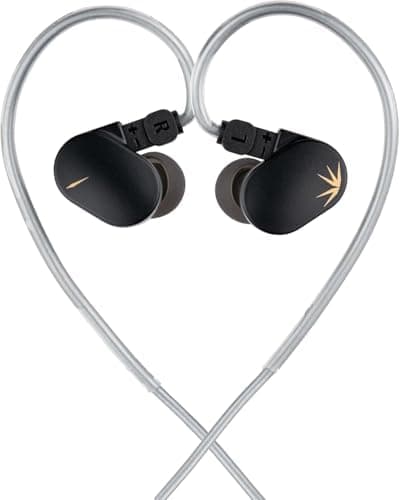
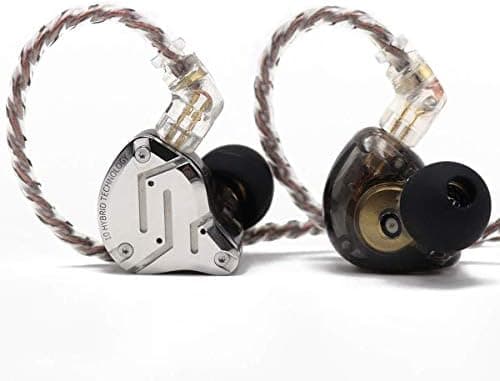
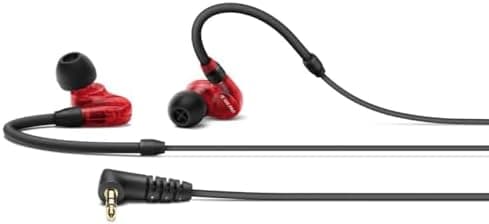
Single dynamic drivers (like the Sennheiser IE 200 and IE 100 Pro) tend to do bass and overall coherence well. Balanced armature drivers are small, fast, and often used for detailed mids and treble or for stage monitoring, where the UE 350's triple-BA setup is typical. Hybrid designs like the Kiwi Ears Astral and KZ ZS10 Pro combine a dynamic driver for bass with multiple BAs for mids and treble, aiming for the best of both at the cost of more complex crossover tuning.
Do I need an external amp or DAC dongle to drive these?
Most of the IEMs here, including the Sennheiser IE 200, IE 100 Pro, Shure SE215, and KZ ZS10 Pro, are sensitive enough to run cleanly off a phone dongle or laptop headphone jack. A dedicated dongle DAC mainly helps with noise floor and gives you a clean volume range; it isn't a requirement for the sub-$300 picks in this list.
Are these usable for stage monitoring or just casual listening?
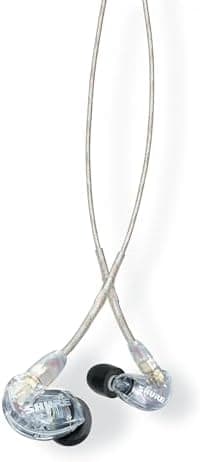
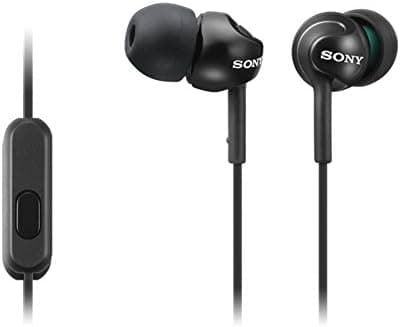
The Shure SE215, Sennheiser IE 100 Pro, and UE 350 are explicitly designed for stage use, with over-ear cable routing, strong passive isolation, and detachable cables. The Sennheiser IE 200 and Kiwi Ears Astral are more tuned for audiophile listening, though musicians do use them. Avoid the Sony MDR-EX110AP-class consumer earphones for stage monitoring; they aren't built for it.
How important is a detachable cable?
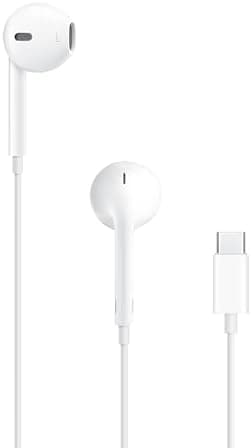
Very, if you plan to keep the IEMs for years. Cables are the most common failure point, and every premium pick here (IE 200, IE 100 Pro, SE215, Astral, UE 350, KZ ZS10 Pro) uses a detachable MMCX or 0.78mm 2-pin connector, so a $15 replacement saves the whole earphone. Fixed-cable models like the Apple EarPods or JBL Endurance Run 2 are essentially disposable when the cable fails.