
VerdictAI

Reviewer consensus · 2026

Best Internal SSDs (NVMe / SATA) of 2026What 86 reviewers actually think, trust-weighted

Internal SSDs span a huge range, from PCIe 5.0 flagships to budget Gen3 drives and legacy 2.5" SATA upgrades, so we read across independent testing outlets, mainstream tech press, verified-purchase retailer reviews, and specialist storage communities to synthesize what reviewers actually conclude. This roundup weights high-trust testing and specialist-community consensus above raw star averages, and surfaces the disagreements (especially around DRAM-less designs, QLC flash, and Gen5 drives that fall short of advertised speeds) rather than smoothing them over. Use it to match a drive to your real workload rather than chasing headline sequential numbers.

Sources behind this verdict

86 reviewers, weighted by source trust

86reviewers read

Weighted by source trust

We don’t review products. We read what other reviewers wrote, score each source for trustworthiness, and synthesize the consensus.

How sources are scored →

At a glance

Compare

Pick any two for a head-to-head

Scores, pros, cons, and our verdict — side by side.

vs

Highest-rated by the consensus

#1 of 8
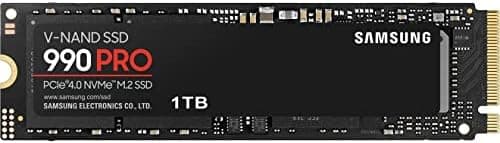
Top pick · #1Samsung 990 PRO SSD 1TB PCIe 4.0 M.2 2280 Internal Solid State Hard Drive, Seq. Read Speeds Up to 7,450 MB/s…
Best overall

Samsung 990 PRO SSD 1TB PCIe 4.0 M.2 2280 Internal Solid State Hard Drive, Seq. Read Speeds Up to 7,450 MB/s…

★★★★★4.8(13,073)93Excellent

Across the reviewers we read, the Samsung 990 PRO is the most consistently praised mainstream PCIe 4.0 drive. The verified-tier review at tomshardware.com describes it as an 'exceptionally fast and efficient class-leading PCIe 4.0 NVMe SSD' backed by name-brand support, and storagereview.com and thefpsreview.com corroborate its near-interface-limit sequential numbers (up to ~7,450 MB/s read).
The rest of the rankings

#2,8

Frequently asked

5 questions
Is a PCIe Gen5 SSD worth it over a Gen4 drive?
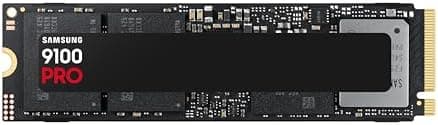
For most gamers and general users, no. Across the reviewers and specialist communities we read, the consensus is that Gen5 drives like the Samsung 9100 PRO deliver enormous sequential numbers but only marginal real-world gains for game loads, while costing roughly twice the price per terabyte and running hotter. Gen5 makes the most sense for heavy content-creation, AI workflows, or 'best of everything' builds. Several community threads also flag Gen5 drives underperforming their advertised speeds in real systems.
Does an SSD need DRAM, and does DRAM-less matter?
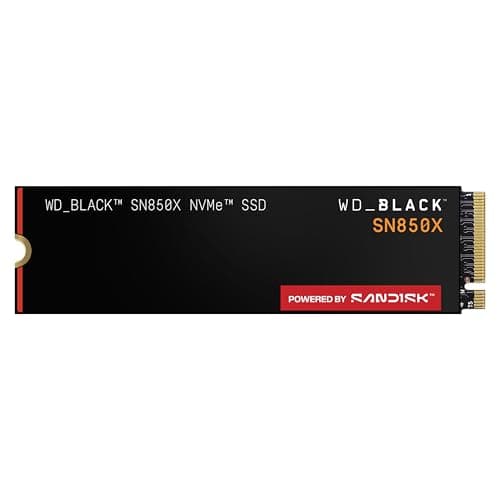
It depends on your use. Specialist-community consensus is that most everyday users won't notice a DRAM-less design, especially modern drives that use Host Memory Buffer. However, DRAM-less and QLC-based drives tend to slow dramatically once their cache is exhausted during sustained large writes, so heavy-write users (video editors, frequent large file transfers) are steered toward DRAM-equipped TLC drives like the Samsung 990 PRO or WD_BLACK SN850X.
What SSD should I buy for a PS5?
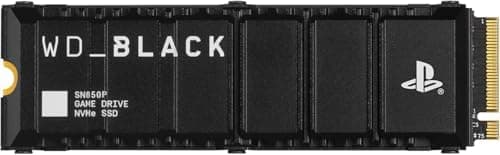
The PS5 requires a PCIe Gen4 NVMe M.2 drive with a heatsink. Verified-purchase reviewers and PlayStation community threads frequently recommend the officially licensed WD_BLACK SN850P for worry-free compatibility, though community members note an unlicensed Gen4 drive with a heatsink (like the SN850X) often works identically for less money.
Is a 2.5" SATA SSD still worth buying in a modern build?
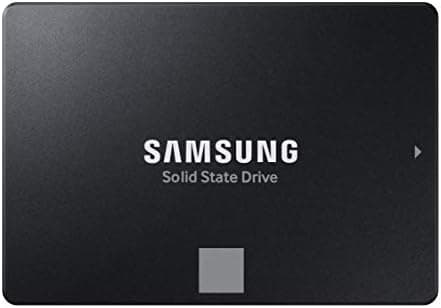
Mainly for older laptops and desktops without an M.2 NVMe slot, or as a cheap secondary game/storage drive. Specialist communities repeatedly call premium SATA drives like the Samsung 870 EVO reliable but 'overpriced' relative to NVMe, since SATA tops out around 560 MB/s. If your system has a free M.2 NVMe slot, reviewers generally suggest an NVMe drive instead.
How much faster is an NVMe SSD than a SATA SSD in real use?
On paper NVMe Gen4 drives hit 7,000+ MB/s versus roughly 550 MB/s for SATA, but reviewers consistently note that for OS boot, app launches, and most gaming, the felt difference between a good NVMe and SATA drive is smaller than the spec gap suggests. NVMe pulls clearly ahead in large sequential transfers and content-creation workloads.