
VerdictAI

Reviewer consensus · 2026

Best Dehumidifiers of 2026What 68 reviewers actually think, trust-weighted

Dehumidifiers are a category where marketing claims ("4500 sq. ft.," "Most Efficient Energy Star") run well ahead of independent testing, so this roundup synthesizes what verified-purchase reviewers, specialist communities like r/Dehumidifiers and r/homeowners, and the handful of independent testers we found have actually reported. The dominant cross-source theme is reliability: across multiple communities, compressor failure within a year or two is the recurring complaint regardless of brand. We weighted high-volume retailer review data and long-term ownership reports above manufacturer pages and low-view promotional videos, which were heavily represented in this pool.

Sources behind this verdict

68 reviewers, weighted by source trust

68reviewers read

Weighted by source trust

We don’t review products. We read what other reviewers wrote, score each source for trustworthiness, and synthesize the consensus.

How sources are scored →

At a glance

Compare

Pick any two for a head-to-head

Scores, pros, cons, and our verdict — side by side.

vs

Highest-rated by the consensus

#1 of 7
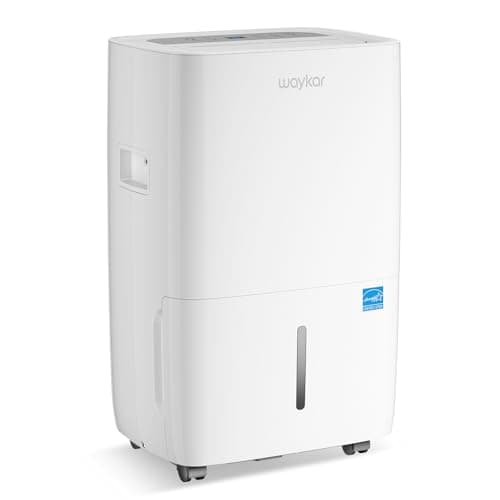
Top pick · #1Waykar 80 Pints Energy Star Dehumidifier for Spaces up to 5,000 Sq. Ft at Home, in Basements and Large Rooms…
Best overall

Waykar 80 Pints Energy Star Dehumidifier for Spaces up to 5,000 Sq. Ft at Home, in Basements and Large Rooms…

Waykar

★★★★★4.4(21,694)82Great

Across the reviewers we read, the Waykar 80-pint is the most thoroughly vetted unit in this group. Verified-purchase reviewers on Home Depot describe it as "quiet, efficient and works great for the space," and Lowe's listing reviews summarize customer sentiment as overwhelmingly positive on fast moisture removal and a compact design.

The rest of the rankings

#2,7

Frequently asked

5 questions
What size dehumidifier do I need for a basement?
Reviewers and specialist communities consistently advise oversizing rather than matching the manufacturer's square-footage claim, which is measured under extreme heat and humidity. Across r/homeowners and r/Dehumidifiers, owners report small units running nonstop while still smelling musty, and recommend a 50-pint-plus compressor unit with a drain hose for most basements up to roughly 2,500 sq. ft.
Are the advertised square-footage ratings (like 4500 sq. ft.) reliable?
Generally no. Discussion in r/HomeImprovement and r/Dehumidifiers repeatedly flags that headline coverage figures are derived from 95°F/90% RH lab conditions and overstate real-world performance. Treat pint-per-day capacity at 80°F/60% RH as the more meaningful spec.
Do I need a dehumidifier with a built-in pump?
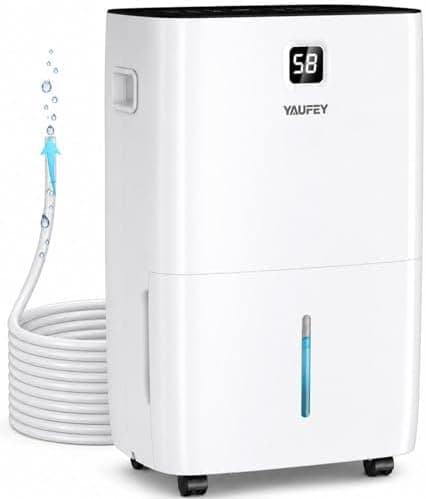
A pump matters mainly when you need to drain upward or over a distance to a sink or window. Reviewers note most units offer gravity drainage via a hose for free; a pump (as on the Yaufey 150-pint here) adds convenience for continuous high-volume drainage but is one more component that can fail.
Why do so many dehumidifiers fail after about a year?
It's the single most common complaint across r/BuyItForLife and r/Dehumidifiers: the fan keeps running but the compressor stops collecting water, usually a sealed-system refrigerant issue that can't be repaired. Reviewers suggest prioritizing brands with responsive customer service and warranty support over raw capacity claims.
Are compressor or Peltier (semiconductor) dehumidifiers better?
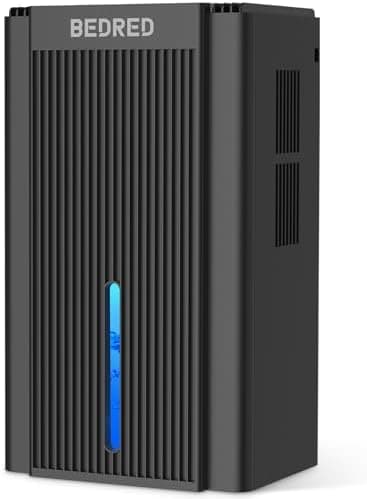
Compressor units (most picks here) remove far more moisture and work better in cool basements, while Peltier units like the budget 95oz model are quieter and lighter but only suited to small, mildly damp rooms. Community consensus is that semiconductor units underperform in true basement conditions.